Poughkeepsie's Indie Galleries Forge a New Hudson Valley Circuit
Gallery owners are coordinating shows, shuttle programs and seasonal festivals to keep artists and collectors circulating through the river towns.
By Rachel Cohen · March 21, 2026 · 4 min read
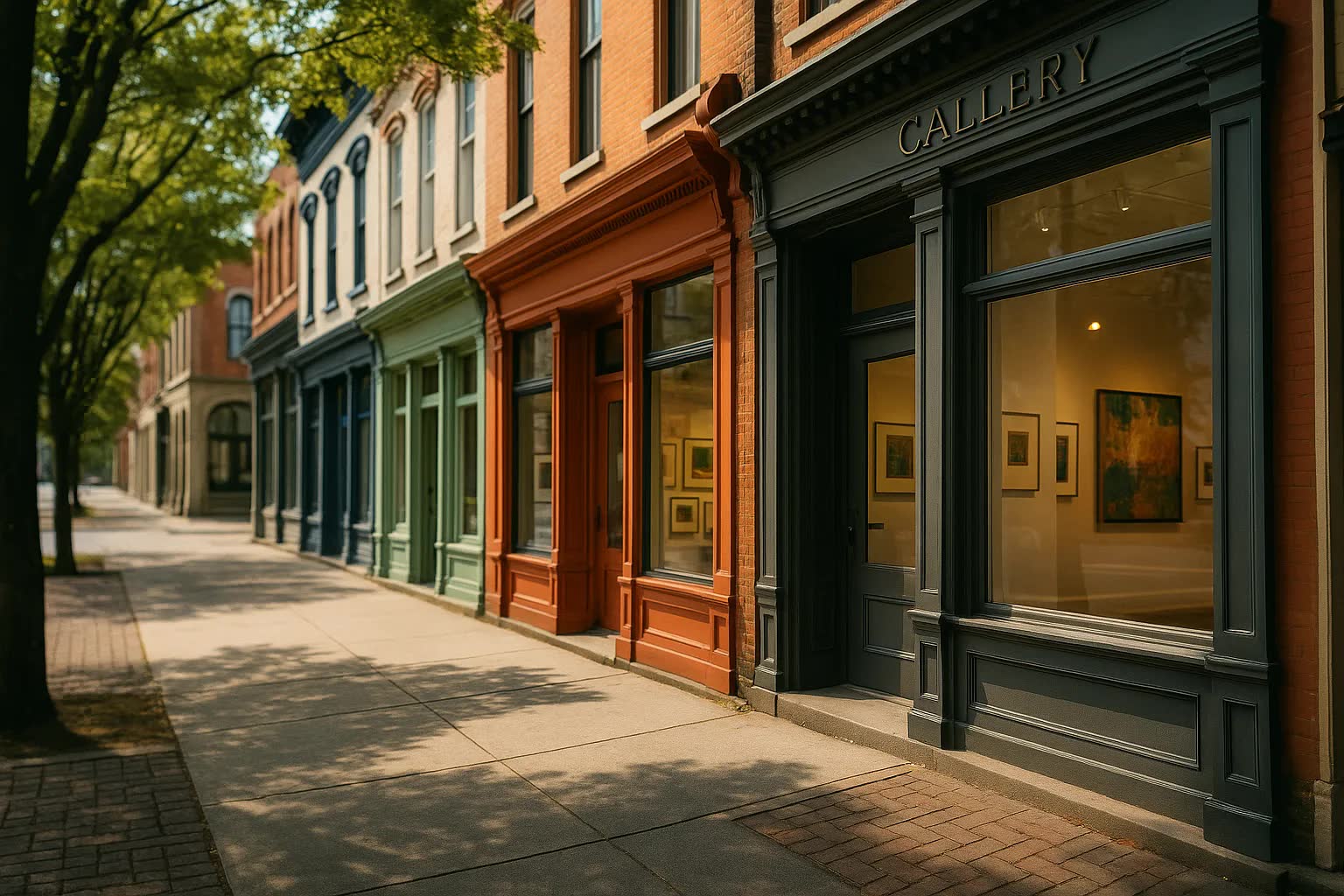
NEW YORK — As Manhattan collectors shrug at escalating Chelsea rents and the siren call of Aldrich Street loft showrooms in Soho and the Lower East Side grows fainter, a new circuit anchored in Poughkeepsie is quietly reshaping how New Yorkers buy art after the subway ride home. Gallery owners in the city’s historic river town — once bypassed for Beacon and Hudson — have coordinated schedules, shuttle programs and seasonal festivals to pull buyers north along the Hudson Line and keep both artists and collectors circulating through the valley.
Gallery owners and arts organizers in Poughkeepsie say the effort is deliberate: instead of competing, they are packaging a day for visitors that begins in Chelsea or Williamsburg and ends with a studio visit and dinner on Main Street. Riverline Gallery, The Foundry on Mill Street, Hudson Thread Gallery and the nonprofit Poughkeepsie Arts Collective now time openings to coincide, publish a unified calendar and operate a weekend shuttle from the Poughkeepsie Metro-North station that drops off at four gallery clusters between Market Street and the waterfront.
“We had to stop hoping people would stumble in,” said Marta Ruiz, director of Riverline Gallery, who moved her program from Brooklyn two years ago and now splits a week between Manhattan fair circuits and Poughkeepsie openings. “By saying, ‘Come to Poughkeepsie on the third Saturday,’ and putting a bus on the schedule, we made it easier for a collector who works on 22nd Street or a curator who lives on the Upper West Side to plan a trip.”
The logistics are part public transit, part private shuttle, and part marketing. Metro-North’s Hudson Line serves Poughkeepsie in about 90 minutes from Grand Central, and gallery organizers worked with a local bus company to run round-trip shuttles from the station every two hours on peak gallery days. “We vetted drivers, synchronized timetables and created a downloadable pass,” said Tom Eagan, coordinator for the shuttle program and a director at the Poughkeepsie Arts Collective. “It’s not flashy — it’s reliable.”
"From the planning side, making that reliability visible was crucial," said a senior Metro-North planner who requested anonymity because they were not authorized to speak on behalf of the railroad, adding that the pilot route helped smooth weekend crowding without adding trains. "We saw a modest redistribution of ridership that reduced pressure on some local shuttles and Park & Ride lots on Saturdays."
The numbers show the initiative is gaining traction: there are 18 commercial galleries and 12 artist-run studios in Poughkeepsie this spring, up from 10 and 7 respectively five years ago; shuttle weekend ridership averaged 420 riders per Saturday during the February–March pilot; the city and regional arts funders awarded roughly $150,000 in matching grants across three programs last year; and participating galleries reported a median increase in sales of 28 percent on shuttle weekends compared with regular Saturdays. Festival attendance peaked at about 2,100 visitors during the fall Art Loop last October, organizers said.
The rise has reshaped the kinds of shows the galleries host. Small spaces on Main and Mill streets are staging pop-up surveys of Hudson Valley painters, curated exchanges with Brooklyn collectives and thematic weekends—printmaking one week, ceramics the next. A new residency program at the former Mill Street textile mill offers monthlong workspace to New York artists in exchange for an open studio night. “We’re trying to build a sustainable ecology, not just one-off traffic spikes,” said Lena Caldwell, executive director of the Poughkeepsie Arts Collective, noting partnerships with restaurants and B&Bs that extend stays into overnight trips rather than daylong excursions.
Not everyone sings the same tune. Local artists and longtime working-class residents worry about the cultural and economic effects of a more active gallery scene. “There’s a real fear that wholesale conversion of light-industrial buildings will push out maker spaces,” said Jamal Price, a sculptor who moved his studio from Bushwick to a second-floor workshop near Main Street two years ago. He acknowledged increased sales and a wider audience, but added, “We need protections: affordable studio leases, community programming and guarantees that galleries reinvest in neighborhoods, not just flip property.”
Gallery owners and city officials say those concerns are part of the conversation as they plan the circuit’s next phase. Organizers are applying for a multi-year municipal arts grant to fund an expanded shuttle network, subsidized studio rents and an artist-in-residence program aimed at emerging talent. They are also negotiating a pilot commuter pass with Metro-North that would pair discounted train fare with shuttle access and gallery admission on select weekends. “If we can lock in a commuter-friendly ticket that bundles transit and programming, it will change the calculus,” said Marta Ruiz, pointing to a potential model for other Hudson River towns. Planning sessions are scheduled throughout spring, and leaders say they will publish measurable targets for affordable workspace and community benefits before the broad expansion begins.