Preservation Battles in Lower Manhattan's Cast‑Iron District
Residents and preservationists are clashing with developers over the future of a historic industrial neighborhood facing redevelopment pressure.
By Aaron Feldman · January 11, 2026 · 4 min read
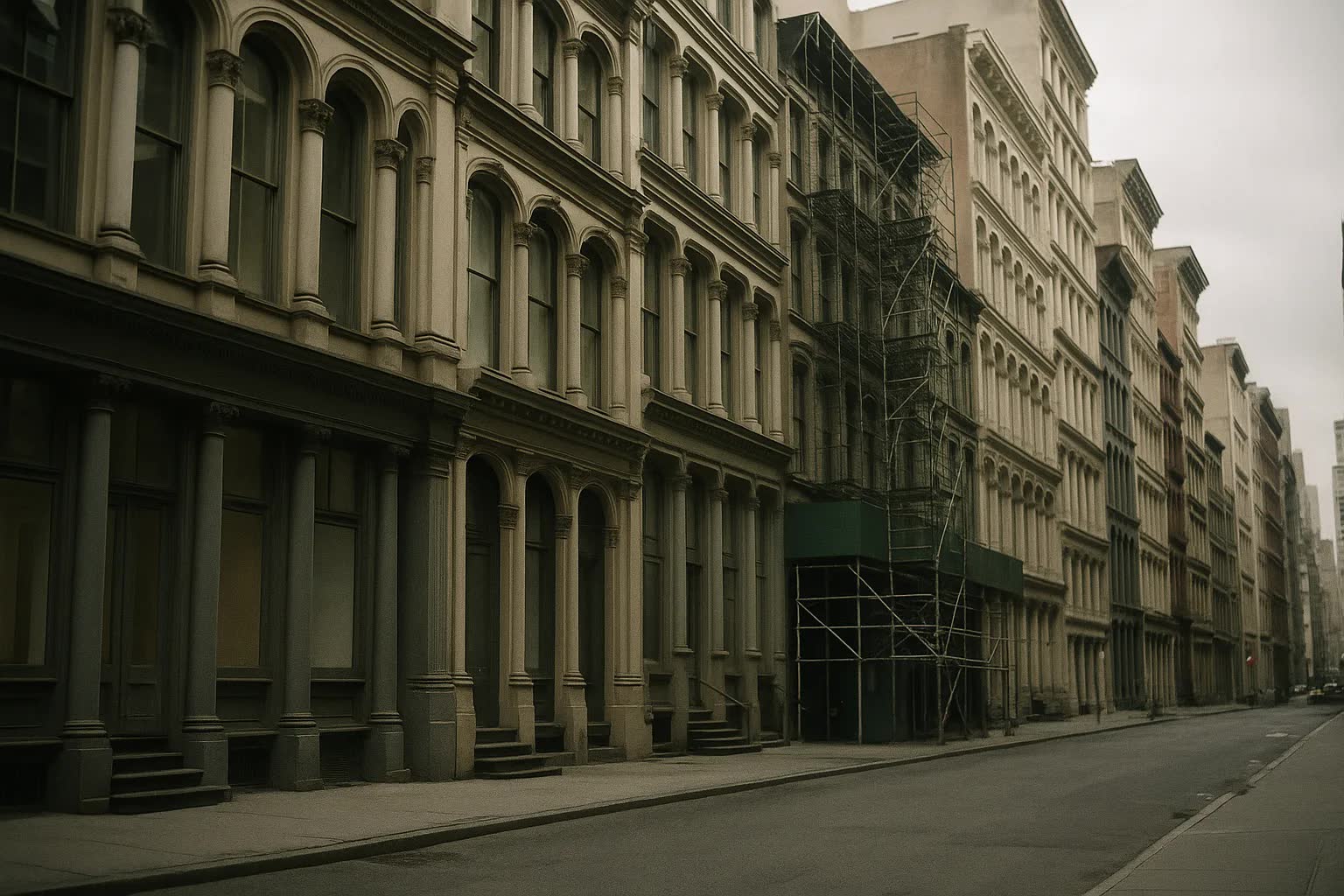
On a chilly January morning, a band of architects, longtime tenants and gallery owners gathered beneath the cast-iron arches of Greene and Wooster streets in SoHo, arguing that what many New Yorkers call the city’s most distinctive industrial streetscape is on the brink of being erased by developers seeking to remake Lower Manhattan into a high-rise residential corridor.
The cast-iron district, which stretches roughly from Houston Street south to Canal and from Broadway west to Lafayette and includes iconic blocks on Greene, Mercer and Crosby streets, dates to the mid-19th century and was an industrial backbone before it evolved into an artists’ enclave in the 1960s and a commercial zone admired worldwide for its cohesive facades.
Now preservationists say that the neighborhood’s fragile balance is threatened by a wave of proposals for large-scale redevelopment, including infill projects and conversions that, they say, would gut the historic fabric and price out the small businesses and creative tenants that define the district.
“This isn’t about opposing growth,” said Maria Delgado, president of the SoHo Historic District Coalition. “It’s about ensuring that growth respects a neighborhood that took generations to create. Once those cast-iron columns are gone or hidden behind glass towers, the city loses something that can’t be rebuilt.”
The numbers offered by both sides illustrate the stakes. A clustered set of filing materials filed with city agencies shows proposals affecting 12 lots across four contiguous blocks between Houston and Canal Streets, totaling roughly 320,000 square feet; developers project 1,240 new residential units, including 372 affordable units under city guidelines, and claim the projects would generate $22 million in new property tax revenue over the first five years. Preservationists counter with estimates that displacement and rent pressure could push average commercial rents on nearby blocks up by 35 percent within three years and add several thousand daily subway riders during peak hours.
Developers defend the proposals as necessary modernization. “We acknowledge the district’s history, but these buildings are underused and in need of reinvestment,” said Ethan Kramer, senior partner at Harborstone Development, which has filed plans for a seven- to 14-story mixed-use scheme on a cluster of former manufacturing lots near Canal Street. “Our plan includes significant street-level retail, job-creating office space and more affordable housing than the site currently provides.”
City agencies and advisory bodies are now entangled in the dispute. The Landmarks Preservation Commission has received petitions from residents asking for an expansion of the existing SoHo-Cast Iron Historic District to include an additional six blocks; the commission’s staff has scheduled a preliminary review for February. Local Community Board 2, which covers much of the area, voted last year to oppose any significant alterations to facades along Greene and Mercer, while the Department of City Planning is conducting an initial environmental analysis that could take months to complete.
The infrastructure implications are drawing attention as well. “We’re concerned about the cumulative transit impact,” said a senior MTA planner who requested anonymity because the review is ongoing. “Our lines through Canal Street and West Broadway are already operating near capacity at peak times; adding thousands of new residents without corresponding transit upgrades would strain service and increase crowding across the N, R, W and 6 lines, not to mention buses.”
Owners of the small shops and galleries that populate ground floors say they have already felt pressure. “We’ve been on Crosby Street for 28 years,” said Joanne Park, proprietor of Park & Co. Interiors. “We survived the 2008 crash and the pandemic, but the moment landlords realize there’s a higher bid, you get served a notice. The developers say they’ll bring jobs, but those jobs aren’t replacing the community that drew people here in the first place.” Legal advocates for tenants have begun assembling a slate of arguments that could include challenges under the city’s Administrative Code and appeals for stronger tenant-protection measures tied to redevelopment approvals.
As the next round of public hearings is scheduled and formal environmental impact statements are drafted, both sides are preparing for a protracted fight that could set precedents for historic preservation across New York. Preservationists are pressing for iron-and-mortar protections, stricter design review processes and transferable development rights that would steer density away from fragile blocks; developers say the city’s housing crisis demands pragmatic trade-offs. Whatever the outcome, residents and planners say, the decisions made in the next 12 to 18 months will ripple through Tribeca, Hudson Square and beyond, shaping how the city negotiates growth and heritage in the decades ahead.