Produce Prices Ease, but Grocers Still Face a Cost Squeeze
Late-summer vegetables are bringing some relief to neighborhood grocery bills, while packaging, refrigeration and insurance expenses remain elevated. Independent stores are adjusting package sizes and ordering more frequently to limit waste.
By Maya Torres · August 24, 2026 · 5 min read
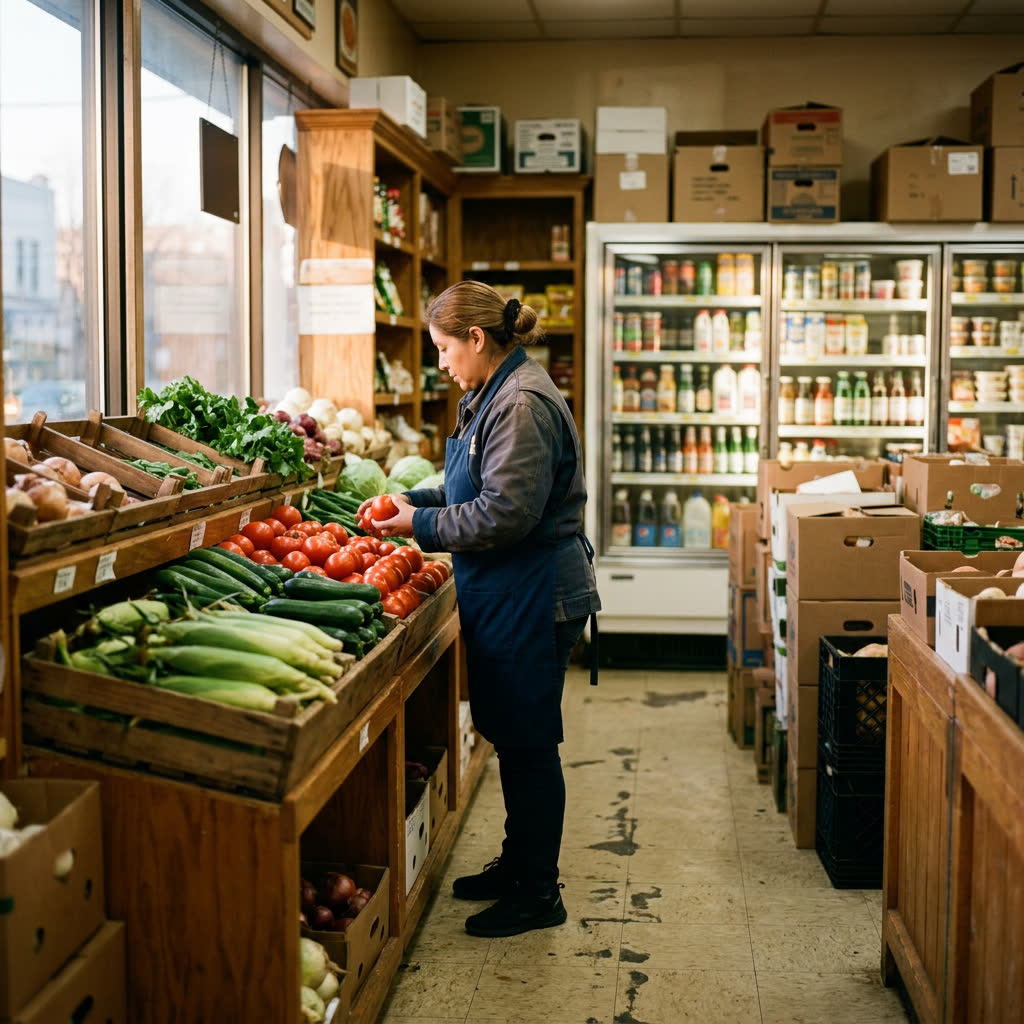
NEW YORK — Boxes of tomatoes, zucchini and sweet corn arrived before sunrise Monday at fictional Green Lantern Market in Jackson Heights, carrying the most welcome price tags owner Omar Sayeed had seen this summer. Abundant regional harvests have lowered his wholesale cost for several vegetables, allowing the store to post weekly specials as families prepare for the school year. Yet the relief is narrow: Nearly every step required to move food from the loading area to the checkout lane still costs more than it did a year ago, he said.
A price review by the fictional New York Neighborhood Food Council found that a basket of 12 commonly purchased fresh items cost about 4% less at participating stores in the third week of August than in early July. Tomatoes and summer squash accounted for most of the decline. The council cautioned that the informal review, covering 35 independent markets, is a snapshot rather than an official inflation measure and does not show comparable relief in dairy, packaged foods or household supplies.
Grocers said their stubborn expenses include cardboard cases, plastic film, refrigeration maintenance, insurance and overnight labor. Those costs rarely appear on a shelf label by themselves, but they influence how much room a store has to pass along a temporary wholesale discount. Sayeed said a service call for a produce cooler can consume the margin from days of vegetable sales, making preventive maintenance as important to the weekly budget as the cost of the food.
Stores are trying to preserve value without relying only on headline price cuts. Green Lantern has introduced smaller bundles of herbs and fruit so shoppers can spend less per trip and households are less likely to discard unused food. In Bedford-Stuyvesant, fictional grocer Little Elm Foods is offering loose potatoes and onions beside larger bags. Manager Simone Price said customers increasingly compare the total at the register rather than the unit price, especially during the final week before payday.
More frequent ordering can reduce spoilage but raises its own transportation and labor costs. Some merchants are sharing deliveries through neighborhood buying groups, combining orders to reach supplier minimums while avoiding excess inventory. The food council said four new purchasing circles formed this year among stores in Queens and Brooklyn. Participants do not share pricing decisions, but they coordinate quantities and delivery windows for selected produce and dry goods.
Shoppers interviewed in Jackson Heights said they had noticed bargains in seasonal produce but little change in their overall grocery totals. Alina Brooks, a parent of two, said tomatoes and corn were going into more dinners while snacks and lunchbox staples remained carefully rationed. She checks circulars from several stores, though transportation and time limit how far she can travel for a discount. For her, a lower price matters most when it appears at a market along the normal trip home.
The approach of the school year is sharpening that calculation for both families and stores. Grocers are expanding displays of portable fruit, sandwich ingredients and bulk breakfast items, but several owners said they are ordering cautiously until they see how demand develops. A hot final week of August could boost drinks and prepared foods while shortening the shelf life of delicate produce, quickly changing the balance between sales and waste.
Sayeed expects the seasonal vegetable break to last into September if weather and deliveries remain stable, but he is not building his autumn budget around it. He plans to update shelf prices item by item as new invoices arrive and to keep the smaller package choices even if wholesale costs rise again. The result for consumers is likely to be uneven: genuine deals in the produce aisle, surrounded by products whose prices still reflect the expensive work of running a grocery store in New York.