Proposal for a Hudson River Drone Corridor for Film Shoots Stirs Safety Debate
Filmmakers want a dedicated lane to speed shoots and lower costs, while regulators and boaters raise concerns about noise, privacy and navigation risks.
By Malik Johnson · January 16, 2026 · 4 min read
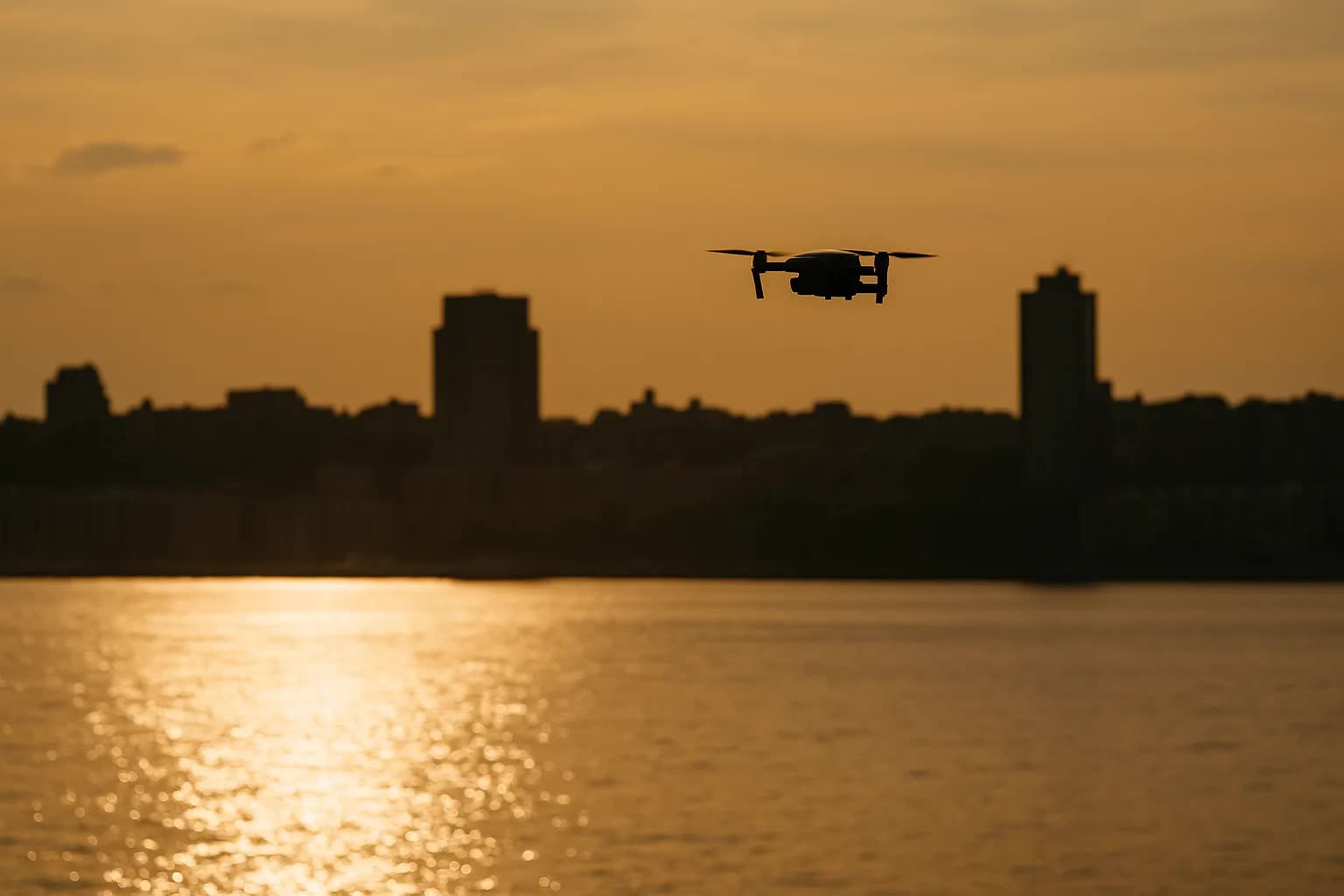
NEW YORK — A proposal to carve out a dedicated drone corridor above the Hudson River for film and television shoots has set off a rare clash between the city’s booming production community and the regulators, boaters and residents who say the plan would trade convenience for safety, noise and privacy risks across Manhattan’s western waterfront.
Under the plan being quietly promoted by a coalition of production companies and location managers, drones used for movie and commercial shoots would be steered into a narrow aerial lane running roughly along the river from Battery Park up past Chelsea Piers and the Intrepid Museum to a terminus near 72nd Street, allowing crews to cut set times and avoid repeated permit delays in crowded streets like Spring Street and 10th Avenue, proponents say.
"We can’t keep paying studio rates to shut down 11 blocks of Hudson Street just to get one overhead shot," said Evelyn Cruz, executive producer at HarborLight Films, which shoots commercials and episodic television along the waterfront. "A managed corridor would let us do those shots faster, for less, and with better predictability for the crews and the restaurants that depend on us for weekday business."
But the idea has raised alarms among maritime operators and public-safety officials who say the river is already a complex navigation corridor and that adding hundreds of small, camera-equipped aircraft could increase the risk of collisions, distraction and acoustic intrusion on neighborhoods from Tribeca to the West Village. "We already run a gauntlet of ferries, tugs, kayaks and recreational craft; putting a permanent swarm lane overhead is asking for trouble," said Captain Jerome Hall, president of the Hudson River Boaters Association, whose members range from commercial tug operators to charter skippers in Battery Park.
The arithmetic behind the debate is stark. The proposal contemplates a 6.5-mile corridor with a minimum altitude band of 200 to 450 feet and a lateral buffer of 100 feet from the riverbank. City film-permit records for 2024 show roughly 1,200 on-location permits issued citywide; drones were listed on 18% of those applications. HarborLight’s internal estimates project the corridor could shorten aerial shoot times by about 30% and reduce permit-related production costs by roughly 20%, while opponents point to 45 documented close calls between small unmanned aircraft and vessels in the Hudson region over the past two years, according to a private safety-monitoring group that tracks air and water incidents.
Safety experts queried by the newspaper noted that the combination of urban wind patterns and high-rise turbulence along the Manhattan skyline could complicate drone control. "Urban wind shear and updrafts near high-rises like those in Hudson Yards can produce unexpected flight behavior that increases loss-of-control incidents," said Dr. Priya Anand, director of the Urban Aviation Lab at the Hudson Institute, a research center in Manhattan. She added that bird-strike risk and electromagnetic interference from waterfront communications equipment would need careful study before any corridor became permanent.
Regulatory hurdles are another barrier. The Federal Aviation Administration has authority over U.S. airspace and has signaled greater scrutiny of concentrated drone operations since the 2022 uptick in rogue flights near airports and critical infrastructure. Marcus Bell, a senior planner at the FAA's New York Flight Standards District Office, said the agency would require a comprehensive safety case and interagency coordination before green-lighting a dedicated corridor that overlaps with waterborne traffic lanes. "Any proposal would require a formal risk assessment, an operations manual, defined contingency procedures and training standards for operators," Bell said.
Neighborhood stakeholders have their own list of concerns. Restaurants on West Street and fitness studios in the West Village worry that continual drone noise during peak dinner and evening class hours could make outdoor seating and rooftop spaces untenable; pier operators from Chelsea to Battery Park fret about potential photographic intrusion into private residences and members-only clubs. "We’ve had shoots where the buzzing never stopped all evening and our customers left early," said Lena Ortiz, owner of The Pierhouse Café at Chelsea Piers. "A corridor could mean a regular schedule of disruption rather than the occasional, predictable closure we can plan around."
Industry leaders say privacy and insurance arrangements could be written into corridor rules, with geofencing to prevent cameras from pointing inland over private terraces and a requirement that operators carry higher liability coverage and maintain live-spotter teams. Michael Neumann, general counsel for HarborLight Films, said protocols would include real-time notifications to the City Film Permits Office and a public-facing schedule. "This isn’t about unrestricted flight; it’s about creating clear standards that lower cost and raise transparency," Neumann said. "If we can demonstrate safer, quieter operations with enforceable penalties for violations, the corridor could be a model for urban production worldwide."
City officials and community groups say they expect months of public hearings, environmental reviews and FAA negotiations before anything is approved. The Mayor’s office has signaled interest in exploring a limited pilot program, and the film-permits office is assembling a stakeholder working group to examine noise modeling, privacy safeguards and coordination with the Harbor Master. If the pilot moves forward, proponents envision a 12-month trial beginning as early as summer 2026, with quarterly safety audits and metrics on noise, near-miss incidents and economic impact on the city’s creative economy. Whether that pilot will satisfy captains on the water, residents along the river and federal regulators remains an open question, but the outcome will likely shape how New York and other dense cities manage the next wave of urban airspace uses.