Proposed Long Island Sound Ferry Routes Aim to Cut Suburban Drive Times
Private operators pitch commuter ferries into Manhattan as an alternative to gridlocked parkways and crowded rail lines.
By Kira Sato · March 16, 2026 · 5 min read
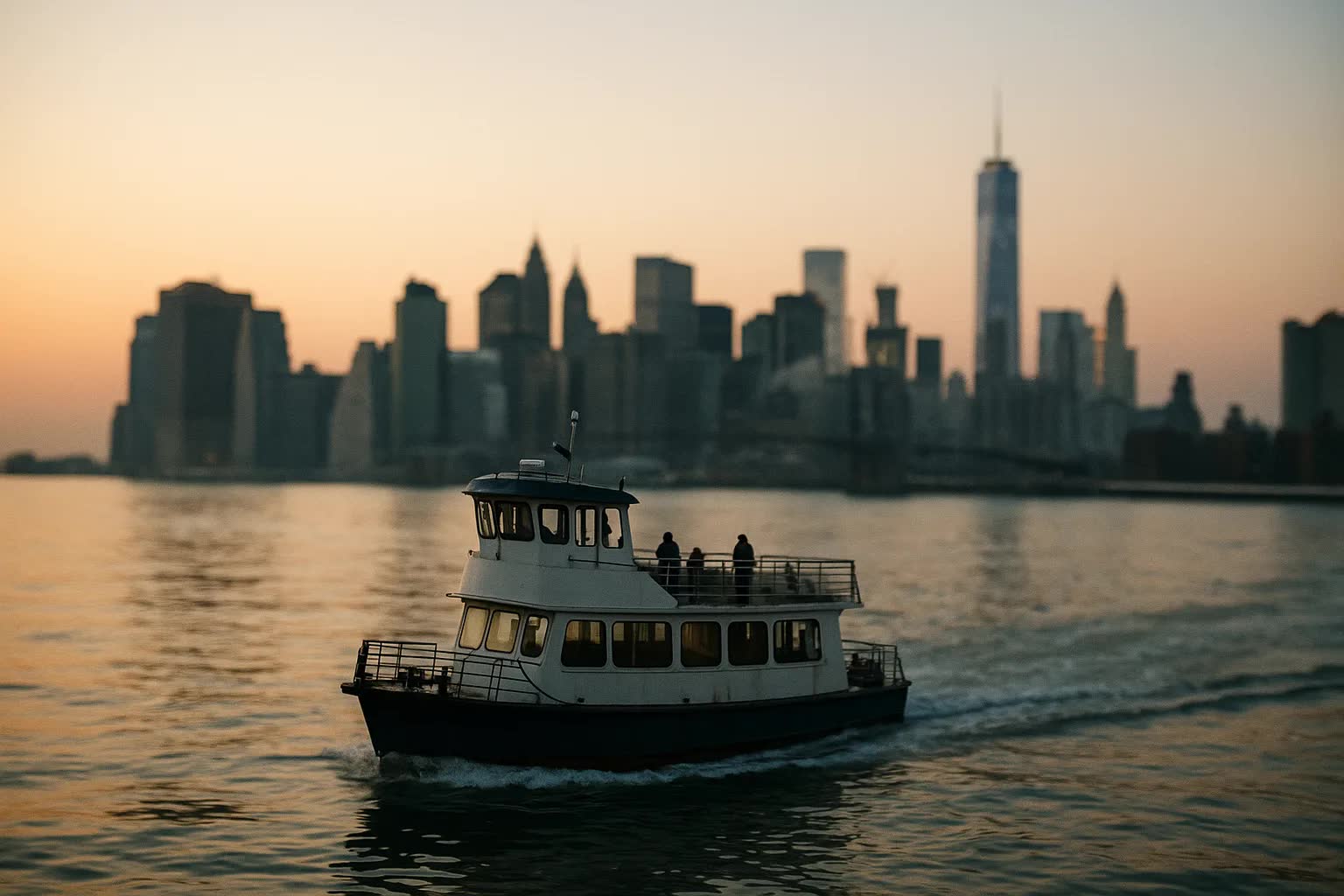
New Yorkers who commute from Long Island's North Shore could soon trade snarled rides on the Long Island Expressway and packed LIRR trains for a seat on the water, under a cluster of private proposals that would run high-speed ferries across the Long Island Sound to Manhattan landings at East 34th Street and Battery Park. The plans, pitched by two start-ups and backed by local chambers of commerce, aim to shave 30 to 60 minutes off many suburban commutes into Midtown and Lower Manhattan, offering an alternative for riders whose daily routes funnel through the bottlenecks of Queens and Nassau County.
The two lead bidders — HarborLine Ferries and SoundLink Transit — presented route maps this month showing regular service from Port Washington, Roslyn, Glen Cove and Oyster Bay to Manhattan terminals at the East 34th Street Ferry Landing and Pier 11 in Lower Manhattan, with a proposed peak-hours express from Glen Cove to Battery Park for Wall Street commuters. Officials said boats would be modern catamarans with indoor seating, bike storage and Wi-Fi, and that midday and weekend runs would accommodate shoppers and tourists headed for Midtown and the South Street Seaport area as well as commuters bound for corporate offices in Midtown East and Battery Park City.
Under the companies' projections, a Port Washington–East 34th crossing would average 32 minutes, Glen Cove–Battery Park 40 minutes, and Oyster Bay–Pier 11 about 45 minutes; those figures compare with typical drive times of 65 to 95 minutes during peak travel on the Long Island Expressway or Northern State Parkway, and with overcrowded LIRR runs that can add station access and wait times. HarborLine estimates first-year weekday ridership of roughly 8,500 passengers across all routes, using a fleet of 10 vessels with capacities of 180 to 240 seats each. The firms are seeking about $150 million in combined capital — roughly $90 million for terminal upgrades and $60 million for vessels — and are pitching fares in the $12 to $18 range, with monthly commuter passes available. Early modeling prepared for the operators forecasts a reduction of about 14 million vehicle miles traveled annually in Nassau County and an emissions cut of 4,200 metric tons of CO2 in year one if ridership targets are met.
"We can cut the average door-to-door commute by nearly half for thousands of riders coming in from the North Shore," said Marta Ruiz, chief executive of HarborLine Ferries. "This isn't about yachts or tourism only — it's about giving daily commuters a reliable, fast, comfortable option that bypasses the clogged arteries of Queens and Nassau County." Ruiz said the company plans to schedule boats to arrive at Manhattan terminals within 10 minutes of key LIRR and subway arrival times to facilitate transfers for reverse commuters and multi-leg trips.
Local business leaders on Long Island welcomed the proposals at public briefings this month. "If we can give workers a clean, predictable commute that drops them off at East 34th or the Financial District, Main Street businesses in Port Washington and Roslyn will see more lunch and after-work traffic," said Aimee Delgado, president of the Port Washington Chamber of Commerce. "We also hear from families who are tired of sitting in bumper-to-bumper traffic for an hour each way; this offers them a real choice."
Officials in New York City and at the MTA say they have begun technical discussions with the operators over scheduling, fare integration and dock access. "We are talking to the operators about scheduling around peak LIRR and subway times and about interoperability with existing transit fare products," said a senior MTA planner who requested anonymity because the talks are ongoing. Docking capacity at Manhattan landings, shuttle connections to Grand Central and Penn Station, and bike-share access at terminal sites were cited as key integration issues that could make or break commuter uptake.
The projects face environmental and regulatory hurdles. Operators will need permits from the U.S. Coast Guard and the Army Corps of Engineers, and manage state reviews for impacts to marine habitat in Manhasset Bay and Hempstead Harbor. Local environmental groups have raised concerns about wake-induced shoreline erosion and underwater noise that could affect shellfish beds. "Any commuter benefit has to be weighed against damage to fragile shorelines and intertidal zones that residents depend on for recreation and fisheries," said Dr. Lena Harford, director of HarborWatch, a Nassau-based conservation group. The companies told the public that new hull designs and speed curbs in sensitive areas would limit wake and that they are prepared to fund habitat monitoring.
Financing and the business model are still under negotiation. Both firms intend to run primarily as private operators, but the proposals assume limited public support for capital costs at terminal sites and potential per-ride subsidies during an initial ramp-up. HarborLine's business plan shows break-even ridership at about 10,500 weekday trips; SoundLink's model assumes stronger tourist-season demand and projects profitability in year three if seasonal fare differentials are allowed. The companies say they will pursue public-private partnerships for terminal upland parking and last-mile shuttle services, and that downtown business improvement districts in Midtown and the Financial District have signaled informal support for pilot subsidies to test demand.
Timetables and frequency would be geared to traditional rush windows: peak-direction express runs roughly every 20 to 30 minutes during the morning and evening commutes, with more frequent, shorter-haul shuttles between Port Washington and East 34th for reverse commuters and midtown workers. Operators also plan expanded weekend schedules to capture leisure travel to Manhattan events and to waterfront restaurants in Tribeca and Hudson River Park. Community meetings in Port Washington, Glen Cove and Midtown East are scheduled over the next six weeks to solicit feedback on pier designs, vehicle access and potential noise mitigation measures.
If regulators sign off and funding holds, operators said they would launch a limited pilot on the Port Washington–East 34th route in late 2027 with two vessels, expanding to the full proposed network by 2030 if ridership and environmental monitoring meet targets. The ferry bids represent more than a transportation experiment; they are a test of whether a private-sector ferry network can reshape commutes that for decades have been dominated by roadways and rail. For many suburban commuters watching the spring calendars, the coming months will show whether the passionate promises on paper translate into scheduled departures and, ultimately, a viable new way into the city.