Public Libraries Emerge as Incubators for Neighborhood Arts
From zine-making workshops to micro-galleries, branch libraries are broadening cultural programming in underserved boroughs.
By Anika Bose · February 14, 2026 · 5 min read
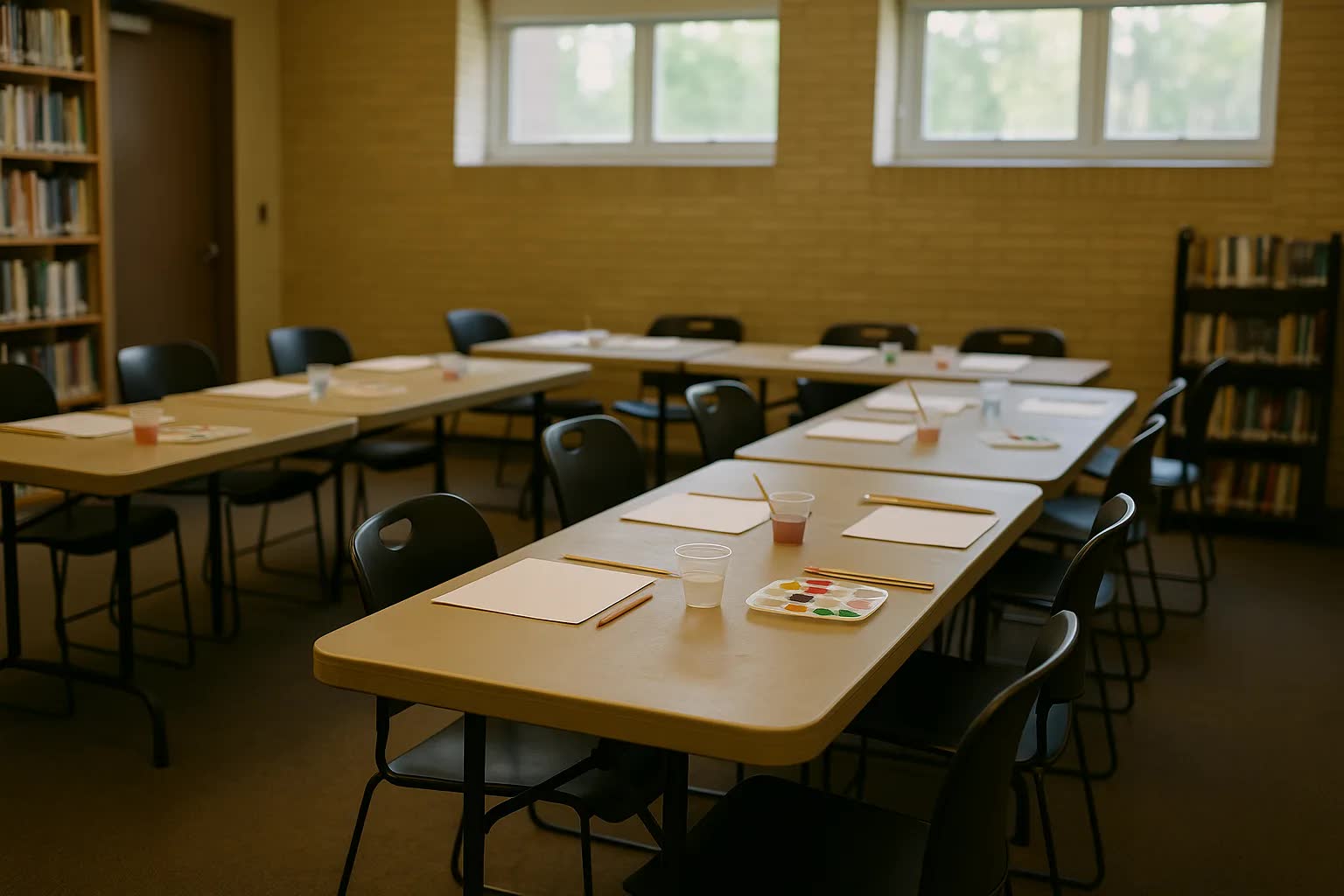
NEW YORK — On a chilly Saturday afternoon in February, the Lorimer Street Library in Bushwick was humming like an art school: teenagers at a folding table stapling zines, an elder teaching silk-screen techniques in a corner, and a temporary micro-gallery of neighborhood portraits hanging where reference books once sat. Across the city, from a renovated storefront room off Fulton Street in Bed-Stuy to a glass-fronted reading alcove on Fordham Road in the Bronx, branch libraries are quietly reinventing themselves as incubators for neighborhood arts, filling gaps in cultural programming in communities that have long been underserved by galleries and arts institutions.
The shift is intentional and practical. Library staff and local artists say branches are offering low-cost, high-impact programs — zine-making workshops, youth photography labs, oral-history listening sessions, pop-up exhibitions and residency slots for early-career artists — that meet residents where they already go for literacy and civic services. "We started with a simple question: what does creativity look like in our neighborhood?" said Alana Rivera, branch manager at the Lorimer Street Library and coordinator of its new Makers & Margins series. "Once we listened, we realized the library could be the safest, most accessible place to try it."
The change is a break from the traditional role many New Yorkers associate with libraries, and it has roots in pandemic-era programming pivots and in longer-term efforts by municipal cultural planners and grassroots arts groups to expand arts access. Libraries are partnering with small nonprofits, artist collectives and independent curators to design programs that reflect local histories and languages — in the Bronx that has meant bilingual book-art workshops on Webster Avenue, while in Sunset Park artists have led skate-culture zine nights on 5th Avenue. Staff members who once scheduled story hours are now booking artist talks, curating shows and managing equipment like lightboxes and silk screens.
Citywide figures compiled by a coalition of library systems and cultural nonprofits show a marked uptick in arts activity in branch libraries over the past five years: as of December 2025, 148 branch libraries across the five boroughs offered regular arts programming, up from 66 in 2019; total attendance at these events was reported at roughly 238,000 participants last year, a 260 percent increase since 2019; city funding earmarked specifically for branch arts initiatives rose from about $1.8 million in fiscal 2020 to $5.2 million in fiscal 2025, supplemented by an estimated $2.1 million in private foundation grants and in-kind donations of equipment and studio space.
One visible expression of the movement has been the rise of micro-galleries — compact, often modular exhibits installed in former reading rooms or vestibules that showcase work by local photographers, painters and assemblage artists. The Fulton Street Micro-Gallery in Bed-Stuy, for example, installed a rotating show of neighborhood storefront portraits taken by seniors in a photography workshop, and the display quickly drew visitors who stayed to flip through the accompanying zines. "Seeing your neighbor's portrait on the wall changes how you walk down the street," said Marcus Chen, artistic director of East River Arts Collective, which has partnered with three branches to curate micro-exhibitions. "We're making a case for small, constant interventions rather than one-off big shows."
Programs are intentionally diversified to be age- and skill-level inclusive. In Highbridge, a weekly after-school screen-printing club on University Avenue has been running for two years, offering young people not only creative outlets but also basic job skills in production and workshop management. Library maker labs now include tools that would have been unheard of behind the circulation desk a decade ago — from community-grade 3-D printers to modular print presses — and staff have added training on equipment safety and project budgeting. Partnerships with local public schools and youth centers mean more students find their first portfolio reviewers at a branch five blocks from home.
Sustaining the programs, however, requires new staffing models and steady funding. Several systems have hired dedicated arts coordinators and community liaisons who split time between programming and traditional reference duties. Private donors and small foundations have filled gaps, but organizers say consistent municipal support is essential for long-term viability. "We can't rely on pop-up philanthropy," said Tamika Bell, founder of the Bed-Stuy Artists Collective and a longtime volunteer arts educator at the Fulton Street Micro-Gallery. "What these libraries are doing is serious cultural infrastructure; it needs predictable funding so it doesn't disappear when a grant cycle ends."
Not everyone is unreservedly enthusiastic. Some residents and advocates worry about space trade-offs — whether more exhibitions will reduce seating or shelf space — and about curation decisions that might privilege artists who reflect incoming demographic shifts rather than long-standing neighborhood practitioners. A recent community meeting on McCarren Park's library annex in Greenpoint drew concerns that programs could inadvertently accelerate cultural displacement if galleries curated by outside organizations do not include local voices. Library leaders say they are hearing those worries and have instituted community advisory panels to guide programming decisions and artist selection.
Early evaluations suggest benefits that go beyond exhibition counts. Library systems report higher repeat visits, improved participation in literacy and digital-skills classes tied to arts programming, and stronger cross-generational engagement: parents bring children to arts nights, seniors return for gallery openings, and teen visual artists collaborate with local historians on oral-history zines. Looking ahead, library directors and cultural partners are mapping strategies to scale successful pilots into permanent offerings, including a proposed citywide fellowship for community artists to be embedded in branches and a mobile art lab slated for a spring 2026 launch that would rotate through neighborhoods with limited physical branch space.
If the last few years are any guide, the next chapter for New York's public libraries will be one of experimentation and negotiation: expanding cultural access while navigating tight budgets, space constraints and community priorities. For residents who already use their branches as study spots, meeting places and lifelines, the new arts programming has been a welcome addition that feels rooted in place. "People are telling their stories in ways that didn't have room before," Rivera said. "Our next challenge is to hold onto that energy and make sure it belongs to the people who live here — not to a trend, but to a neighborhood institution that lasts."