Queens Food Pantries Shift to Client-Choice Models
Several nonprofits are redesigning distribution to let clients pick foods they prefer, improving nutrition and reducing waste.
By Nia Washington · December 1, 2025 · 4 min read
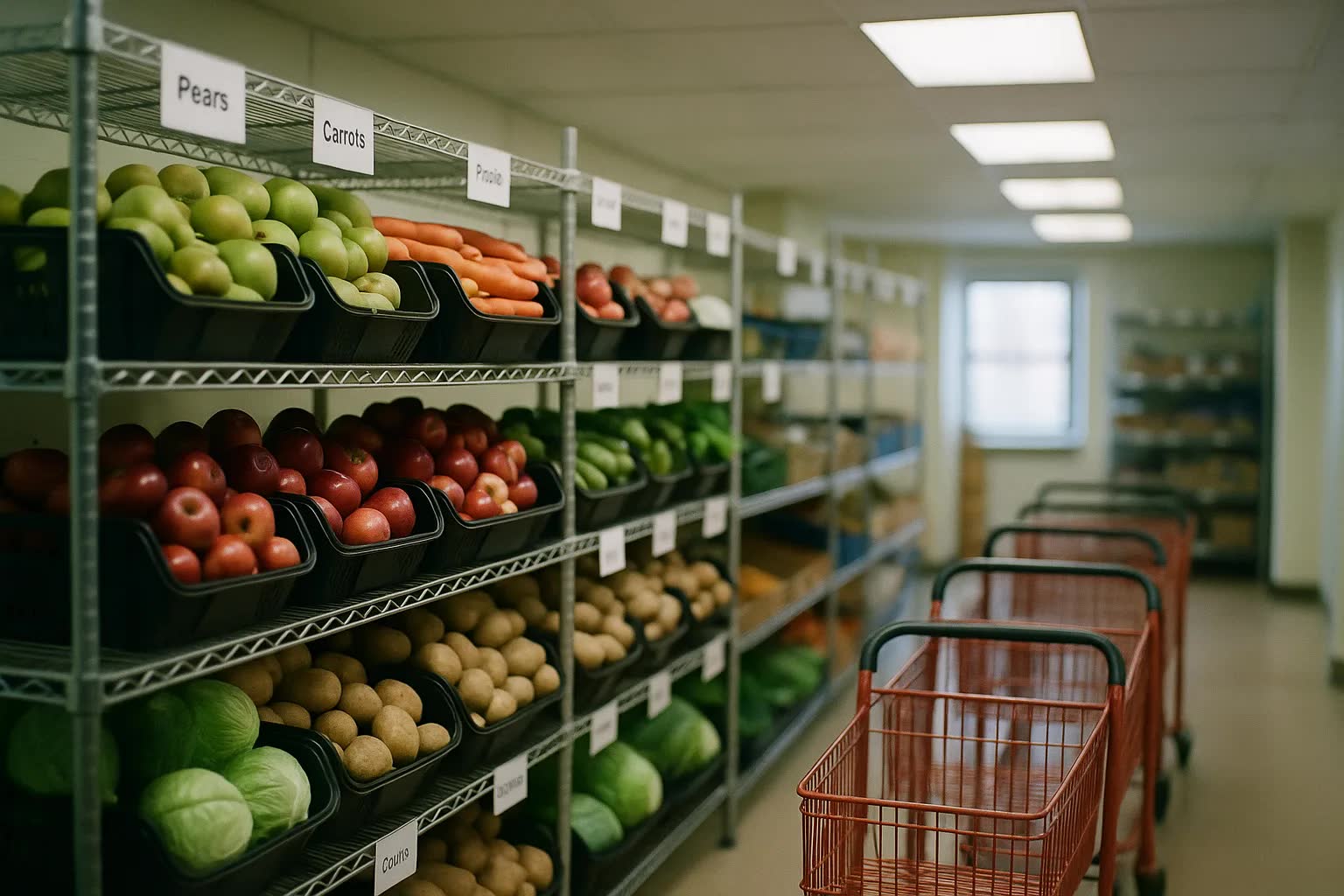
On a biting December morning outside the Sunnyside Community Cupboard on Queens Boulevard, neighbors shuffled through a new layout of wooden crates and labeled aisles instead of the old table-and-box line that defined food charity for decades; the shift to a client-choice model in pantries across Queens aims to give people more control over what they take home while improving nutrition and cutting waste at a time when demand has remained stubbornly high across the borough.
Client-choice, in practice, replaces prepacked bags with a market-style arrangement that lets households select their own produce, proteins and culturally familiar staples, a change advocates say restores dignity and reduces the likelihood that food will be thrown away. In Ridgewood, Elmhurst and Flushing, nonprofits have reconfigured basements, storefronts and church halls into narrow grocery-like corridors, and volunteers now shepherd clients with paper lists, tokens or appointment slots so selections remain orderly and fair.
"We wanted people to shop, not be shamed," said Maria Delgado, executive director of Sunnyside Community Cupboard. "When you hand someone a bag full of unfamiliar cans, you tell them they're a problem. When you let them choose, you acknowledge their household, their kids, their culture — and they leave with food they will actually cook."
The redesigns have required logistical rewiring: refrigeration units for fresh items, shelving to display dry goods, bilingual signage and new inventory systems. Elmhurst Harvest, a six-year-old nonprofit on 90th Street near Queens Boulevard, installed three walk-in coolers this year and partnered with the Queens Farmers Co-op to bring weekly deliveries of seasonal greens. Volunteers are trained to guide families through selections, and some pantries now stock recipe cards that show how to turn moringa leaves or bitter gourd into simple meals.
The network’s internal statistics underline the shift: since pilot conversions began in early 2023, 12 pantries in Queens have fully adopted client-choice systems; participating sites report a 34 percent reduction in food waste, a 22 percent increase in client satisfaction scores collected quarterly, and a 42 percent rise in perishable items distributed. Monthly foot traffic across those pantries averages about 22,400 visits, serving approximately 15,800 unique households, and the average time a household spends inside has dropped from 27 minutes to about 14 minutes under the appointment-plus-walk-in model.
"I can pick the spices my mother used to cook with, and my kids actually eat the vegetables now," said Omar Hassan, a Ridgewood resident and client who works as a shipping supervisor and visits the Ridgewood Outreach Center near Myrtle Avenue. "When my son sees the okra and the right kind of rice, it makes a big difference. It feels like we're shopping, not asking for charity."
Despite early successes, smaller pantries face obstacles: limited square footage on commercial strips such as Jamaica Avenue and Northern Boulevard, a shortage of refrigeration space in basement sites in Jackson Heights, and the upfront cost of shelves, labels and point-of-sale tablets that track inventory. Seniors and clients without smartphones sometimes struggle with appointment-based systems intended to avoid crowding, prompting some sites to reserve midday walk-in hours or add phone lines staffed in Bengali, Spanish and Mandarin.
Funding has come from a mix of sources: local fundraising, grants from the QueensGiving Foundation, in-kind donations from grocery chains like MetroMart and neighborhood drives organized by churches near St. John's Cemetery and civic groups around Flushing Meadows. The pantries have also forged data-sharing agreements — with client consent — to measure dietary improvements and food stability over time, an effort led by the Queens Food Access Network, an informal collaborative of 24 pantries and food programs across the borough.
Neighborhood tailoring has been central to acceptance. In Flushing, a pantry near Kissena Boulevard stocks Chinese-style greens and soy products; in Jackson Heights, a site on 82nd Street offers a Punjabi spice rack and lentil varieties; and a mobile client-choice pop-up launched last summer at the Corona Plaza near the 7 train delivered produce boxes chosen by recipients to families returning from work. Volunteers and staff emphasize cultural familiarity as much as freshness — labeling that spells out ingredients in Urdu, Korean and Spanish has been critical.
Organizers say the work is far from finished: more pantries plan phased conversions in 2026 and fundraisers are underway to underwrite a fleet of refrigerated vans for mobile client-choice distribution along Hillside Avenue and the Rockaway corridor. For many Queens residents, the change has been immediate and practical, but organizers caution that sustaining the model requires continued funding, civic partnerships and ongoing feedback from the people it serves — an effort they say will keep evolving with the borough’s own shifting demographics.