Queens Metal Shops Adopt Robotics to Win City Contracts
Small fabrication firms are investing in automation to meet tight deadlines and technical specs on municipal infrastructure projects.
By Olivia Park · December 10, 2025 · 4 min read
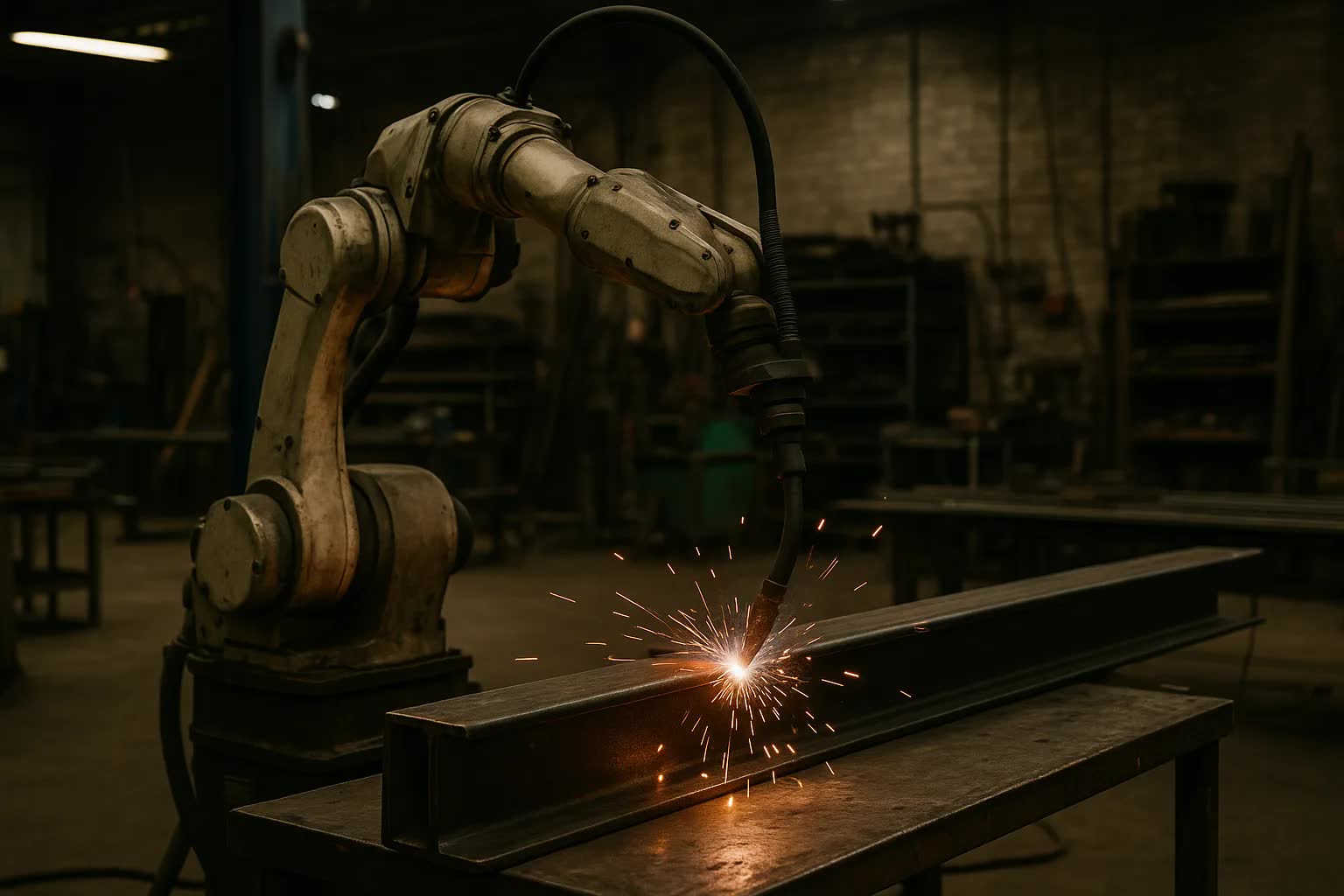
In the shadow of the Queensboro Bridge and amid the glass towers of Long Island City, small metal shops that once relied on hand-fed presses and welders are installing robotic arms and computer numerical control cells to meet new municipal specifications and tighter deadlines for city infrastructure contracts.
For decades the borough's dense patchwork of family-run fabricators — clustered along Steinway Street in Astoria, under the elevated tracks in Sunnyside and in low-slung industrial lots near 37th Avenue in Jackson Heights — supplied fire escapes, access hatches and custom brackets to the city on flexible schedules; now many of those same companies say automation is the only way to reliably deliver to increasingly rigid procurement standards for bridges, public housing retrofits and subway station upgrades.
At Queens Metalworks, a 40,000-square-foot shop on 2nd Street in Long Island City, owner Maria Jin said her first robotic press cell paid for itself within 18 months after the firm landed a Department of Citywide Administrative Services contract that called for parts with tolerances of a few tenths of a millimeter. "We couldn't compete on price and precision with our old workflow — the robot gave us consistency and the speed to hit city benchmarks," said Jin, who grew up in Forest Hills and took over the family business in 2016.
Steinway Fabrication in Astoria recently retrofitted a bending line and added two gantry welders supplied by Bayside Robotics Integration, a Queens-based systems integrator. "The work used to take an entire crew and three shifts; now we can do it with a smaller team running two shifts, and we get fewer rejects," said Carlos Vega, production manager at Steinway Fabrication. Vega said the company reallocated two full-time welders into quality control and programming roles, then hired an apprentice through a neighborhood union program on 21st Street.
Procurement officers and project managers for municipal agencies have tightened specifications in recent years to reduce rework on large jobs such as sewer vaults, stairwell rehabilitations in public housing and stainless-steel ductwork for school kitchens, pushing small shops to demonstrate precision manufacturing capabilities. A senior MTA planner who requested anonymity said the transit authority has increasingly required digital part files and production logs as part of contract compliance. "When we audit a fabrication run for a platform canopy or a bracket assembly, we want traceable data — not a stack of hand-marked drawings," the planner said.
Concrete numbers underline the shift: shops surveyed by a Queens manufacturing coalition reported capital outlays of $150,000 to $1.2 million for robotic cells and software in the past three years, with an average lead-time reduction of 35 percent and an average scrap-rate drop from 8 percent to 2.5 percent on city jobs. Municipal procurement data provided by a trade association estimate that Queens-based small fabrication firms won roughly $42 million in city contracts in fiscal 2023 and $68 million in fiscal 2024, a 62 percent increase that local shop owners link in part to upgraded production capacity.
The move to automation has presented hard choices for owners and workers. Several long-running shops in Maspeth and Woodside reported short-term disruptions during installation, including temporary layoffs for day laborers and an uptick in subcontractor costs for programming and maintenance. Unions representing local trades say they are partnering with community colleges and workforce development nonprofits to retrain fabricators' employees for controls programming and robot maintenance, but those programs are only now scaling to meet demand.
City incentives and small-business grants have helped ease the transition. The Department of Small Business Services launched a targeted grant last year for manufacturers investing in automation, offering reimbursements for equipment purchases and certified training. Local integrators such as Bayside Robotics Integration and Harbor Automation Group in Astoria said they are also offering rent-to-own packages and staggered payment plans to reduce upfront burdens for shops on narrow margins.
Neighborhood dynamics shape how automation is received. In Sunnyside and Long Island City, where mixed-use development has pushed property values up, some older shops said zoning pressure and rising rents accelerated decisions to invest or consolidate. In contrast, heavier industrial corridors in Ridgewood and Maspeth, where rents remain relatively low, have become hubs for light industrial clusters that can host larger robotic cells and workforce training facilities near transit lines like the M and R at Metropolitan Avenue.
Looking ahead, owners, union representatives and city procurement officials say the next battleground will be how small fabricators balance automation with local hiring mandates and green procurement goals that demand low-emission manufacturing. For Queens shops that have already installed robots, the priority now is upgrading staff skills, securing maintenance contracts and bidding for larger, multi-year municipal projects — a test that will determine whether the borough's metal shops remain anchors of the local manufacturing economy or become feeders into more consolidated regional suppliers.