Queens Night Market Expands Live Music Lineup to Showcase Local Latinx Acts
Organizers are programming weekly music stages to spotlight Queens-based Latinx bands and attract broader evening crowds.
By Evelyn Torres · December 2, 2025 · 5 min read
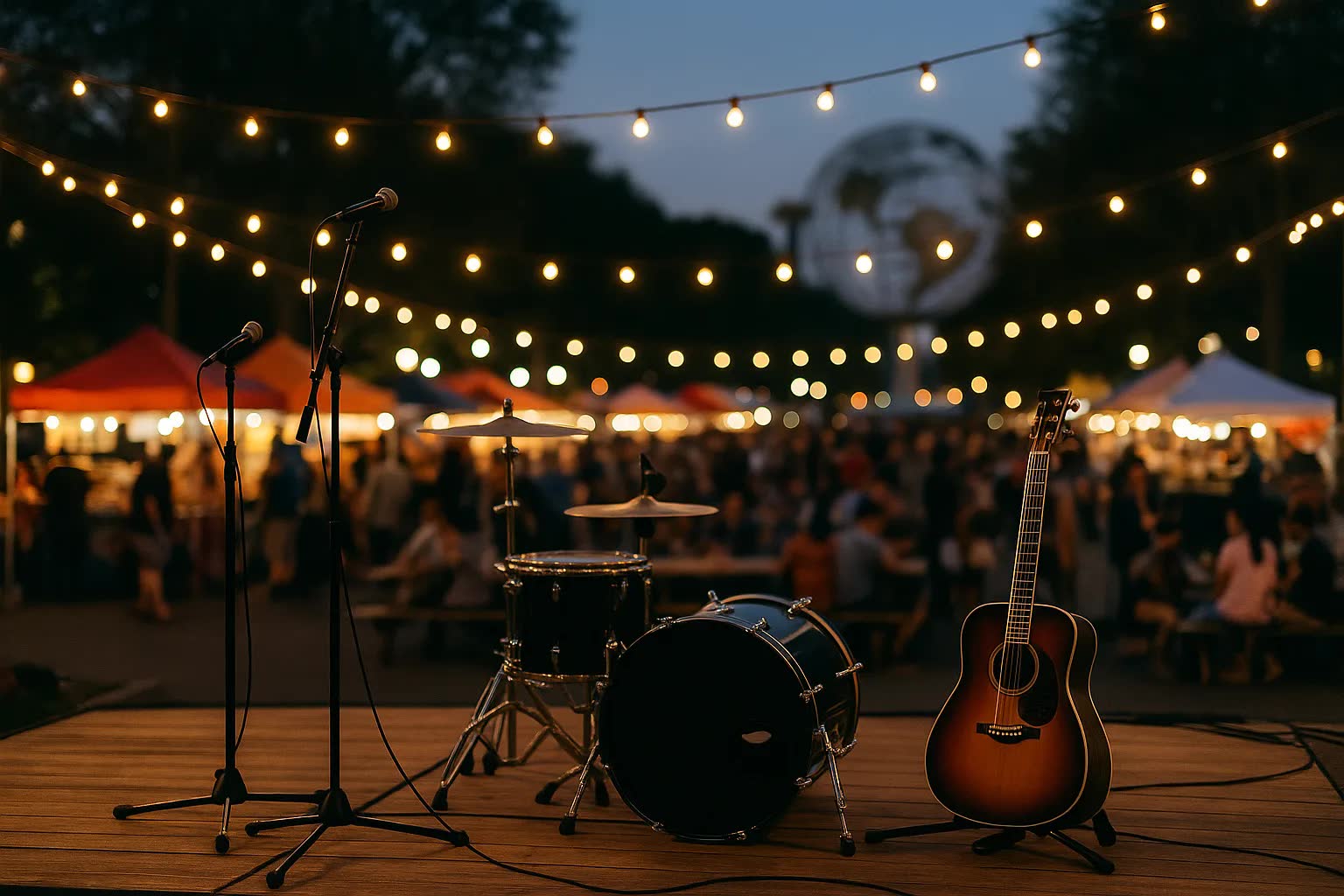
NEW YORK — The Queens Night Market will expand its live music lineup next spring, adding weekly evening stages to spotlight Queens-based Latinx bands and to draw more residents from Corona, Jackson Heights and Sunnyside into the park after dark, organizers announced Tuesday as city leaders push to bolster neighborhood night economies across the borough.
The decision by the nonprofit Queens Night Market Collective follows three seasons of rising daytime attendance at the Flushing Meadows Corona Park market and a cluster of community requests for more culturally specific evening programming. "We built this market around food and community, and music has always been the heartbeat — now we are turning up the volume on Queens talent," said Mariana Lopez, programming director for the Queens Night Market Collective, at a press briefing near the Unisphere. "This is about creating paid gigs for artists, safe late‑night options for families and venues for traditions that already exist in our streets and apartment towers."
The new series will run Fridays and Saturdays from 6 to 11 p.m. on a rotating schedule of two stages — one near the park's central promenade by the New York Hall of Science and a second by Meadow Lake — with programming focused on salsa, cumbia, bachata, reggaetón, Afro‑Latinx fusion and experimental Latinx folk. Organizers said the stages will include choreography-friendly open spaces, bilingual emcees and short artist residencies with local dance schools and cultural centers such as La Finca Cultural Center of Corona and Sunnyside's Luna Hall offering free workshops before shows. "We want people to come for the food and stay for the story, the rhythms and the dancing," said Esteban Rivera, lead singer of Los Picos, a Sunnyside cumbia group that will be part of the initial rotation. "Too often bands from Queens are booked uptown or downtown; this keeps the music close to home."
Merchants in neighboring corridors say they expect immediate benefits. Ana Mendez, who has run Panadería Sol y Sazón on 74th Street in Jackson Heights for 12 years, said weekday dinner service already spikes on market days, and later shows could lengthen the evening rush for restaurants and bodegas. "If the music brings people down Roosevelt Avenue after work, we will sell more rotisserie chickens and empanadas, and maybe hire another baker for the late shift," Mendez said. Community leaders in Elmhurst and East Elmhurst also welcomed the prospect, noting that culturally specific programming has a track record of drawing multigenerational crowds in the borough.
Organizers provided concrete projections for the pilot season: they expect average nightly attendance of 8,000 to 12,000 people on market evenings, with about 20 to 25 bands appearing each month across both stages; 40 distinct Latinx acts from Queens neighborhoods are slated for the inaugural run, and the collective has budgeted roughly $150,000 for music programming, including artist fees, sound production and community outreach. The city Department of Cultural Affairs contributed an initial $50,000 grant, officials said, and market sponsors have committed in‑kind support for staging and security.
Logistics will be heavy on coordination. The Queens Night Market Collective said it has obtained special events permits from the Parks Department and will work with the city’s Office of Nightlife and the 109th Precinct on safety planning and trash management. "We are coordinating with transit agencies to ensure trains and buses can handle later crowds," a senior MTA planner who requested anonymity said, citing ongoing timetable reviews for the 7 train on stadium event nights. Officials said they are exploring supplemental late‑night bus service and crowd control measures at Mets–Willets Point and the Main Street stations to avoid the bottlenecks that can accompany large events at Citi Field and Arthur Ashe Stadium.
Beyond logistics, the expansion is pitched as a cultural equity initiative. The collective said each performance slot will come with a stipend and a technical rider that commits to a minimum sound check length, secure load‑in access and a paid stage manager. "Too many local musicians give their time for free; we insisted artists be paid a living fee and have access to quality sound and lighting," said Mariela Santos, director of La Casa de Cultura Queens, which helped curate the initial Latinx roster. The series will also include a youth showcase on Sunday afternoons to connect high school bands from Jackson Heights and Corona with municipal arts internships.
Not everyone greeted the plan without reservations. Neighborhood groups in Sunnyside and Kew Gardens raised concerns about noise spillover and sanitation on weekends, and some small promoters have questioned whether larger market budgets will crowd out grassroots bookers. "We support local arts, but we want to make sure this doesn't become a late‑night racket that leaves our streets full of trash and our residents sleepless," said James Alvarez, co‑chair of the Sunnyside Neighborhood Alliance. Market organizers countered that expanded trash collection, decibel limits and a 11 p.m. curfew for amplified music are baked into the permit applications.
Funding and sustainability were recurring themes in private discussions with community leaders. Sponsors including a pair of Queens credit unions and two local food distributors have signed on for the pilot season, organizers said, and a promised revenue‑share model will allow a portion of vendor premiums to seed a local arts fund. Bands will be paid per set, with planned rates ranging from $300 for emerging acts to $800 for headline slots; the collective said it will evaluate compensation and crowd patterns after the first six weeks and aim to scale fees if attendance and sponsorships exceed expectations.
The pilot season is scheduled to begin in late April 2026, and organizers said they are already scheduling community listening sessions in Corona, Jackson Heights and Flushing to refine curfew, transit and vendor plans. "If the first season proves what we believe — that Queens residents want nights that reflect our neighborhoods — this could become a regular fixture and be replicated in other parks across the borough," Mariana Lopez said. For many local musicians, merchants and families, the expansion is at once economic lifeline and cultural recognition, a promise that the sounds of Queens will finally have a stage that keeps the borough humming after the sun goes down.