Queens Prosecutor Hit With Ethics Complaint Over Charging Decisions
A newly filed complaint alleges inconsistent charging practices in high-profile cases, drawing attention from elected officials and watchdogs.
By Omar Haddad · March 29, 2026 · 4 min read
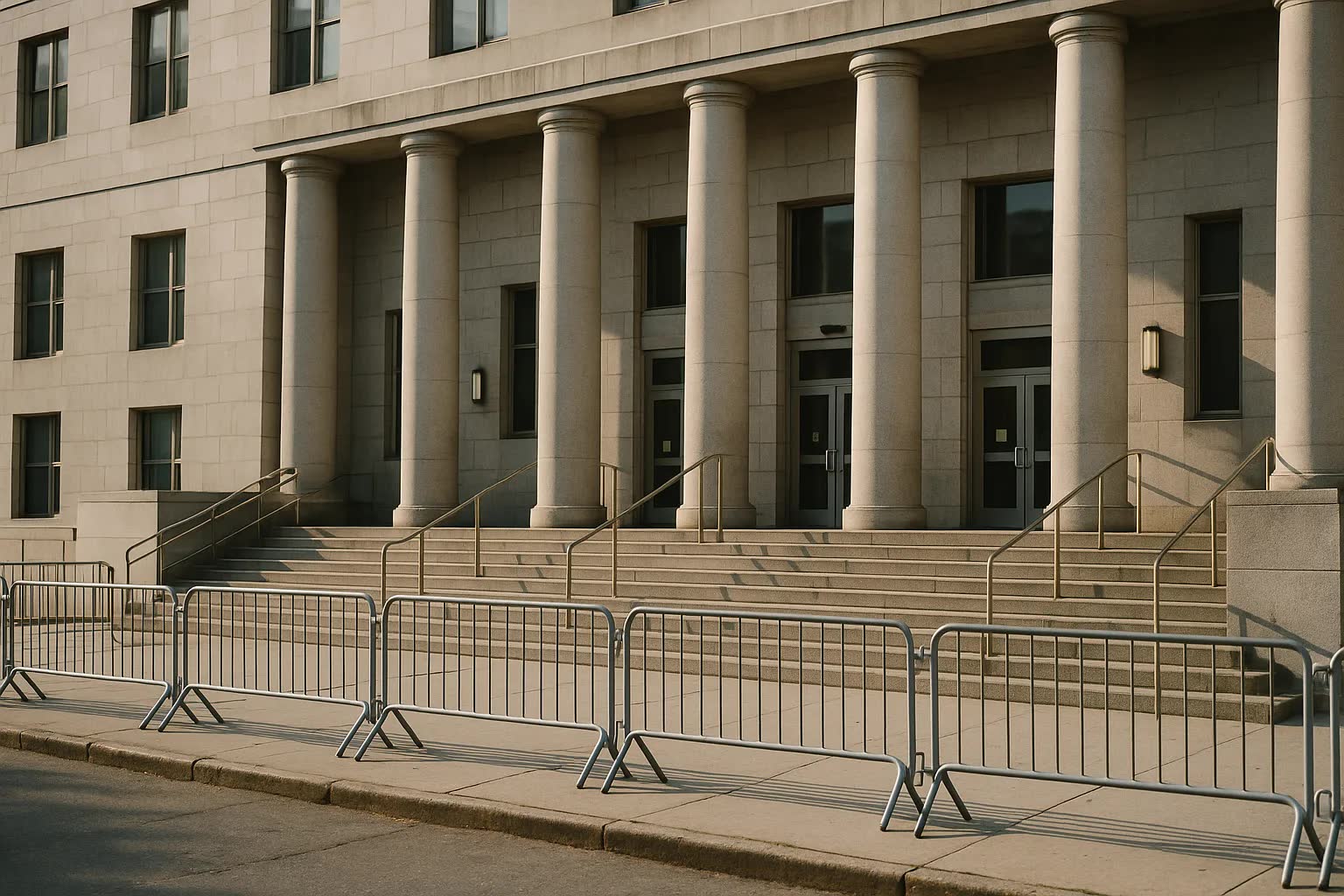
NEW YORK — A newly filed ethics complaint against Queens prosecutor Mara Hughes has thrust the borough's courtroom politics into the spotlight, alleging that charging decisions in several high-profile matters have been inconsistent and politically motivated, with effects most sharply felt in neighborhoods from Jamaica to Astoria and outside the red-brick façade of the Kew Gardens courthouse where many cases are filed and argued.
The complaint, lodged last week by the watchdog group Queens Accountability Project, catalogs a series of cases in which prosecutors initially declined to pursue charges or accepted reduced pleas in matters involving well-connected defendants, while pursuing more aggressive indictments in lower-profile prosecutions involving residents of Jackson Heights and Far Rockaway. It names specific matters — a racketeering referral tied to a development firm in Long Island City, a police misconduct investigation out of Woodside and an assault case in Sunnyside — as examples of alleged uneven application of prosecutorial discretion.
“Our goal here is not to second-guess every courtroom outcome, but to establish whether a pattern of selective charging exists and what drove those decisions,” said Evelyn Cruz, executive director of Queens Accountability Project. “Communities in Elmhurst and Ozone Park deserve answers when charging decisions appear to follow a map of influence rather than the facts of a case.”
The filing was drafted by a small team of former prosecutors and civil attorneys and signed by Marcus Bell, a retired Queens assistant prosecutor who now works as a compliance consultant. “I spent 22 years in that office,” Bell said. “When I see a set of decisions that deviates from what we used to call consistent charging protocols, I have an obligation to raise my hand.”
The document includes concrete figures aimed at showing scale: it says 18 high-profile matters over the past 30 months saw either early declinations or plea agreements that reduced felonies to misdemeanors; it cites a 34 percent decline in felony-level indictments in those 18 matters compared with similar cases in the five years prior, and notes that 11 formal ethics complaints have been filed against the prosecutor's office since 2024. The filing also points to staffing shifts, saying the office handled roughly 1,450 felony cases in 2023 compared with 1,190 in 2025 — a drop the complainants say is not explained by broader crime trends in borough precincts like Forest Hills or Flushing.
The prosecutor's office pushed back in a statement, calling the complaint “a selective and politically tinged review” that ignores internal policies designed to evaluate evidence, witness credibility and community harm. “Prosecutorial discretion necessarily produces different charging outcomes based on the facts before us,” said Liam O'Connor, the office communications director, who added that the office has opened its own internal review into the named matters. “We will cooperate with any legitimate inquiry while defending decisions made in the interest of justice and public safety.”
Elected officials from Queens reacted with a mix of caution and demand for transparency. Councilmember Ana Reyes (D–Jackson Heights) said the borough deserves a clear accounting. “People in Jackson Heights, Astoria and Jamaica all need to feel that our justice system treats everyone equally,” Reyes said. “A pattern like the one alleged here, if true, undermines trust in a borough that already faces deep economic and social divides.” Other officials, speaking on condition of anonymity for political reasons, urged caution and noted the prosecutor has statutory independence to make charging calls.
Legal ethics scholars and former prosecutors described the complaint as serious but not uncommon, and said state-level oversight mechanisms will play a key role. “Allegations of inconsistent charging are the kind of thing oversight bodies are set up to evaluate,” said Dr. Helena Park, director of the Institute for Criminal Justice Reform at Queensborough University. “The complaint appears to use a data-driven frame, which helps, but proving improper motive requires more than case comparisons — it requires contemporaneous communications or a showing that standard protocols were ignored.”
Neighborhood advocacy groups and victims' families said the complaint echoes long-standing frustrations. Nadia Ortiz, co-founder of Survivors First, a violence-prevention nonprofit based near Jamaica Avenue, said survivors often feel outmatched when a case is quietly downgraded. “We’ve had people in Sunnyside and Ridgewood who felt their cases were sidelined,” Ortiz said. “When charges are dropped or dramatically reduced without a clear explanation, it retraumatizes victims and erodes confidence in prosecutors.” At the same time, small-business owners in Long Island City who reported alleged frauds said they feared raising complaints would produce no result if influential defendants drew lighter scrutiny.
The procedural path forward is clear but slow: the state attorney general's office and the court of professional conduct have been notified and, per the complaint, have 30 days to acknowledge receipt and decide whether to open a formal investigation; the watchdog group says it expects a preliminary inquiry within 60 days and a full review could extend beyond six months. The prosecutor's office has scheduled internal briefings and told staff to preserve records tied to the named matters. A hearing where community members, former prosecutors and the prosecutor herself may be called to testify is tentatively expected in late April at the Queens County Courthouse, and legal observers said the outcome could shape proposals on oversight and transparency ahead of next year's local elections.