Queens Reclaims Its Place in Hip‑Hop History
New memorials, tours and youth programs are spotlighting the borough's overlooked contributions to rap and DJ culture.
By Nia Washington · April 23, 2026 · 4 min read
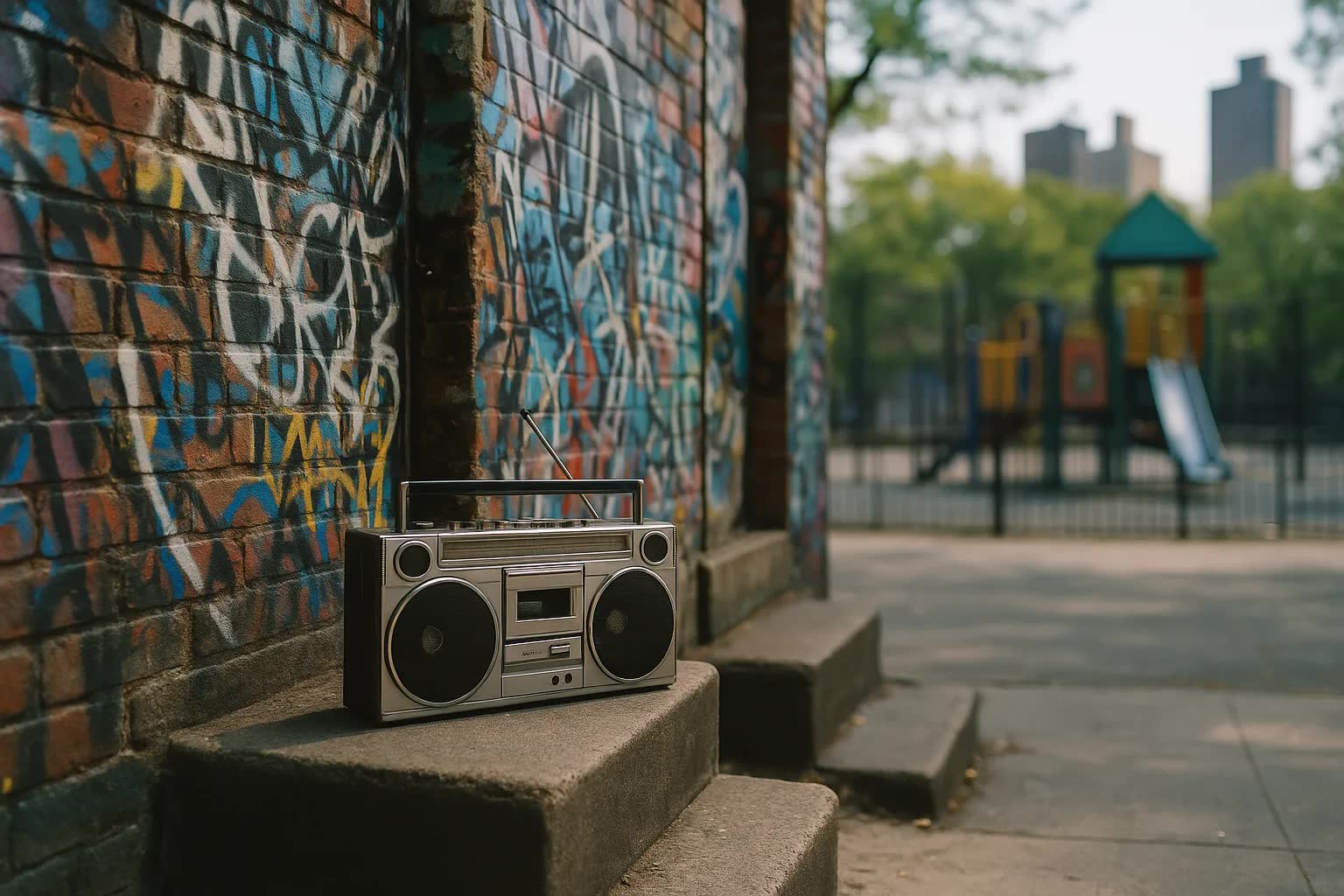
You can hear Queens every time a subway rumbles under Hillside Avenue, a bus idles at Parsons Boulevard or a DJ sets up by the boardwalk at Rockaway Beach; after decades of being footnoted in histories of rap, the borough is seeing a concerted effort to reclaim and formalize its role in the story of hip‑hop, with new memorials, guided tours and youth programs springing up from Jamaica to Astoria and Queensbridge to Long Island City.
In the past 18 months the borough has installed a series of permanent tributes: bronze plaques at key intersections in Hollis and St. Albans, a large mural on the side of a laundromat at Hillside Avenue and 217th Street, and a commemorative plaza at 183rd Street and Jamaica Avenue that features engraved benches and listening posts detailing oral histories collected from longtime neighborhood residents and club owners.
The most visible public-facing project is Queens Rap Routes, a walking-and-bus circuit offered by the nonprofit Queens Beat Collective that runs Saturdays from Jamaica Center through Hollis, past the Queensbridge Houses and ending in Astoria Park, with stops at record stores and home addresses of early DJs and crews. “We wanted something that moved people through the actual geography where culture happened, not a sanitized museum exhibit,” said Malik Ortiz, executive director of Queens Beat Collective. “When you stand on the corner at 212th Street and Hillside and hear the stories, it changes how you understand the music.”
Alongside tours, a cluster of youth programs has proliferated, anchored by Scratch Academy, an after‑school and weekend program launched in a repurposed warehouse in Long Island City that teaches scratching, beatmaking and music business basics to students ages 12 to 19. The academy partners with Queens College and the Queens Library system to provide equipment and credit-bearing internships. “For decades, scholarship has lagged behind practice,” said Dr. Simone Park, associate professor of musicology at Queens College. “These programs are a corrective: they not only teach technique, they teach lineage and context.”
Small businesses and storefront institutions in neighborhoods along the routes say the projects have translated into renewed foot traffic and civic pride. Rosa Alvarez, owner of Rosa’s Bodega on Merrick Boulevard near the new Jamaica plaza, keeps a shelf of local mixtapes and sells copies of the trail map. “People from Brooklyn and Manhattan come through and ask questions,” Alvarez said. “Kids bring their parents to show them where things started — it makes the block feel seen.”
The scale of investment and participation is concrete: since 2023 the city’s Queens Cultural Affairs office and private donors have funded 27 hip‑hop–related projects with a combined $4.2 million; 14 murals and eight plaque installations are complete, and three interpretive exhibits are scheduled to open this summer. Queens Rap Routes logged about 18,400 riders in 2025, up from roughly 1,200 in its inaugural year, and Scratch Academy enrolled 520 students last year with a 78 percent retention rate for multi‑week courses, program data show.
Public transit officials have also begun to accept the idea that subway stations can do more than move people; they can mark history. A senior MTA planner who requested anonymity said the agency is exploring the installation of audio kiosks and curated tile work at several Queens stations linked to the tour, including a planned renovation on a busy transfer hub near Jamaica Center. “We’re looking at ways to tell local stories without impeding passenger flow,” the planner said. “It’s part of a broader push to make stations places of memory as well as movement.”
Academic and archival work has stepped up in parallel. The Queens Historical Society and a newly formed Oral Hip‑Hop Archive at Queens College have collected more than 300 hours of interviews, photographs and ticket stubs from community members, while neighborhood radio stations and low‑power outlets such as WRQS 89.5 have created weekly blocks of programming featuring archival sets and live mixes recorded in Queensbridge basements and Flushing basement studios. Local producers and veteran DJs have begun apprenticeship programs that place teens in real sessions, and a handful of small labels in Forest Hills and Flushing report renewed interest from vinyl collectors and documentarians.
Organizers say the recent flurry is only the beginning. This summer, the borough will host the first Queens Hip‑Hop Heritage Week, timed to coincide with a proposed public symposium and an anniversary block party on Rockaway Beach, and planners are mapping out a second phase of the trail that will extend to Jackson Heights and Ozone Park while creating paid fellowships for former scene participants to serve as tour guides and archivists. If the current momentum holds, Queens leaders say, the borough will not just be a stop on the narrative of hip‑hop — it will be the place where a fuller, more inclusive history gets written and passed on to the next generation.