Queens Studios Adopt LED 'Volume' Stages as Virtual Production Boom Reaches NYC
Local film and TV companies are investing in LED-wall stages that shrink location costs and create new technical careers in the borough.
By Taylor Nguyen · March 15, 2026 · 4 min read
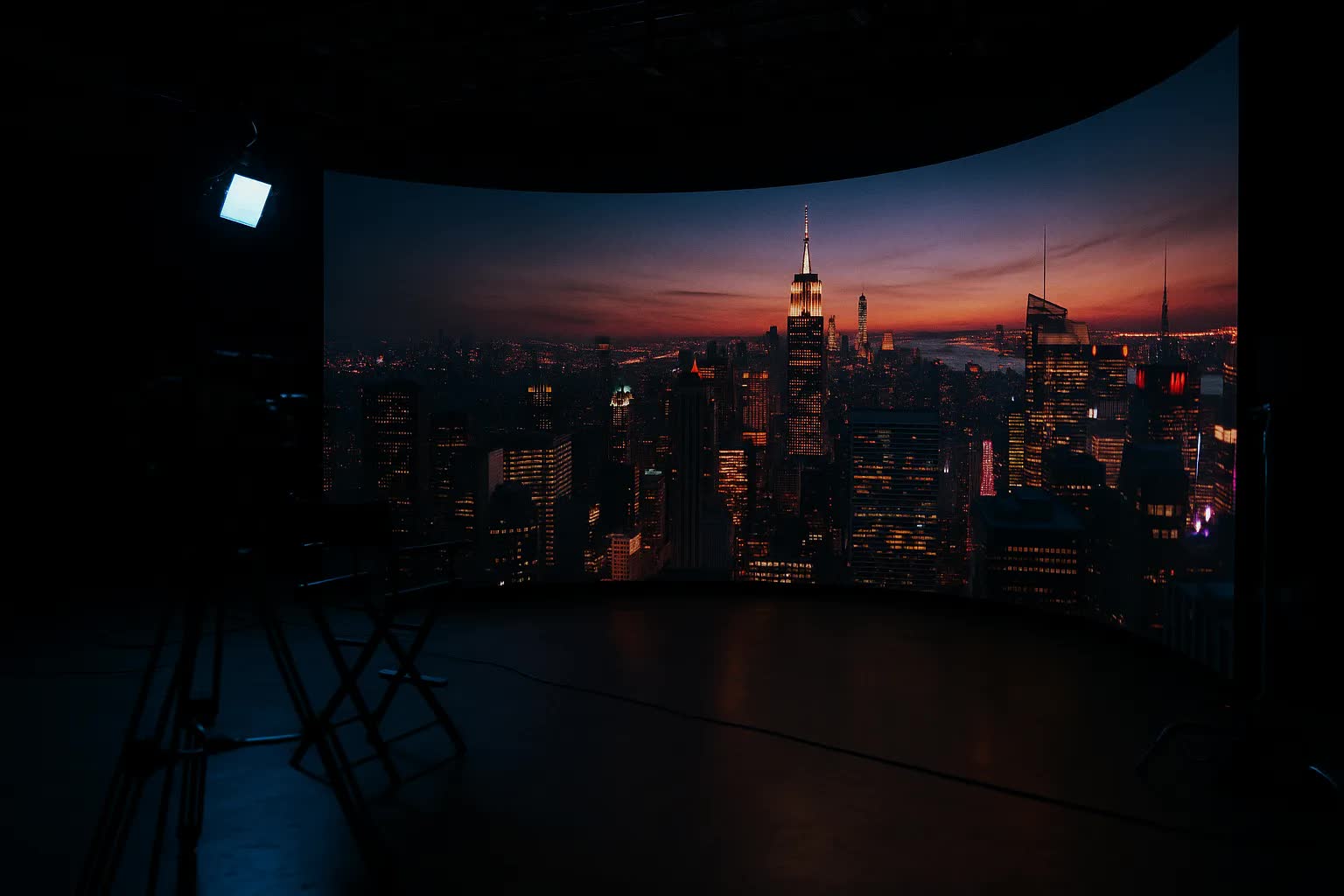
Queens is staking a claim in the next era of moviemaking as local studios install towering LED 'volume' stages that let directors conjure sunrises over Roosevelt Avenue or a stormy skyline over Gantry Plaza without leaving a converted Astoria warehouse; the technology is reshaping how television and film shoots book neighborhoods, cutting location costs and creating a growing pipeline of technical careers across the borough.
The new stages—large, curved walls of high-definition LED panels synced to real-time rendering engines—have proliferated in Long Island City, Astoria and Sunnyside over the past three years, converting old manufacturing spaces into hyper-controlled production environments. Producers say they no longer have to shuttle crews across boroughs to get a single shot, and local businesses from cafes on Steinway Street to bodegas near Jackson Heights report more regular daytime traffic when shoots are running.
"We're seeing productions that used to need weeks of permits and multiple street closures now wrap in days because everything happens inside the volume," said Maria Santos, studio operations director at Queens Harbor Studios in Long Island City, whose 15,000-square-foot stage opened in 2024. "That predictability brings jobs into the community and keeps more of the production spend in Queens."
Beyond convenience, the volumes shift the cost calculus. Queens Harbor and two other operators in the borough estimate that virtual production cuts out-of-pocket location expenditures—permits, temporary power, street rentals and transit logistics—by 30 to 60 percent on typical episodic work, while allowing significant creative control for effects-heavy scenes that would otherwise use green screens or distant on-location shoots.
Concrete numbers underscore the surge: since 2023, Queens studios have launched five LED-volume stages totaling roughly 72,000 square feet of LED surface, backed by some $58 million in private investment, according to studio release documents and interviews. Weekly rental rates for a mid-size volume range from $25,000 to $95,000; studios report an average 45 percent increase in bookings year-over-year, and the facilities collectively employ more than 420 full-time technical staff with an additional 1,100 freelance gigs annually.
The technical tasks are specialized and in demand: LED calibration, real-time compositing, color grading on-set and virtual camera operation. Training programs have emerged to meet the need. "This is the biggest technical shift since sound stages went from silent to talkies," said Darnell Price, training director at LIC Technical Academy, which launched a six-month virtual-production certificate last fall and has placed nearly 70 graduates into entry-level roles on borough shoots.
Neighborhood impacts are uneven. Long Island City, where several volumes sit within blocks of Gantry Plaza State Park, has seen a spike in daytime catering trucks and van parking, while Astoria's Steinway Street corridor reports longer restaurant lines tied to crew breaks. Community groups in Jackson Heights and Sunnyside have pushed for clearer staging guidelines after residents complained about generator noise during overnight preps; studios contend newer volumes reduce diesel generator use but demand high grid capacity for sustained LED runs.
"We welcome the jobs and the creativity, but we need safeguards so residents aren't pushed out by rising rents and constant daytime closures," said Beatriz Mendoza, executive director of the Sunnyside Arts Coalition. Mendoza said her group has opened talks with two studios about community hiring quotas and evening noise curfews to protect small businesses on Queens Boulevard and nearby side streets.
City agencies and studio operators say infrastructure and workforce development are priorities. Queens Harbor Studios and LIC Technical Academy have committed to a joint apprenticeship program that will train 150 local residents over 18 months in LED systems, power management and virtual cinematography; studio executives also meet monthly with a city film office liaison to coordinate street-use schedules. At the same time, operators are investing in grid upgrades and battery-buffer systems to reduce peak power draws that have raised neighborhood concerns.
As the virtual production footprint in Queens grows, so does a sense of momentum and caution: developers are mapping another three volumes proposed for warehouses south of Citi Field and along the waterfront near Hunters Point, and training pipelines are scaling up at community-based technical schools. Whether the borough leverages these stages into stable careers—and mitigates housing and infrastructure strains—will shape Queens's role as not just a backdrop for storytelling but as a center of the technical craft of modern filmmaking.