Red Hook Residents Rally Over Waterfront Development Deal
Community leaders say a private developer's agreement will privatize public shoreline access and weaken existing land-use protections.
By Priyanka Rao · December 24, 2025 · 4 min read
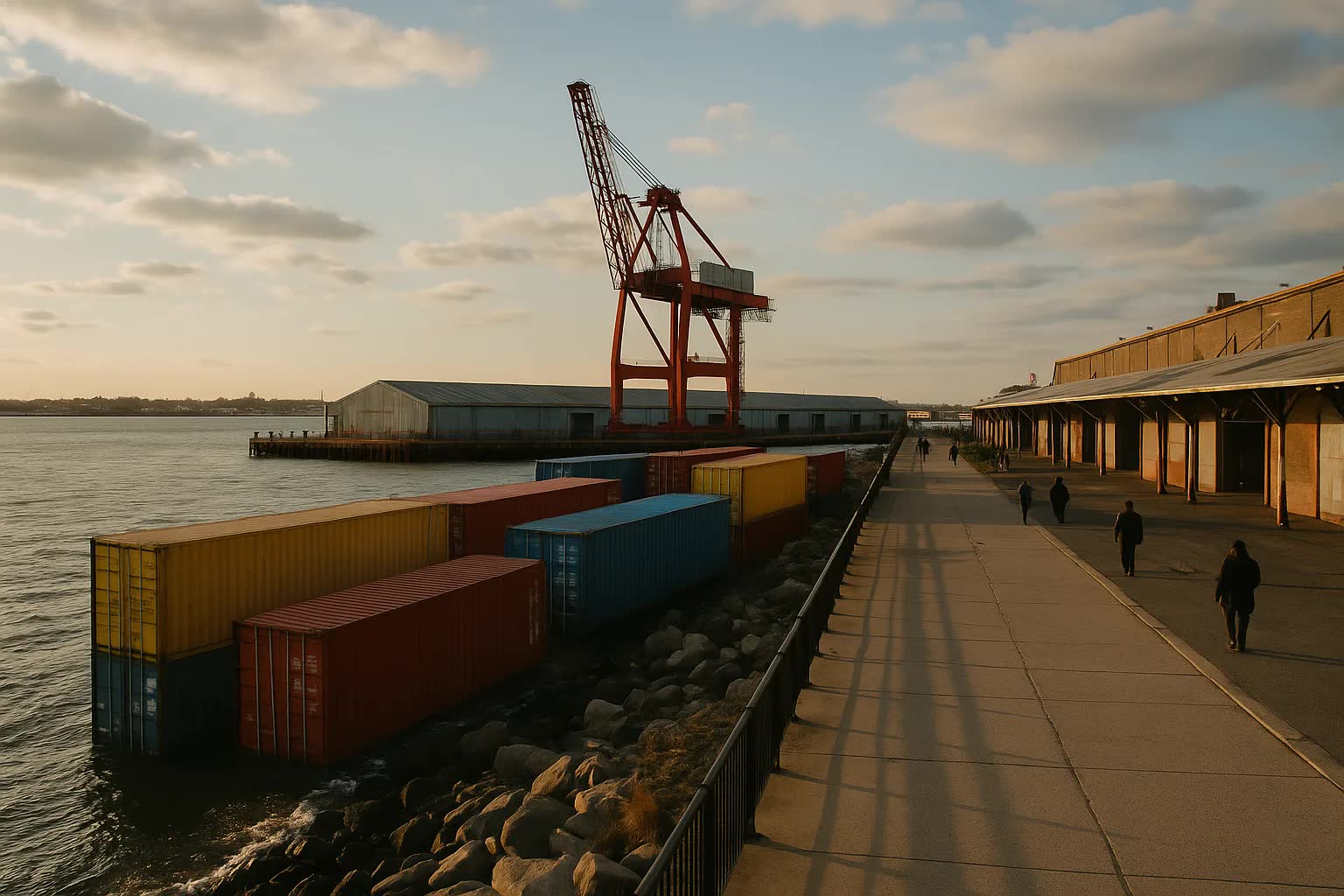
NEW YORK — Hundreds of Red Hook residents packed the steps outside the Brooklyn Cruise Terminal and marched along Van Brunt Street on Tuesday evening to protest a recently announced waterfront development deal they say will hand a swath of public shoreline to a private developer and strip away long-standing land-use protections that have kept the neighborhood’s waterfront accessible and industrial in character for decades.
The agreement, brokered between the City’s waterfront office and Harborline Development LLC, would convert roughly 10 acres of city-owned shoreline around the Atlantic Basin into a long-term ground lease and allow for a mixed-use project that critics say contains large private courtyards, restricted piers and developer-controlled access paths. Community activists say the terms are written in a way that could negate provisions of the Red Hook Special Waterfront District and reduce legal obligations for continuous public access.
“This isn’t redevelopment — it’s privatization,” said Marisol Vega, president of Red Hook Neighbors United, speaking through a megaphone at Tuesday’s rally. “Families who have used Valentino Pier and the Atlantic Basin shoreline for generations will be shut out by gates, memberships and commercialized plazas. We’re not opposed to investment, but not at the expense of our right to the water.”
Harborline Development defended the pact in a statement and at a brief press availability near Imlay Street, arguing the company’s plan would restore contaminated parcels, build a continuous waterfront esplanade and bring jobs to a neighborhood that has weathered disinvestment. “We’re proposing a revitalization that preserves public access while generating stable revenue for the city and creating more than a thousand construction and permanent jobs,” said Daniel Cho, senior vice president of Harborline Development. “This is a partnership, not a sell-off.”
The proposal’s details, released in a draft term sheet last week, include figures that are already fanning dispute: roughly 1.2 million square feet of new development across four buildings, a 99-year ground lease, 400 housing units with 20 percent set aside as affordable by the developer’s calculations, and an 800-foot stretch of continuous promenade that the company says will be public. Activists counter that the draft allows gated offshoots, private piers accounting for 30 percent of the shoreline, and a clause that permits limited hours for public access; petition organizers say more than 4,200 people have signed a protest letter and about 300 demonstrators turned out Tuesday.
The crux of the fight is not just how much open space will be built but which rules will govern it. Red Hook is currently subject to a Special Waterfront District designation adopted in the 1990s that prioritizes maritime industry and public access over residential development and retail. Community leaders say the Harborline deal includes language that would allow the city to reclassify parcels to permit hotel, office and high-end retail uses without a full Uniform Land Use Review Procedure — or ULURP — hearing, effectively bypassing community review.
“Weakening the Special Waterfront District sets a dangerous precedent,” said Dr. Henry Morales, an associate professor of urban planning at Pratt Institute, who has studied New York’s waterfront zoning. “Once the rubric that prioritized working waterfronts and continuous public access is altered for one project, developers will cite that example to chip away at protections elsewhere. You’re not just talking about Red Hook — you’re talking about how a post-industrial waterfront is governed across the harbor.”
At the rally, speakers traced a line between the neighborhood’s history of shipbuilding, the Red Hook Houses public housing complex and small businesses along Columbia and Court streets, and their present concerns. Local restaurant owners and fishermen from the Atlantic Basin said they had not been given detailed plans and worry their mooring rights and commercial activity will be restricted; Lucky Dog Café on Van Brunt Street closed early as staff joined the demonstration. Signs referencing Louis Valentino Jr. Park and the Red Hook Community Justice Center dotted the crowd as residents chanted for binding protections and independent oversight.
City officials said the draft agreement will undergo an environmental review and a public comment period before any binding contract is signed. A spokeswoman for the city’s waterfront office declined to comment on specifics of the lease but confirmed the administration plans to open a 30-day comment period and that a City Planning Commission hearing is expected in January; the City Council would be the ultimate arbiter if zoning changes are necessary. Community organizations, however, have already retained legal counsel and warned of litigation if the plan moves forward without stronger public guarantees.
The fight in Red Hook is likely to turn into months of hearings, petitions and negotiations, and both sides say they are preparing for a protracted process. Harborline officials say they will tweak public-access language and meet with neighborhood groups; activists say they will demand binding easements, enforceable hours and a community oversight board. As winter gives way to a new session of hearings early next year, the waterfront that brought generations of New Yorkers to Red Hook is poised to be the center of a larger contest over who controls the city’s shoreline and how public space is preserved in the next era of development.