Revisiting Hudson River School Sites as Pilgrimage and Protest
Artists and activists are using historic landscape locations to stage performances and debates about conservation and land use.
By Priya Patel · January 10, 2026 · 4 min read
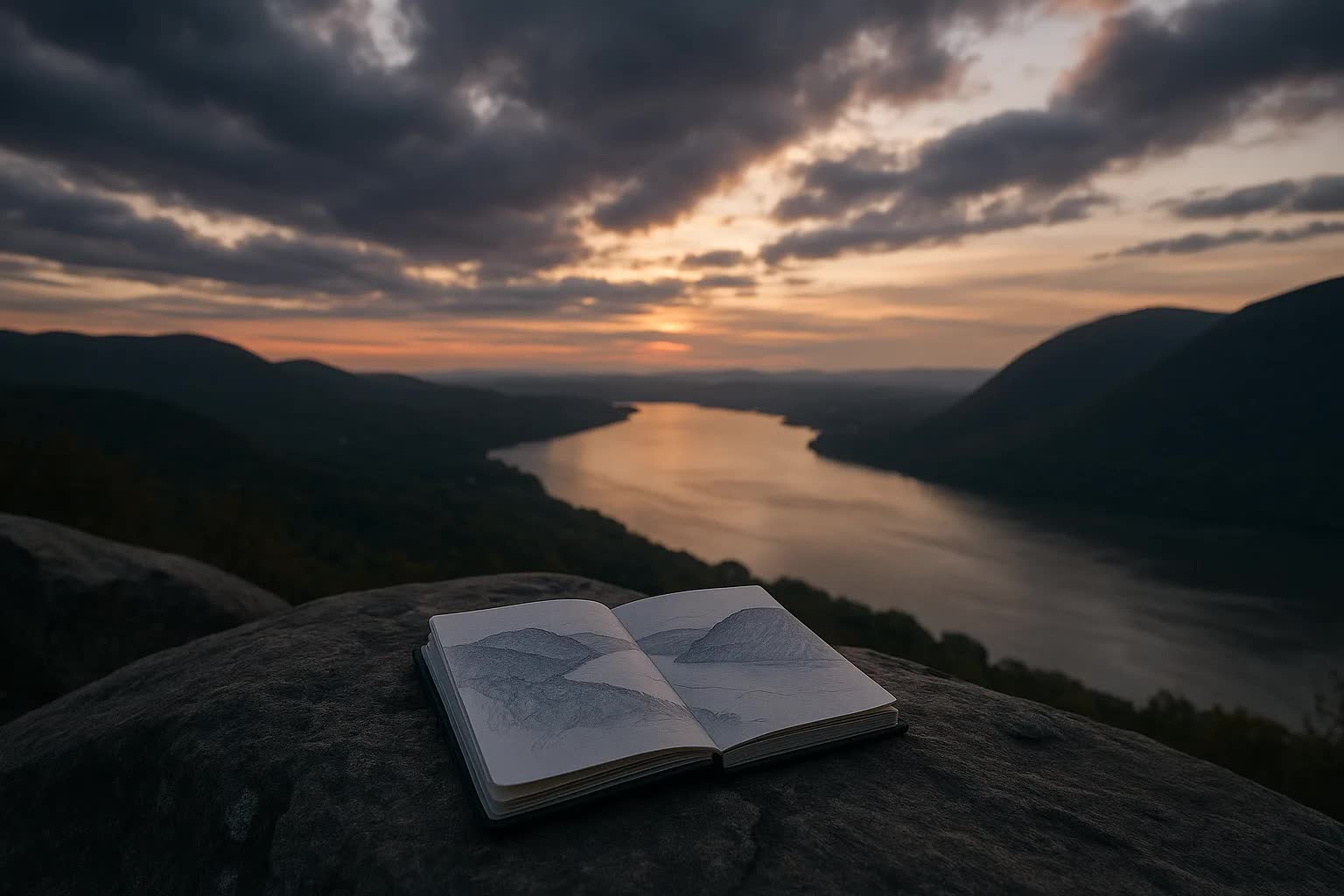
NEW YORK — On a cold morning in late November, a group of painters from Chelsea, a choir from Sunset Park and a dozen activists from Inwood boarded a charter bus at 14th Street and West Side Highway and set off for a cluster of Hudson River highlands where 19th-century landscapists once made pilgrimages; what might once have been an art-historical field trip has evolved into a hybrid of performance, protest and conservation forum that has drawn increasing numbers of New Yorkers eager to recast the River School legacy for the 21st century.
The acts unfolding on bluffs and marsh edges — scripted recitals that incorporate historical texts, site-specific sculptures made from reclaimed storm debris, and rallies that demand more stringent protections for riparian land — are meant as both homage and critique, organizers say, challenging an art history that canonized views while often overlooking Indigenous occupation, industrial impacts and contemporary housing pressures along the river corridor.
Artists and community groups from across the city have been deliberate about recruiting participants from particular neighborhoods, staging smaller pre-performance workshops in public libraries in the West Village and Bay Ridge before moving upriver to locales like Cold Spring and a privately conserved ridge in Beacon; the itinerary helps tie urban concerns — flooding in Red Hook, waterfront rezoning in Williamsburg — to the landscapes once idealized by painters such as those in the River School movement.
“We are retracing their paths but not repeating their blind spots,” said Lena Márquez, artistic director of Hudson Roots Collective, a Manhattan-based nonprofit that has organized five multi-site pilgrimages since 2023. “It’s about bringing the questions they ignored — who worked these lands, who was displaced, who profits from conservation — into the frame of a performance so the audience can’t look away from the actual topography of displacement.”
The interventions have provoked pushback from some preservationists who say that ritualized performances risk damaging fragile ecosystems and romanticizing a past that was never as pristine as oil portraits suggest. Thomas Berger, a senior ranger with the Palisades Regional Park Service, expressed concern about unpermitted installations. “We welcome engagement, but we also have to manage foot traffic and invasive species,” Berger said. “A sculptural piece anchored on a slope can exacerbate erosion if not properly sited.”
The tension has played out in permit offices and town halls: between 2022 and 2025, five municipalities on the east bank of the Hudson recorded a 34 percent increase in permit requests for art and protest-related activities at historic landscape sites, rising to 2,184 applications in 2025; funding for community-led stewardship projects increased to $1.8 million that year after several private foundations and two New York City-based donors created matching grants; meanwhile, park managers reported 67 artist-led events and 42 permit denials tied to environmental concerns during that 36-month window.
Neighborhood-level dynamics have shaped both the form and reception of these pilgrimages. In Red Hook, where rising tides and a fragile economy have made shoreline access a flashpoint, activists staged a processional that included archival readings and a mobile art studio pulled by volunteers; in Greenpoint, a group of illustrators held a silent march ending at the Warsaw Street Mole, using provisional galleries to highlight shoreline histories often erased by industrial zoning. These local inflections underscore how the River School sites have been repurposed as stages for current urban struggles.
Curators and conservators say the performances have spurred new kinds of scholarship and citizen science. At a symposium last spring in Tribeca, the North River Institute released a survey mapping decades of shoreline change alongside paintings and prints, and several artists offered performance scores based on archival research. “When people see a painted vista next to a drone map showing a landfill where a marsh used to be, the ethical questions of preservation become immediate,” said Dr. Miriam Connelly, research director at the Institute. “Art becomes a means of civic inquiry.”
Meanwhile, some artists are using the pilgrimages to model alternative stewardship practices. A project coordinated by a Brooklyn-based landscape designer involved volunteers from Park Slope and Bedford-Stuyvesant in planting native grasses at a restored wetland near Nyack; the team tracked volunteer hours, reporting 1,260 community service hours over six months and a 12-percent increase in native plant survival after the first growing season. These pragmatic interventions, organizers say, make for a different kind of reverence — one that foregrounds care over contemplation.
As the movement gains momentum, stakeholders from city planners to regional conservancies are beginning to negotiate new frameworks: expedited permitting for hybrid art-conservation projects, joint stewardship agreements that bind artists to maintenance plans, and a proposed registry that documents both creative interventions and ecological impacts. For many New Yorkers who have already made the pilgrimage from neighborhoods like Chelsea and Inwood, the work remains unfinished and contested; the next season of events, scheduled to run from spring through early autumn, will test whether the River School’s vistas can host a truly collaborative future that balances creative expression, historical accountability and environmental stewardship.