Rikers Closure Timeline Slips as Island Redevelopment Debates Intensify
City officials and community groups are at odds over housing, public safety, and the fate of the waterfront complex once the jail closes.
By Evelyn Torres · January 10, 2026 · 5 min read
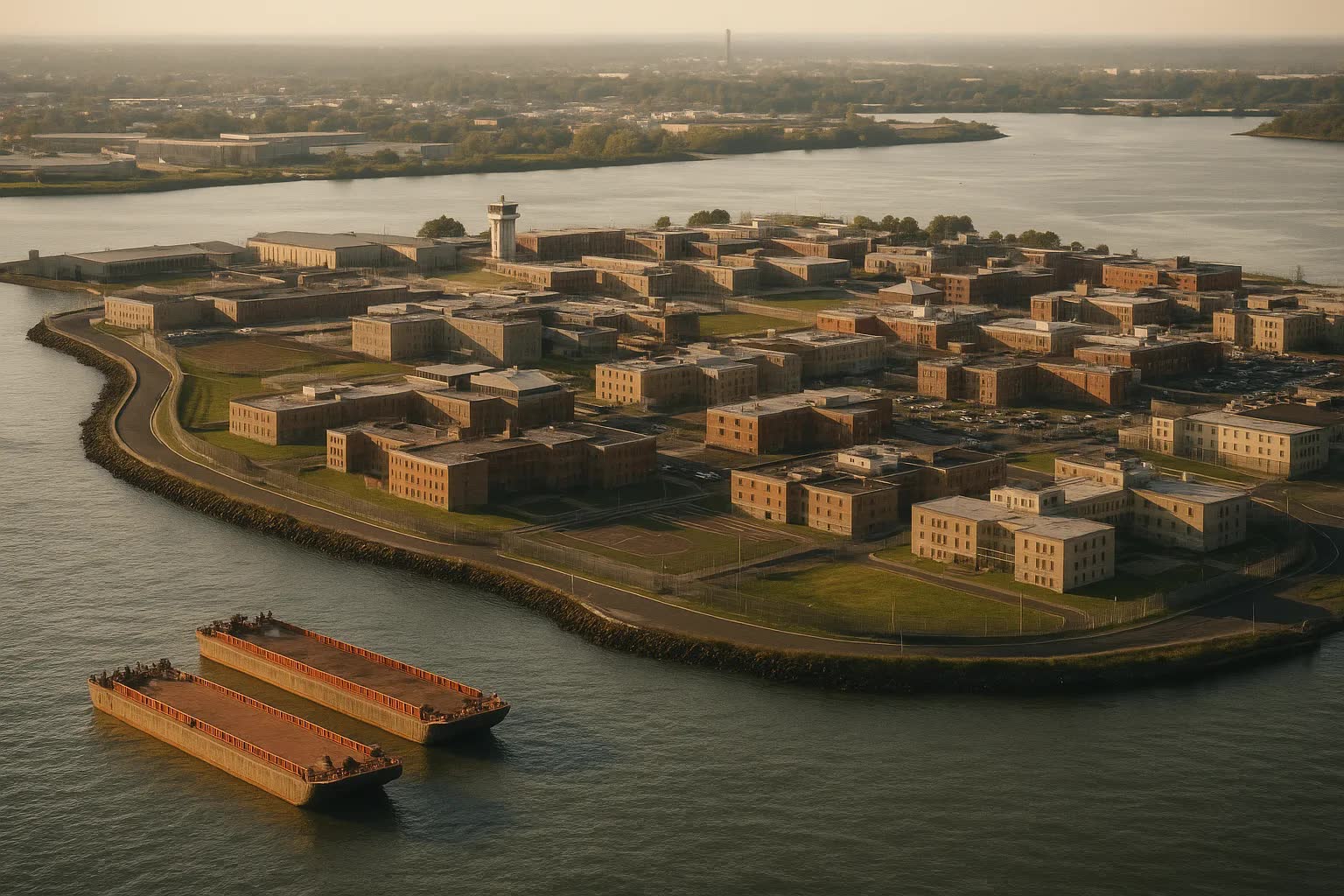
NEW YORK — A yearslong campaign to shut Rikers Island and remake the East River site into housing, parks and civic space has slipped again, city officials confirmed Friday, deepening a fractious debate among neighborhoods from Astoria to the Lower East Side over what should replace the notorious jail complex and when inmates will be moved off the island.
The delay — officials now say final closure is unlikely before 2030 — comes after construction bids ran over budget and engineering teams flagged unexpected utility and flood-protection work around the island’s perimeter, prompting a reassessment of sequencing that will push back promised borough-based jails and the broader redevelopment timeline, city sources said. "This is a complicated, interagency puzzle that requires more time than anyone hoped for," said Daniel Kwan, deputy commissioner for facilities at the Department of Correction. "We are not going to move people into inadequate spaces simply to meet an artificial deadline."
Community groups and elected officials outside the mayor’s office said the slip is evidence of poor planning and a disregard for low-income neighborhoods that would bear the burdens of new jail facilities while receiving too little of the promised housing and jobs. "We were told Rikers would close and our waterfront would finally be for people, not cages," said Marisol Vega, co-chair of the Friends of Randall's Island Coalition, citing the group’s membership in East Harlem and Astoria. "Now the clock keeps getting pushed back and so do the affordable homes we desperately need."
City data compiled for an interagency briefing last month showed the island currently houses about 3,600 detainees, down from roughly 10,000 a decade ago; the closure effort has already consumed roughly $1.2 billion in planning and preliminary construction costs, officials said. The updated budget for demolition, site remediation and waterfront resilience measures is estimated at $2.1 billion, with an additional $6.3 billion earmarked for redevelopment and new housing and infrastructure — a total program cost of about $8.4 billion. The city’s draft plans envision roughly 12,000 housing units on the island and adjacent parcels, with 45% set aside as permanently affordable under current proposals, and projections estimate the redevelopment could create 5,400 jobs during construction and 1,200 permanent positions when complete.
Those numbers have done little to calm neighborhoods jockeying for influence. Officials at the Department of Citywide Administrative Services and the mayor’s office argue that the extra expense is driven by necessary improvements — floodwalls, new sewer interconnects along Vernon Boulevard and upgraded ferry landings at the Queens side — that will protect future residents and the rest of the East River shoreline. "We cannot rush a transformation of this scale without ensuring it is safe, equitable and resilient for decades," said Lina Morales, deputy mayor for housing. "Delaying the closure by a couple of years is a difficult decision, but it's the responsible one given what engineers are finding below grade."
Housing-rights organizers and some local community boards, however, say the city’s recalculation obscures the political choices at play, pointing to developer proposals for market-rate towers on stretches near the Queensboro Bridge that they characterize as likely to displace lower-income renters in surrounding neighborhoods such as Long Island City and Astoria. "We need legally binding commitments, not presentations," said Aisha Campbell, executive director of Housing Now NYC, a nonprofit that has led tenant campaigns in the Bowery and East Village. "If the city is going to take a decade to build, those years should buy real affordability and community benefits for neighborhoods that have already sacrificed too much."
Public-safety advocates, defense attorneys and smaller nonprofits worry about the interim logistics of keeping detainees safe while the island remains open. The original borough-jails plan would consolidate beds in facilities clustered near existing courthouses in the Bronx, Lower Manhattan and Queens, but some proposed sites — including a location near the Astoria waterfront off Shore Boulevard — have drawn opposition from residents and local business owners. "Transferring people into jails that are waterfront-adjacent without adequate transportation and programmatic space risks more harm," said Jerome Liu, a public defender with Bronx Legal Aid. "We need a clear, bound timetable and binding protections for detainee services during the transition."
Legal and procedural hurdles have already slowed progress. Three lawsuits filed by a coalition called Families for Safe Communities asked a state court to require a comprehensive social impact assessment; a judge in Manhattan granted a preliminary injunction that delayed site demolition by nine months while the court reviews the filings, according to court records. Meanwhile, environmental reviews under the State Environmental Quality Review Act and updated FEMA flood maps have required new mitigation proposals for any housing or infrastructure along the East River esplanade and around Ward’s and Randall’s Island, adding months to the permitting process.
Neighborhood commerce built around the East River waterfront is watching closely. Restaurant owners on Vernon Boulevard in Long Island City and fish markets on Hallets Cove in Astoria said that prolonged uncertainty has chilled investment, while community groups in East Elmhurst and Queensbridge said the city has not offered sufficient guarantees for local hiring on major construction contracts. Ferry operators who run routes to Roosevelt Island and the Bronx report early discussions with city planners about expanded service if the island redevelopment moves forward, but warned that ridership projections and docking improvements would require further capital funding and coordination with the MTA’s broader Queens transit plans.
For now, city officials say the next steps will include a revised master plan to be released in late spring, additional public hearings in community boards from the Lower East Side to Astoria and a renewed bid process for demolition and resiliency work this summer. Community advocates and legal challengers have vowed to keep pushing for deeper affordability guarantees and stronger oversight. "The island’s fate will define waterfront policy for decades," said Marisol Vega, returning the conversation to the human stakes. "If the city is serious, it will show it by the terms it sets, not the calendars it moves."