Salsa's Crossroads: Community Halls Keep the Bronx's Dance Traditions Alive
Grassroots social halls and volunteer teachers are preserving dance styles even as mainstream venues move uptown.
By Luisa Pereira · December 4, 2025 · 4 min read
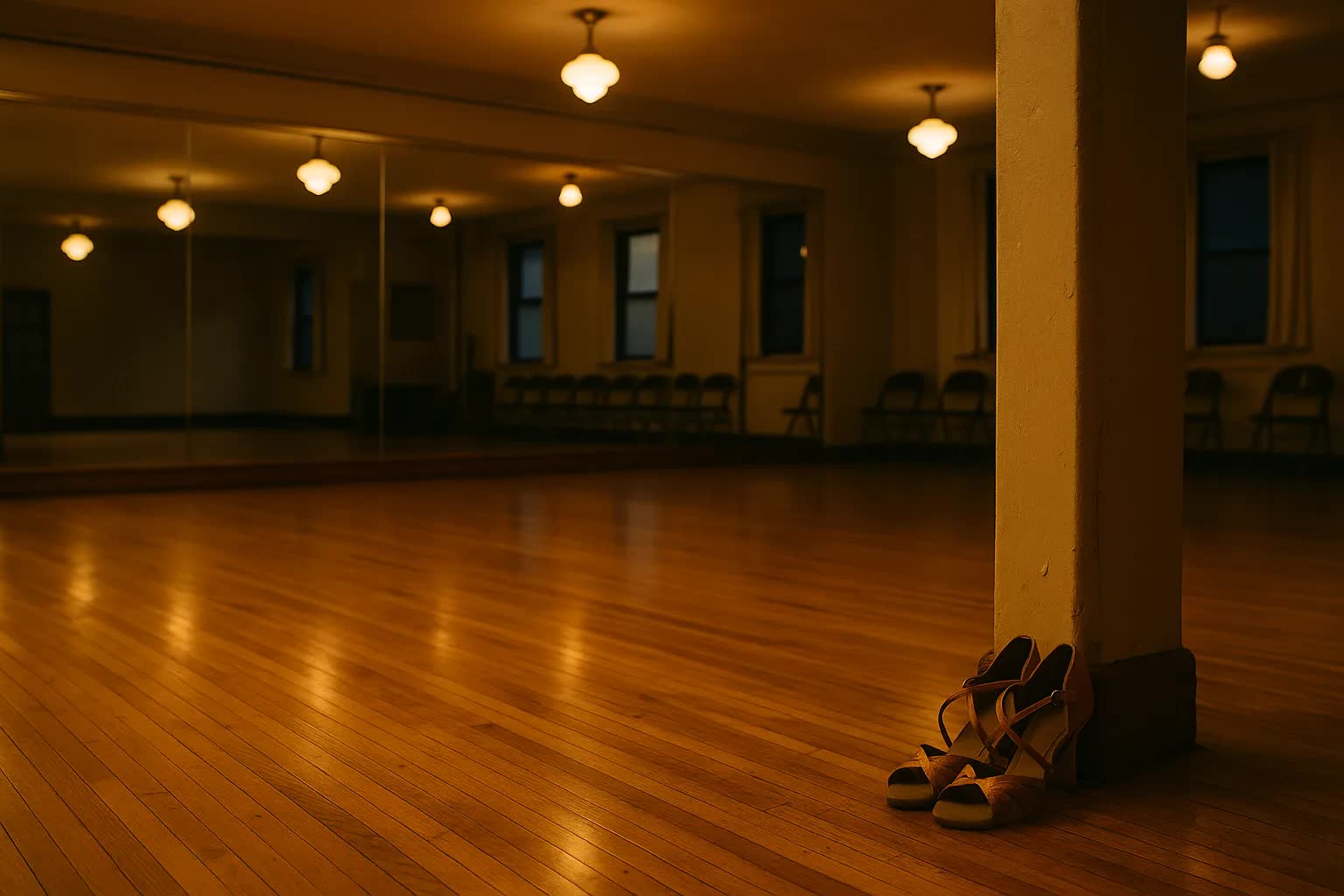
NEW YORK — December 4, 2025 — On a cold Tuesday night in the South Bronx, the wooden floor of La Casa del Barrio on East Tremont Avenue reverberates with clave and tapping shoes, a sound that has threaded families and block parties from Hunts Point to Riverdale for generations. As concert halls and commercial promoters move salsa nights uptown to Manhattan's theater districts and luxury hotels, grassroots social halls in neighborhoods like Mott Haven, Highbridge and Fordham are quietly sustaining the dance traditions that long defined Bronx street culture, teaching both choreography and a way of belonging.
Salsa's roots in the borough are well known to dancers here: a bricolage of Puerto Rican, Cuban, Dominican and New York influences that evolved in community centers, church basements and day-long picnics. The social hall model — a multipurpose room that hosts quinceañeras, community meetings, domino nights and salsa socials — has always been less about spectacle and more about continuity. For many Bronx residents, the halls are where elders pass down timing and stories, and where teenagers first learn to navigate grown-up spaces with rhythm and respect.
One of the busiest of those halls, Bronx Social Hall on Third Avenue in Mott Haven, runs open-air practica and formal classes in equal measure. The hall was founded in 1992 inside a refurbished storefront near the 145th Street Bridge and operates on a shoestring: sliding-scale fees, a modest city cultural grant, and an army of volunteers. On a recent Saturday, instructors paced a room of 40 students — ages 12 to 72 — drilling cross-body leads and timing, while a volunteer DJ balanced classic boasts with timba and salsa dura.
Isabel Rivera, 62, a retired public school teacher who has volunteered as an instructor at Bronx Social Hall for 18 years, sees the work as stewardship. "We teach because the music is our family and because the kids who come here need a place to learn who they are," Rivera said. Rivera, who lives in Tremont and still keeps attendance sheets on paper, organized a free youth intensive last summer in partnership with PS 95 and says the payoff is not only technique but the stability the hall offers youth on weekend nights.
Concrete numbers illustrate the stakes: a 2020 Bronx Cultural Survey conducted by the fictional Bronx Arts Partnership estimated roughly 45 grassroots social halls operating borough-wide in 2000; by 2025, neighborhood organizers estimate that number has fallen to about 26. Weekly salsa classes and socials across the borough now total approximately 80 sessions, drawing an estimated 1,800 participants per week. Median commercial rents near transit hubs like Fordham Road and the Grand Concourse have risen by roughly 68 percent in the past decade, according to a local housing study, squeezing low-margin cultural venues and prompting a 22 percent increase in permit denials and noise complaints citywide for community halls.
The migration of more polished salsa nights uptown has changed the economics of the dance form. Promoters routinely book larger acts in Manhattan theaters and rooftop lounges, where ticketing, VIP packages and higher bar revenue are possible. That leaves the Bronx halls to offer authenticity and access rather than profit. "We can't compete with a 1,500-seat theater, nor should we try to be that," said Sergio Alvarez, director of Bronx Social Hall. "Our value is in the apprenticeship. We teach footwork, yes, but we also teach how to be in community when the music stops."
Despite financial pressures, the halls survive through adaptability. Many have doubled down on intergenerational programming and school partnerships, bringing instructors into after-school programs and offering free monthly practica for teens. Some halls have negotiated shared schedules with churches and Vietnamese and West African community groups that use the same space at different hours; others run micro-business ventures such as weekend empanada sales and salsa-making classes that cross-promote dance nights with food culture. Those efforts have expanded audiences beyond traditional circuits, attracting newcomers from Inwood and northern Manhattan.
Yet the threats are persistent. Landlords eyeing redevelopment, zoning changes that favor commercial over community uses, and tighter enforcement of noise ordinances all complicate long-term planning. Small halls also face logistical hurdles when applying for city grants that favor fiscal sponsorship and nonprofit status most grassroots groups lack. "We have the cultural know-how but we lack the paperwork and the lobbyist," said Daniela Cruz, 34, a Bronx-born choreographer and organizer who helps smaller halls with grant applications. Cruz has helped form a loose coalition, the Bronx Salsa Collective, to share resources and training.
The human payoff is evident on the dance floor. On any given night a grandmother in a floral dress will correct a teenager's timing; a volunteer DJ will crank a classic track to test a newly learned rueda; young men in baseball caps will learn to lead salsa without aggression. Such moments produce a civic fabric that statistics can't fully capture: reconciliation across generations, communal joy after hardship and a continuing space for Spanish-language music and Afro-Latin rhythms in a city that often prizes the new over the durable.
Looking ahead, organizers say preservation will require both municipal support and creative community solutions: more flexible grant structures, modest property tax abatements for cultural spaces, and borough-wide programming that brings audiences to Bronx halls rather than pulling halls into expensive Manhattan markets. For now the beat continues on East Tremont, Third Avenue and dozens of other rooms where volunteer teachers, aging DJs and scrappy organizers insist that salsa remain not a commodity but a shared inheritance — and they are already planning a borough anniversary tour next summer to prove it.