Seltzer and Soda Fountain Comebacks Refresh Queens Diners
Local owners are restoring classic fountain counters with house-made sodas and modern, locally sourced flavors.
By Malik Johnson · December 25, 2025 · 4 min read
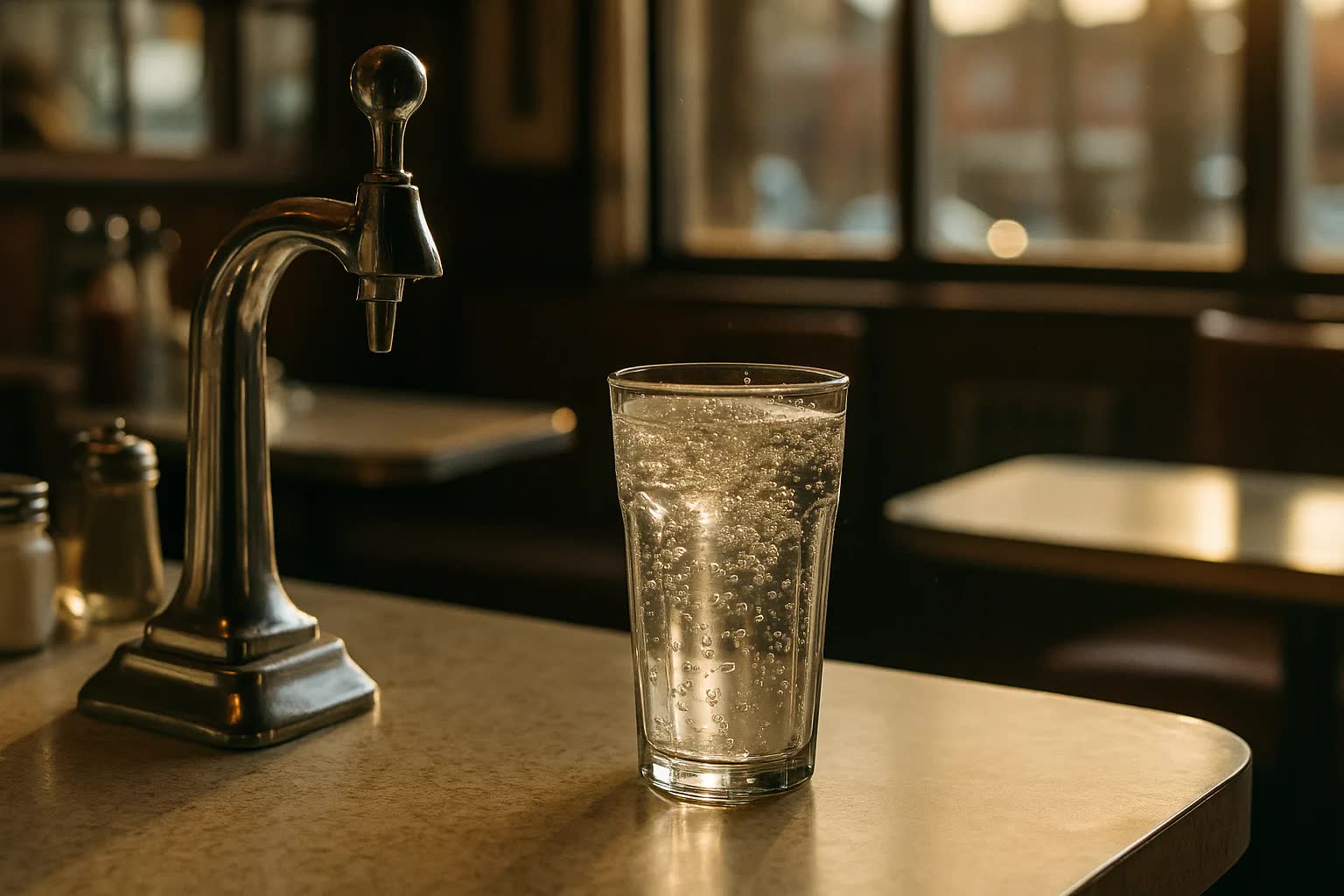
NEW YORK — On a cold December morning, the clang of a bar spoon in a metal mixing tin and the hiss of a carbonator are becoming as familiar in Queens neighborhoods as the buzz of the 7 train and the rumble of trucks along Queens Boulevard. Across Jackson Heights, Astoria, Flushing and Long Island City, independent diner owners are restoring soda fountain counters and installing glass-front seltzer displays, marrying chrome-and-leather nostalgia with house-made syrups and locally sourced flavors to draw longtime residents and newcomers alike into a revived ritual of sweet, fizzy refreshment.
At Rosa's Fountain on 37th Avenue in Jackson Heights, owner Maria Alvarez built a soda counter where an unused booth had sat since 2011, rehabbing the original marble slab and installing a new triple-head carbonator. "People come in here and tell me stories about the soda jerks they used to know; we wanted to give them a place to tell those stories again," said Alvarez, who previously ran a catering business and opened the diner in April with a menu of tamarind-ginger seltzer and a cherry-vanilla cream soda made from milk-alternative foam. Her fountain, a narrow, gleaming anchor facing the street, has become a midday gathering point for varied neighborhood life.
Behind the counters, the work is part chemistry, part local sourcing. Proprietors are steeped in small-batch technique: steeping hibiscus and yerba mate, fermenting fruit syrups with minimal cane sugar, and infusing seltzer with cold-pressed citrus from vendors in Flushing's markets. Several operations have formalized supplier relationships with the Queens County Farm Museum and a handful of rooftop urban growers in Sunnyside to obtain seasonal herbs and edible flowers. Bartenders at the counters describe the process as a continuum between the soda jerk trade and today's craft beverage movement, swapping standardized syrup cubes for house reductions and botanical extracts.
The comeback is measurable. Since 2022, an estimated 12 independent soda fountains have re-opened or relaunched in Queens, according to a survey compiled by the nonprofit Queens Eats, with another six projects in permitting. The average new investment reported by owners was $32,000 for counters and carbonation equipment, and several operators say they sell between 300 and 600 bottles or fountain servings per week during fall and winter months, rising to as many as 1,200 a week in summer. One longtime diner owner reported a 28% year-over-year increase in beverage revenue after installing a restored fountain counter in 2024.
In Astoria, Omar Patel, general manager of Sunnyside Seltzer Co.'s new Astoria outpost near Ditmars Boulevard, points to community building as the primary impetus. "We're not trying to out-craft the breweries or coffee shops — we're trying to be the soda counter where neighbors run into each other," Patel said, standing behind a row of cobalt-blue bottles filled with grapefruit-basil seltzer. Sunnyside's menu also lists a line of zero-sugar sodas made with monk fruit and botanical bitters, a nod to health-conscious patrons who want the ritual without the sugar spike.
Customers reflect Queens's layered demographics, from seniors who remember the original mid-20th-century soda fountains to teenagers who treat the counters as a retro-chic backdrop for social media. "I used to come here with my father in the 1960s," said Eleanor Sokol, 78, a Forest Hills resident who now brings her granddaughter to Rosa's on weekend mornings for orange blossom seltzer. Younger patrons add their own influence: they request falooda-style rose sodas modeled after South Asian street drinks in Jackson Heights and guava-and-lime fizz inspired by South American flavors in Jackson Heights' nearby businesses, prompting menus to expand beyond the classic cola and phosphate drinks.
Owners say the revival also creates jobs and new partnerships. Several diners have hired traditionally trained soda jerks and pair their counters with local bakeries and ice cream shops that create floats, while others contract with small Queens breweries for carbonation and kegging solutions. Vintage carbonators purchased on the secondary market range from $2,500 to $6,500; custom stainless-steel counters run another $8,000 to $18,000 depending on configuration. Operators estimate that reopening or installing a soda fountain adds at least two full-time jobs and several part-time positions to a neighborhood business's payroll.
Regulatory hurdles and rent pressure remain hurdles. Health department permits for soda fountain operations require separate approvals for CO2 systems and prepped syrups, and landlords in transit-adjacent corridors such as Queensboro Plaza and Vernon Boulevard have pushed back on structural retrofits. To manage those costs, some entrepreneurs have turned to pop-ups and shared commercial spaces: Ridgewood Soda Works, for example, rotates its fountain through weekend markets and a commissary kitchen on Myrtle Avenue before committing to a permanent counter. The approach gives operators time to test flavors and build a customer base without the full capital expense.
Cultural and culinary historians in Queens say the reemergence of these counters fits a broader nostalgia for tactile, neighborhood-centered commerce, but they also stress the hybrid character of the new soda movement. "This is not a museum piece — it's living history that people are remaking for contemporary tastes," said Darnell Hughes, a food historian and proprietor of a small pop-up called Ridge Soda in Ridgewood, who has advised several owners on archival counter design and period-appropriate signage. He notes that embracing dietary trends, such as low-sugar and plant-based options, has allowed the counters to appeal to a broader cross-section of the borough.
Looking ahead, owners and advocates say the soda fountain resurgence in Queens will continue to evolve into a small-business ecosystem this spring, with plans for a boroughwide seltzer trail, coordinated tasting events with the Queens Night Market and apprentice programs to train a new generation of soda craftsmen. Several proprietors are exploring expansion into small bottling runs for local shops and neighborhood farmers markets. If the past year is any indication, the fizz won't fade: instead, Queens's counters are poised to carbonate the borough's memory and its menus for years to come.