Shelf to Stage: Staten Island Playwrights Adapt Library Archives
Writers are mining local historical collections to craft dramas that open conversations about identity, migration and neighborhood memory.
By Noah Fitzgerald · February 9, 2026 · 4 min read
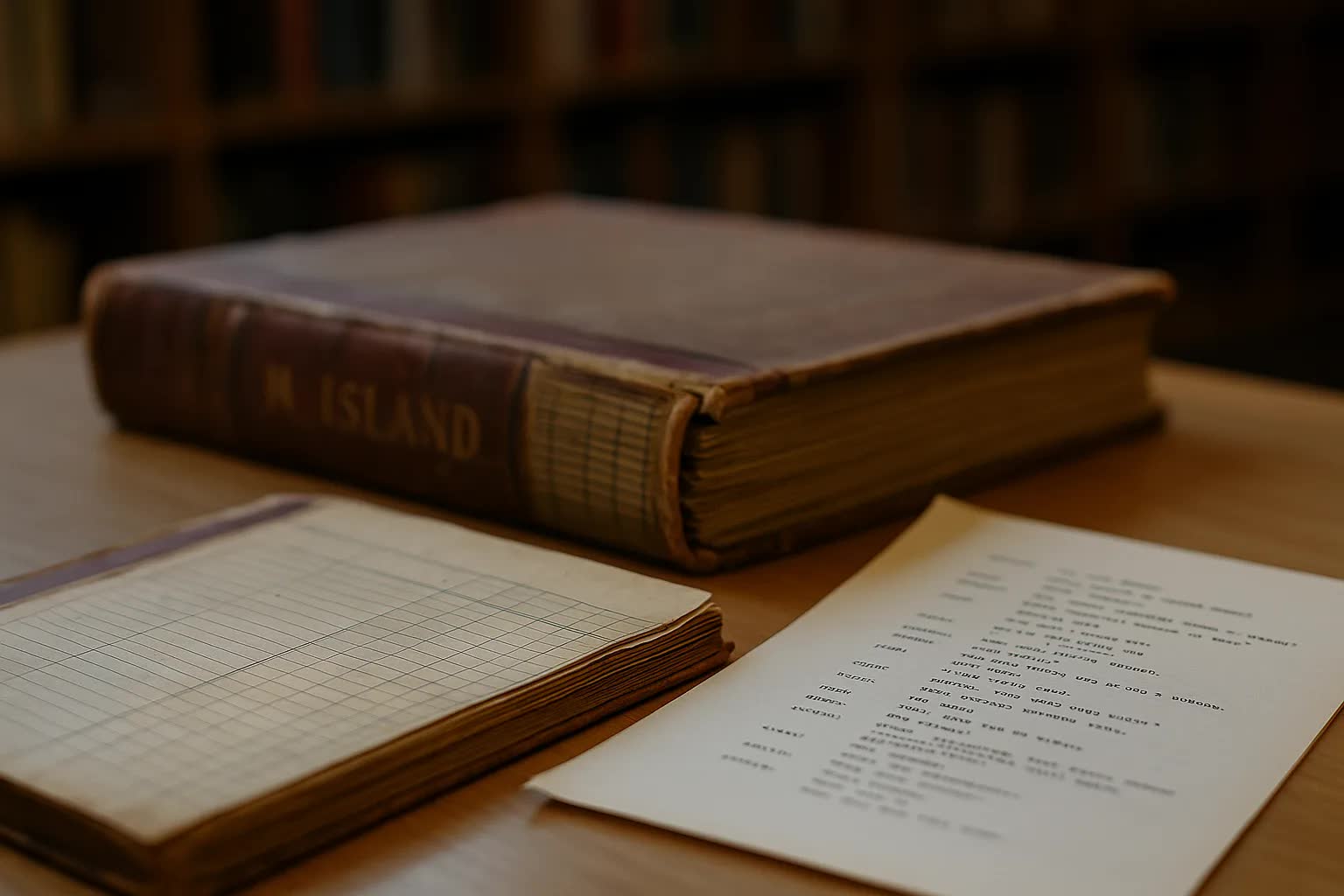
NEW YORK — On Staten Island, where the ferry docks at St. George and neighborhood storefronts still trade stories in the language of block parties and bodegas, a small but determined cohort of playwrights is turning the borough's library archives into raw material for the stage, using property ledgers, ship manifests and community newsletters to probe identity, migration and what memory does to a neighborhood. The initiative, which folds local history into rehearsal rooms from Tompkinsville to Tottenville, aims to make theater a civic tool as much as an art form, sparking conversations about who belongs in a rapidly changing borough.
The project, launched last year by FerryHouse Theater in partnership with the Staten Island Archive & Research Center and a network of community branches, pairs nine emerging playwrights with archivists and neighborhood elders to comb through collections at Snug Harbor, the Richmond County clerk's records and the stacks of the Staten Island Public Library. "The archives are full of living people whose names have been reduced to dates and parcel numbers; we give those entries a voice," said Marcus Lee, archivist at the Staten Island Public Library, who has been assigned to the program full time. Producers say the aim is not to museum-ize memory but to dramatize its friction points.
Playwrights involved in the program come from across the borough and write in different registers. Aisha Gomez, a Tompkinsville native, adapted a series of 1940s ship manifests and a family of seamstresses' letters into a play called Bones of Rent that traces a Puerto Rican family's arc from economic migration to second-generation restlessness. Jermaine Carter, who grew up in Stapleton, mined 1970s eviction records on Victory Boulevard and oral histories recorded at the Oakwood community center for a piece about displacement and civic services. Rehearsals are staged in a range of venues, from a storefront on Bay Street to a former bank on Richmond Terrace converted into a rehearsal studio.
The materials being used vary widely. Playwrights have pulled digitized photographs from the Alice Austen House collection, property transfer documents from the Richmond County clerk, and microfilmed editions of a once-weekly neighborhood paper printed on Victory Boulevard and distributed at ferries. "We treat archival work like reporting," Lee said. "There is an ethical layer: we verify dates, cross-reference family names and when possible we get consent to dramatize private letters. Archives don't speak for themselves; people do." That approach has required new workflows between librarians, lawyers and dramatists.
The numbers behind the program are concrete. The Shelf to Stage initiative supported 12 playwright commissions and six staged readings in its first 18 months, reviewed roughly 4,600 archival items, and digitized 1,200 documents for public access. Attendance at readings in St. George and Clifton averaged 145 people per performance, a 37% increase over the borough company's historic audience size, and the program was seeded by a $125,000 grant from the Richmond Arts Fund together with $40,000 in small donations from local businesses on Forest Avenue and Bay Street.
Neighbors have noticed. At a recent reading at the Harborlight Playhouse near Snug Harbor, older residents from Westerleigh and younger newcomers from New Dorp shared a post-show conversation that ran long past the theater's posted closing time. "I came to see my street on stage," said Gloria Marin, a lifelong Clifton resident, referring to a vignette about a 1937 immigrant boardinghouse on Forest Avenue. "But I left remembering my neighbor's voice." Local teachers have begun bringing classes from schools on Richmond Terrace and the North Shore to pre-show workshops that tie the plays to social studies standards.
For playwrights, translating municipal records and brittle letters into live scenes demands new craft choices and raises ethical questions. "You can't just pluck a document and call it theater without thinking about the people behind it," said Aisha Gomez, playwright and workshop leader, noting that the team redacts identifying details in several scripts and reaches out to families where possible. "Sometimes a census entry becomes a character's silence, not a monologue. Our job is to honor truth while creating space for imagination." Directors say those constraints have produced more layered, humane work rather than limiting it.
Funding and access remain challenges. The Archive & Research Center reports that despite recent digitization efforts, roughly 65% of its back-catalogue remains in analog form and available only on-site, which creates logistical hurdles for artists juggling day jobs. The program has begun to negotiate a longer-term partnership with the Staten Island Museum and the Department of Cultural Affairs to expand digitization; producers hope to create a searchable portal for playwrights and teachers. Several local businesses, including a bookstore on Bay Street and a cafe on Forest Avenue, have contributed in-kind meeting space and volunteer researchers.
Organizers say the real test will be whether these archive-driven plays can move beyond readings to sustained runs and educational residencies that reach the neighborhoods whose stories they borrow. Plans are already in motion for a borough-wide season next fall that would tour new work to Snug Harbor, the St. George Library Center and community centers in Tottenville and Mariners Harbor, coupled with a publicly accessible digital exhibit of the underlying documents. If the initial momentum holds, theater leaders hope the project will become a template for other boroughs seeking to turn shelves into stages and to keep history, in all its complication, at the center of civic life.