SNAP Enrollment Is Falling as New Work Requirements Take Effect
New federal data show SNAP participation continuing to fall across the country as expanded work requirements begin affecting eligibility in New York City.
By Lucy Luo · August 20, 2026 · 4 min read
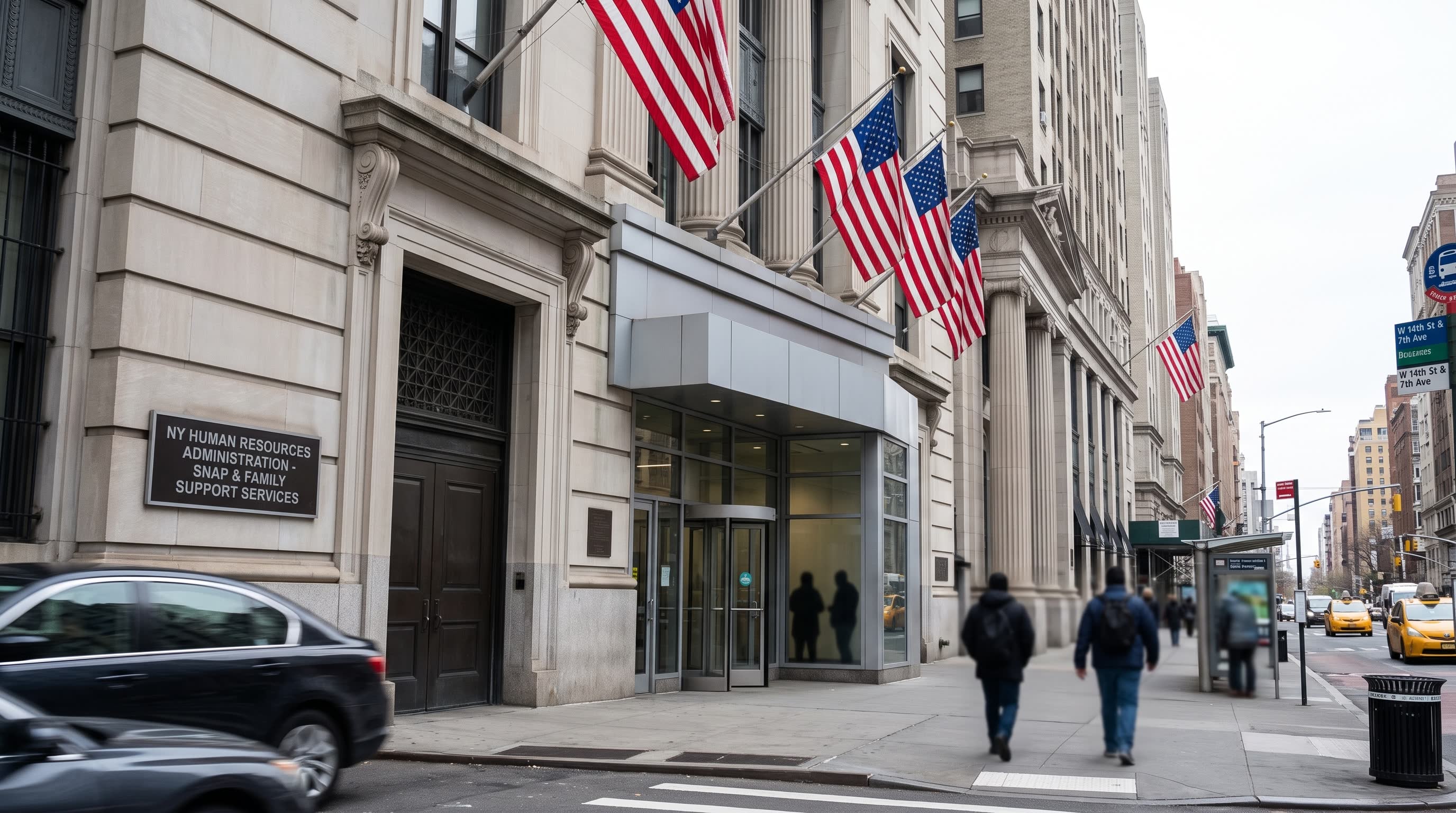
New federal data show SNAP participation continuing to fall across the country. In New York City, the decline comes as expanded work requirements begin affecting eligibility, raising a larger question: Does falling enrollment mean fewer people need food assistance, or are changing eligibility requirements affecting who can continue receiving benefits?
NEW YORK, Aug. 20, 2026 — Fewer Americans are receiving federal assistance to buy groceries, and the latest numbers suggest the decline is continuing.
The most recent data from the U.S. Department of Agriculture show that 37,011,096 people received benefits through the Supplemental Nutrition Assistance Program, or SNAP, in April, nearly 427,000 fewer than in March. Compared with a year earlier, national participation fell by nearly 13 percent, with all but one state recording a year-over-year decline.
The figures arrive as major changes to SNAP eligibility take effect nationwide. In New York City, expanded federal work requirements have reached the point where some recipients can lose benefits if they do not meet or report required work or other qualifying activities.
The developments raise a question that enrollment numbers alone cannot answer: Does falling SNAP participation mean fewer households need help buying food, or are changing eligibility rules affecting who can remain in the program?
SNAP is the nation’s largest food-assistance program, providing monthly benefits to eligible low-income households to supplement their grocery budgets. Participation can change with economic conditions, household income and employment. Rising incomes can cause some households to exceed eligibility limits, while periods of economic weakness can increase demand for assistance.
The current decline, however, is occurring alongside significant changes in federal SNAP policy. The 2025 federal reconciliation law expanded work requirements, changed how some benefits are calculated and modified aspects of the program’s administration. The Congressional Budget Office estimates that the law’s SNAP provisions will reduce federal primary deficits by about $187 billion between 2025 and 2034, compared with projections made before the law was enacted. For New Yorkers, some of those changes are already taking effect.
Since March 1, New York City has enforced expanded work requirements for certain able-bodied adults without dependents, commonly known as ABAWDs. Affected recipients generally must complete at least 80 hours per month of qualifying activities to continue receiving SNAP beyond a limited period. Those activities can include employment, education or training, volunteering, or a combination of qualifying activities.
The rules now apply to some people who previously received exemptions, including certain adults ages 55 to 64, veterans, people experiencing homelessness and former foster youth.
March was the first month counted under the new rules. Recipients who did not satisfy the requirement during March, April and May could therefore begin seeing their benefits affected starting June 1.
That timing is important because the latest nationwide USDA participation figures extend only through April. The federal data show that SNAP participation was already declining before the earliest potential benefit losses associated with three months of noncompliance in New York City. As a result, the April figures do not capture the full effect that the expanded requirements may have had on participation in subsequent months.
Losing SNAP eligibility is also not necessarily the same as no longer needing help buying food. For people subject to the work requirements, continued eligibility depends on meeting the required level of qualifying activity and complying with applicable reporting requirements. A change in enrollment can therefore reflect changes in eligibility or program compliance as well as changes in a household’s financial circumstances.
At the same time, it would be misleading to attribute the national decline in SNAP participation entirely to work requirements. Employment, wages, household income, recertification cycles and differences in state-level administration can all affect enrollment. The latest national data do not establish how much of the decline can be attributed to any single factor. The decline is also occurring while food remains a major household expense.
Nationally, prices for food purchased for home consumption were 2.7 percent higher in June than a year earlier, according to the U.S. Bureau of Labor Statistics. The increase was larger locally. In the New York-Newark-Jersey City metropolitan area, the food-at-home index, which measures grocery-store prices, was 4.0 percent higher in June 2026 than a year earlier. The broader food index increased 3.7 percent over the same period, according to the BLS Northeast Information Office.
Slower inflation does not mean that food prices have returned to earlier levels. It means that prices are increasing at a slower rate. For lower-income households, food expenses also compete with housing, utilities, transportation and other necessities for limited household income. Grocery inflation can therefore moderate while households continue to face financial pressure. This makes the decline in SNAP participation difficult to interpret on its own.
It may partly reflect households earning more and moving beyond the need for assistance. It may also reflect changes in eligibility requirements and the conditions recipients must meet to remain enrolled. The available data do not yet show how much each factor has contributed to the decline.
The next several months of federal participation data may provide a clearer picture as they begin to cover the period after New York City’s expanded work requirements started affecting benefits.