Solar Installers Target Old Industrial Roofs in Queens and Brooklyn
City incentives and available rooftop area are making older warehouses attractive for large-scale solar retrofits.
By Caroline O'Neill · December 10, 2025 · 4 min read
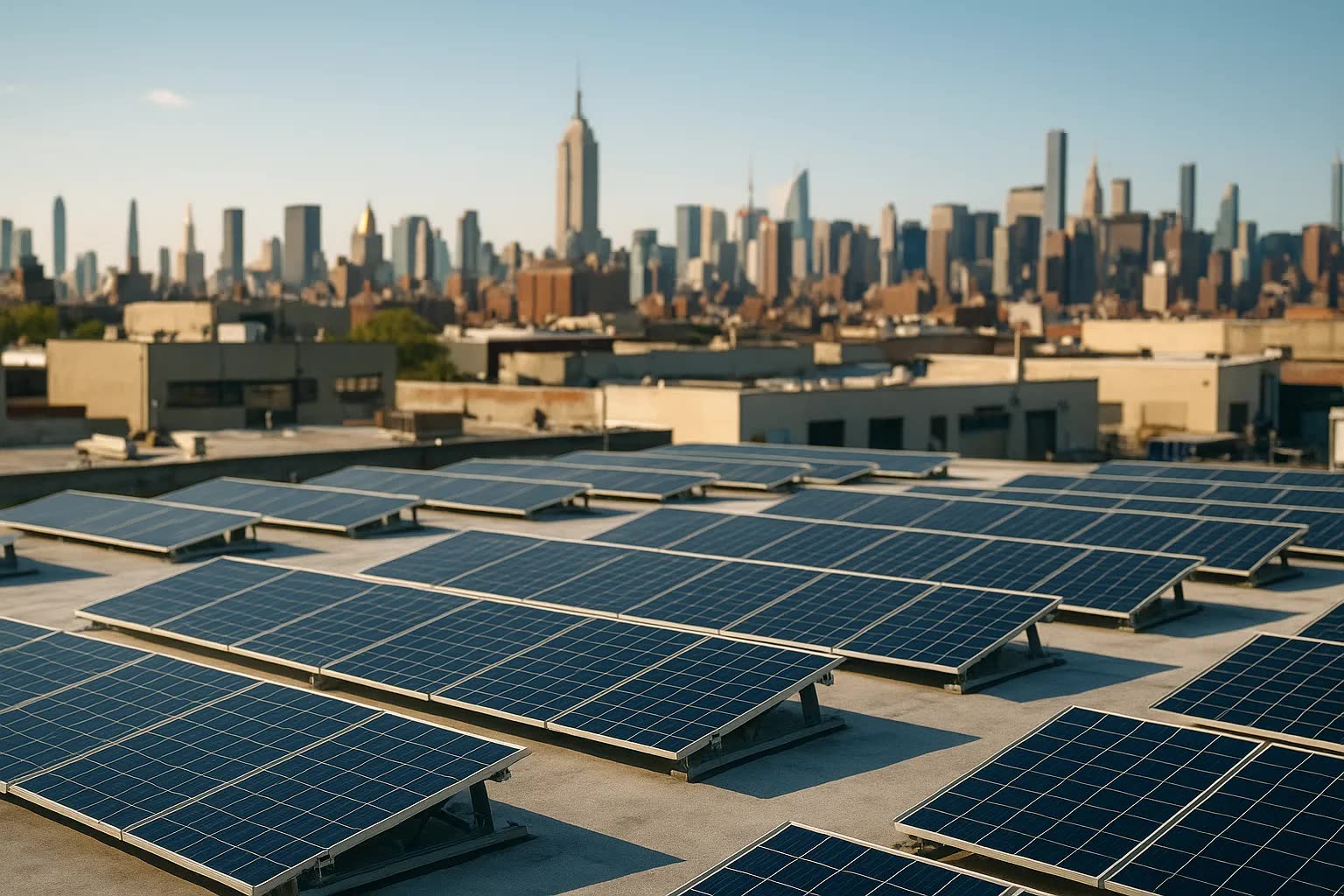
NEW YORK — Older, flat-roofed warehouses across Queens and Brooklyn are drawing a new kind of tenant: solar installers, who say generous city incentives and an unusually deep inventory of unobstructed rooftop real estate have turned sections of Maspeth, Long Island City, Red Hook and Sunset Park into a practical frontier for large-scale solar retrofits.
Developers, community groups and contractors describe a steady stream of proposals to cover industrial roofs with panels that feed nearby buildings or the grid, a change from the small installations that have characterized residential and storefront projects in recent years. The shift reflects a convergence of factors: municipal grant money aimed at decarbonizing heavy industrial zones, cheaper hardware, and a post-pandemic rush by property owners to find new revenue streams for aging assets.
At 37-25 21st Street in Long Island City, a 1920s brick warehouse owned by a family trust has become a showcase for what installers call a 'mid-market' retrofit. "We can mount panels faster and cheaper when there are no skylights, HVAC obstructions or historical rooflines to deal with," said Miguel Alvarez, director of operations at HarborSun Solar, which is managing a 1.1-megawatt system there. "For owners, it’s predictable cash flow and a way to keep an industrial tenant roster viable without selling to condo developers."
City planners involved in the rollout say the incentive programs reduce upfront costs enough to make projects attractive even in neighborhoods with modest electricity prices. "The Rooftop Retrofit Fund covers up to 40 percent of engineering and stabilization costs for buildings older than 50 years, which turns many marginal projects into bankable ones," said Leah Kim, president of the North Brooklyn Industrial Council. "That’s why we’re seeing warehouses on 3rd Avenue in Gowanus and at the Bush Terminal in Sunset Park suddenly on the radar of big installers."
Installers and owners also point to streamlined permitting that launched in mid-2024. A senior city planner who requested anonymity said the Department of Buildings has a new fast-track review for structural assessments when developers agree to preserve industrial use and sign a 10-year commitments charter. "It shaves months off the schedule," the planner said. "Time is money for these projects. The industry needed regulatory certainty, and we provided it."
The numbers underlying the push are substantial. A city inventory released this year identified roughly 1,200 warehouse buildings in Brooklyn and Queens with an estimated 45 million square feet of flat, unobstructed roof area suitable for solar; at current panel efficiencies that translates to roughly 350 megawatts of potential capacity. Average installed costs are running about $1.10 to $1.30 per watt for retrofits of this scale, and the Rooftop Retrofit Fund and a related Green Boroughs Initiative together have committed $120 million in direct subsidies and low-interest loans through 2028.
Property owners say the economics are changing operations across neighborhoods. In Maspeth, an owner of three light-manufacturing buildings on Grand Avenue said the projected revenue from a shared-lease arrangement would cover roof repairs and increase the value of the buildings without a disruptive sale. Small industrial tenants in Red Hook report interest in discounted on-site power purchase agreements that can lower their electric bills during peak demand months.
But obstacles remain. Contractors warn about structural surprises on older stock — from encased tar layers to decades of ad hoc roof additions — and the need for upgrades to rooftop anchors and drainage. Local unions and training programs are racing to supply qualified crews for array and racking work, while community advocates press for labor standards and local hiring. Installers also fret about interconnection timelines with the region’s grid operator, and whether nearby distribution circuits in parts of East New York and Ridgewood can absorb sudden influxes of distributed generation.
Beyond logistics, neighborhood politics have a say. Community boards in neighborhoods such as Greenpoint and Sunset Park have held hearings about glare, truck-access impacts and whether industrial owners should be obligated to offer discounted power to small businesses on site. "We support anything that keeps manufacturing alive and reduces emissions," said Carmen Ortiz, a Greenpoint co-op owner and member of her community board, "but we want assurances that the projects don’t displace existing tenants or add hidden costs to the neighborhood."
Planners and industry executives say the next two years will determine whether rooftop solar becomes a sustained strategy for industrial preservation or a shorter boom. Companies are exploring pairing panels with battery storage to increase building resiliency, and some proposals would bundle dozens of warehouse roofs into single procurement deals to lower costs further. If the incentives remain in place and interconnection bottlenecks ease, neighborhoods from Jamaica Avenue to the Brooklyn waterfront could see the skyline of their industrial districts change from tar and gravel to arrays of black panels — and with that, a durable new revenue stream for owners and cleaner, cheaper power for local businesses.