State Opens New Grant Round for NYC Neighborhood Resilience Projects
Local governments and nonprofit partners can seek state support for cooling sites, flood mitigation and emergency-power upgrades under a competitive program opening this week.
By Evan Rios · August 24, 2026 · 5 min read
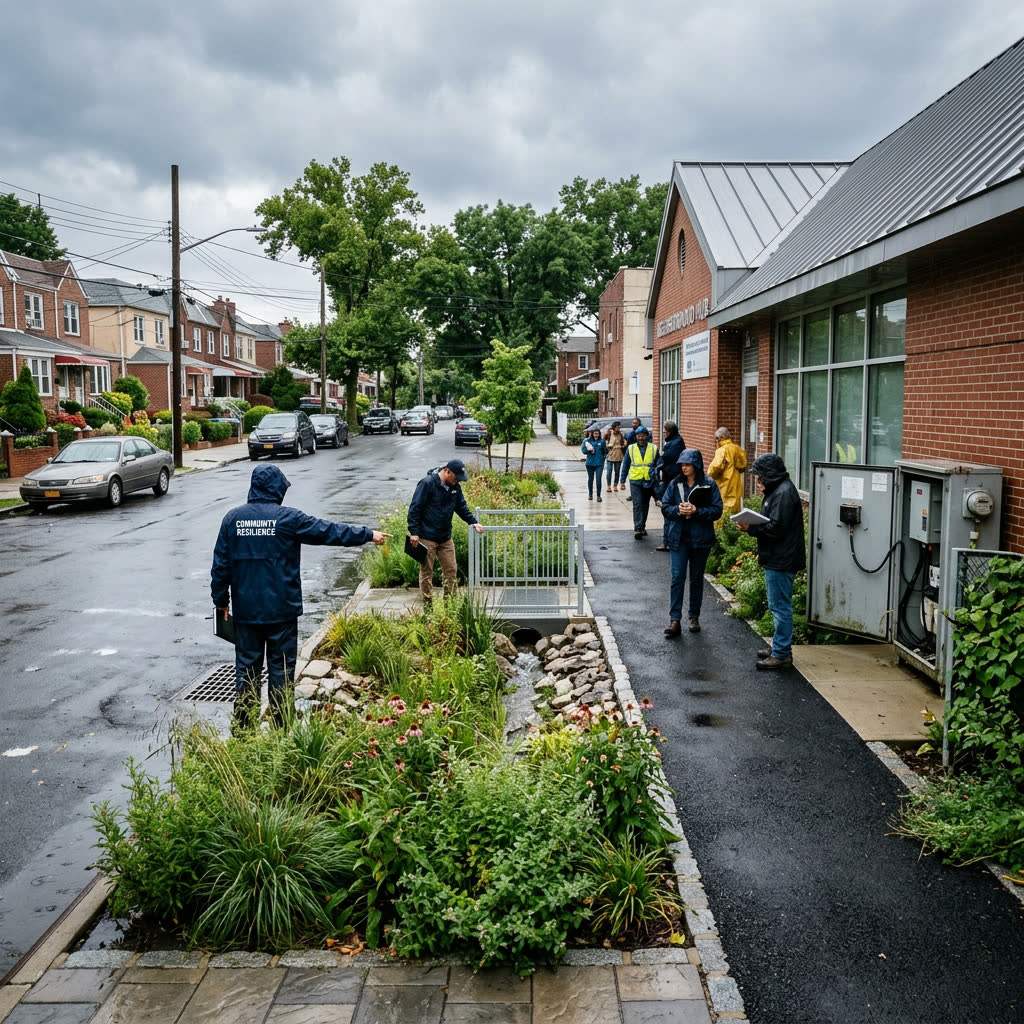
ALBANY — New York state will begin accepting applications this week for a competitive resilience grant round that could help finance cooling centers, stormwater controls and backup power at community facilities across New York City. Municipal agencies may apply directly or sponsor proposals developed with nonprofit groups, according to application materials released Monday. Awards will be evaluated over the fall, with selections expected before the end of the year.
The program is designed for projects that can be completed on a neighborhood scale rather than major coastal barriers or regionwide infrastructure. Eligible work includes elevating electrical equipment, adding shade and efficient cooling to public gathering spaces, installing rain gardens and improving emergency power at sites used during outages. Planning and engineering expenses may be included when they are tied to a defined construction proposal.
Gov. Kathy Hochul's office said in a statement that the funding is part of the state's continuing focus on climate readiness and local infrastructure. The governor has regularly identified extreme heat, flooding and reliable public facilities as statewide policy concerns. The application notice does not reserve a fixed share for the five boroughs, meaning city proposals will be assessed alongside submissions from other regions.
New York City agencies are reviewing candidate sites and discussing possible partnerships with libraries, community centers and service organizations, according to a City Hall official familiar with the process. The official said the city will look for projects that complement work already in its capital plan rather than replace locally funded commitments. Final applications must identify who will own and maintain each improvement after construction.
That maintenance requirement is important for projects such as pumps, batteries and cooling equipment, which require inspections and eventual replacement. Applicants must provide an operating plan and document access to the facility during emergencies. Projects also receive additional consideration when they serve areas with high heat exposure, repeated drainage complaints or limited access to air-conditioned public space.
In Queens, the fictional North Junction Community Collaborative is preparing a proposal with a city agency to improve a multipurpose center used during heat advisories. Executive director Leena Shah said the concept includes a shaded outdoor waiting area, upgraded cooling and outlets supported by a battery system. She said the group is still refining costs and has not been assured of an award.
Grant reviewers will score proposals on readiness, community benefit, cost and the applicant's ability to manage construction. Matching contributions are encouraged but may be reduced for projects in communities facing greater environmental burdens, according to the state guidance. The structure is meant to avoid limiting the pool to organizations or localities that can readily assemble substantial outside funding.
Infrastructure analysts cautioned that small grants cannot resolve citywide flooding or heat exposure on their own. Darius Kemp, a fictional policy director at the Regional Adaptation Forum, said neighborhood projects are most effective when linked to larger sewer, energy and public-realm plans. He added that community facilities can still provide immediate value because residents already know and use them.
A virtual briefing for prospective applicants is scheduled for early September, followed by a written question period. State officials will publish answers for all applicants rather than provide private guidance on individual proposals. Organizations interested in participating must work through an eligible municipal sponsor unless they qualify under the program's nonprofit partnership rules, and the state advised applicants not to begin reimbursable construction before receiving an award.