Staten Island Expands Aging-in-Place Services as Seniors Seek to Stay Home Longer
Home-delivered meals, retrofitted apartments and volunteer transportation networks are scaling up to meet a growing senior population.
By Diego Alvarez · April 23, 2026 · 5 min read
NEW YORK — On a bright spring morning at the St. George ferry terminal, a steady stream of older Staten Islanders made their way past the ticket booths and the line for the ferry, a daily choreography that belies a larger shift on the borough: more of its residents want to age in place, and local services are stretching to meet them. From home-delivered meals on Hylan Boulevard to stair lifts on Richmond roads and volunteer drivers at the Stapleton senior center, the push to keep seniors at home instead of in nursing facilities is becoming an organizing principle for neighborhoods across the island.
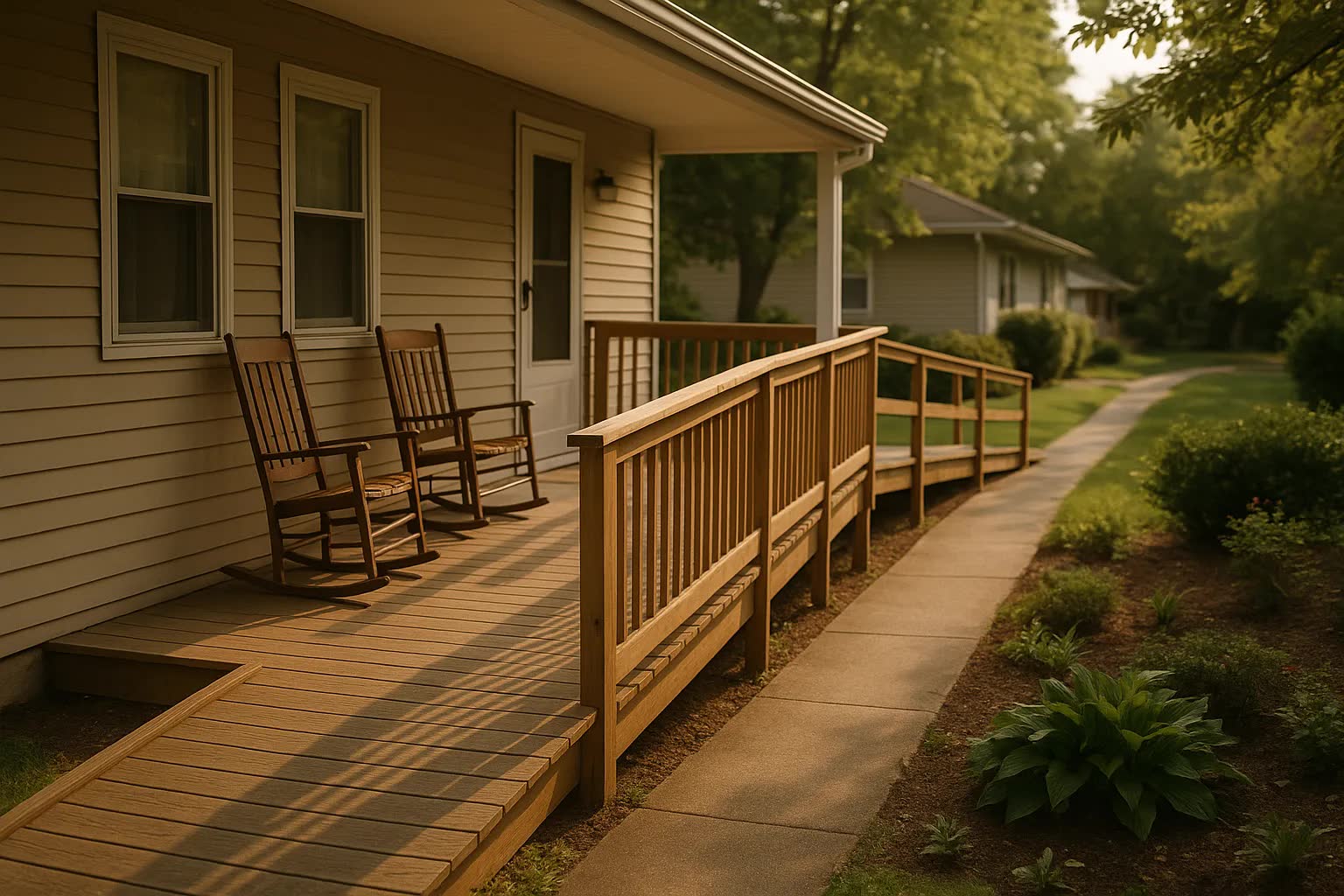
City and borough agencies, community nonprofits and private contractors have expanded a patchwork of programs that together aim to address three common obstacles to aging at home — food security, housing modification and mobility. The Staten Island Office for the Aging has boosted meal delivery routes that now reach parts of Tottenville and Great Kills that previously lacked service, while small retrofit firms such as Hearth & Home Retrofit, a local business based on Victory Boulevard, are installing grab bars, ramps and accessible showers in multiunit buildings off Bay Street and in Richmondtown.
“Most residents tell us they want to stay in the neighborhoods where they raised their families,” said Maria Chen, director of the Staten Island Office for the Aging. “That means we have to bring the services to them, whether that’s a meal at their door, an accessible unit near the ferry, or a volunteer driver at the corner to get them to a doctor.” Chen said the approach includes new partnerships with landlords and community boards to accelerate approvals for minor structural work that keeps people safe at home.
The scale of the effort is measurable. Borough officials estimate the population of Staten Island residents age 65 and older climbed roughly 18 percent from 2015 to 2025, reaching an estimated 69,200 people in 2025. In response, public and nonprofit providers say home-delivered meal routes expanded from 3,800 weekly deliveries in 2019 to about 9,400 in 2025; housing retrofits have increased from 240 completed units in 2020 to 1,120 last year; and a volunteer transportation network now logs an average of 2,700 rides monthly to medical appointments, cultural sites like Snug Harbor and grocery stores along Hylan Boulevard. The borough earmarked about $6.5 million in local funds and secured another $4.1 million in city and philanthropic grants for aging-in-place services over the past three fiscal years.
Neighborhood-level work is visible in places like New Dorp, where a cluster of senior apartments along New Dorp Lane recently received chair lifts and widened doorways, and in Stapleton, where a community garden project next to the senior center has been adapted to accommodate walkers and mobility scooters. In Tottenville, retrofit teams collaborated with the local historical society to preserve the façade of an older building while converting two units inside for universal design. Each site demonstrates the balance providers say is necessary between retaining the borough’s character and ensuring safety and accessibility.
“We’ve learned that the technical fixes are often simple, but the logistics are not,” said Thomas Ruiz, executive director of Home for Life SI, a nonprofit that coordinates retrofits and landlord outreach. “Working with small building owners on Bay Street means navigating unique wiring, old stairwells and a lot of permitting. It’s the human side — convincing an owner an accessible unit can be an asset, not a liability — that takes time.” Ruiz said his group now maintains a roster of vetted contractors and offers a low-interest loan to property owners who commit to creating or preserving accessible units.
Transport services have been one of the most crucial, and most visible, elements of the expansion. The Staten Island RideLink program, a coalition of faith groups, community boards and volunteer drivers, operates from a hub in Tompkinsville and coordinates trips to Staten Island University Hospital, dialysis centers in South Beach and cultural destinations like the Snug Harbor Cultural Center. “People tell us the trip to a doctor is the difference between staying home and going into assisted living,” said Lena Carver, RideLink’s volunteer coordinator. “Our drivers often become part of someone’s daily life — they pick up prescriptions, carry groceries, and call to check in.”
Still, providers warned that aging-in-place is not a fix-all. The borough faces shortages of home health aides, and recruitment is complicated by wages and training demands. Local training programs at the Richmond Vocational Training Center have added two cohorts focused on geriatric care, but officials say more stable funding is necessary to retain staff. “We can retrofit a bathroom and ship food, but without consistent caregiving the risk of rehospitalization remains,” said Dr. Harold Whitman, medical director of RichmondHealth Clinic, a community provider on Victory Boulevard. “Long-term savings often depend on investing in the workforce upfront.”
Equity has also become a central consideration. In neighborhoods such as Mariners Harbor and Port Richmond, language access, transportation deserts and digital divides mean services must be tailored differently than in higher-income pockets of the borough. Community groups have launched multilingual outreach, and several meal programs now include instructions and check-in calls in Spanish, Russian and Mandarin to serve Staten Island’s increasingly diverse senior population. Some advocates argue that citywide policies should formalize funding formulas to direct more resources toward neighborhoods with higher rates of social isolation and chronic disease.
Planners say the next phase will test whether the current momentum can be sustained. Pilot programs aimed at subsidizing retrofit loans for small landlords, scaling RideLink to more than 5,000 monthly rides and expanding vocational training are slated to launch in the next fiscal year, pending budget approvals. For many Staten Islanders, the change has been immediate: a safer shower, a friendlier driver, a delivered hot meal. “We talk about aging as something that happens to people,” Maria Chen said. “What we’re trying to do is make aging a part of community life — familiar streets, familiar faces, and the services that let people stay where they belong.”