Staten Island Ferry Faces Winter Staffing Crunch
Rising overtime and a wave of retirements are forcing schedule cuts that could disrupt thousands of daily cross-Hudson commuters.
By Priya Patel · December 9, 2025 · 4 min read
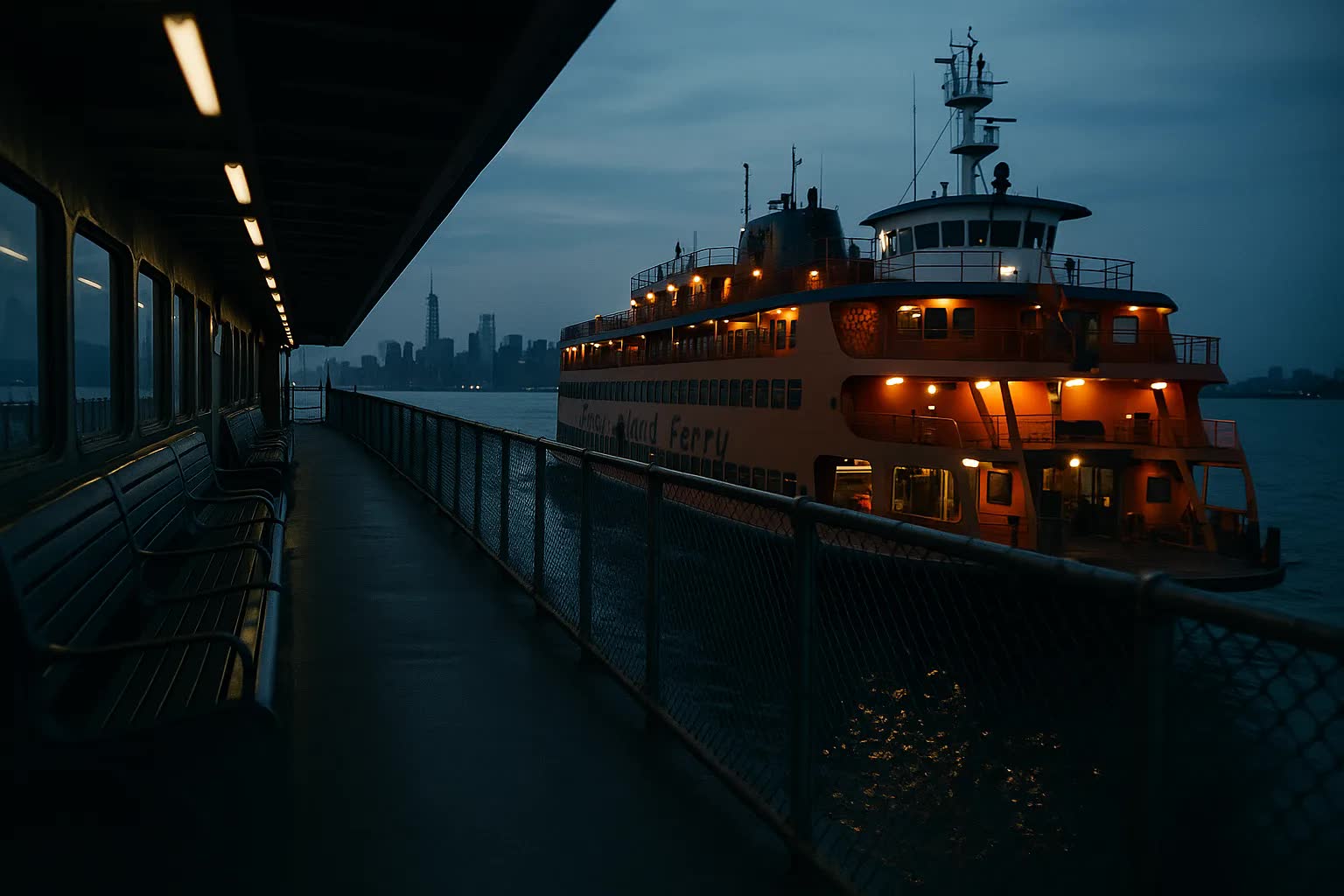
The Staten Island Ferry is warning commuters to brace for longer waits this winter as a confluence of retirements and surging overtime costs forces officials to trim scheduled runs that carry thousands across the harbor each weekday between St. George and Lower Manhattan. Riders from Stapleton, Tompkinsville and the South Ferry area already report tighter decks and packed Whitehall Terminal concourses during evening rush hours, and transit planners say the crunch could worsen when weather and holiday travel add strain to an already tightened roster of captains and crew.
City transportation managers attribute the shortfall to an unusually large cohort of veteran employees reaching retirement eligibility this year, combined with recruiting and training bottlenecks that have slowed the pipeline of new deck officers. The ferry system, long shielded from some of the labor-market pressures hitting the subway and bus networks, now faces stiff competition from private maritime employers and offshore vessel operators for licensed mariners, officials say. The result is heavier reliance on overtime and a need to shrink the operating footprint on certain midweek and late-night sailings.
"We are seeing a wave of retirements that we did not fully anticipate two years ago, and that has a direct impact on our ability to staff every boat as frequently as riders expect," said Asha Kapoor, director of ferry operations at the Department of Transportation's Staten Island Ferry Division. "Safety remains our top priority, so where we cannot meet certification requirements for a full crew, we must consolidate runs, even knowing it disrupts people’s commutes into Battery Park and the Financial District."
The numbers underscore the pressure. The ferry typically carried about 65,000 weekday passengers pre-pandemic; current weekday ridership is roughly 52,000 but spikes to 60,000 on holiday shopping days, officials said. There are roughly 460 full-time employees assigned to the ferry system, including an estimated 82 licensed captains and 128 deck officers; since June 2024, 94 crew members have retired or resigned. Overtime expenses have climbed by 38 percent year over year, to an estimated $8.7 million annually, while scheduled weekday sailings have been trimmed by approximately 11 percent during off-peak hours and 7 percent during peak periods to match available crews.
The operational changes have a domino effect on intermodal connections in both boroughs. At St. George Terminal on Bay Street, shoppers and commuters who normally transfer to the Staten Island Railway or S40 and S46 buses have faced longer lines at bus stops and more crowded trains, according to neighborhood business owners. In Manhattan, the Whitehall Street and Battery Park areas have seen surges of late-arriving ferry riders who miss first opportunities to transfer to the 1 train at South Ferry or to private shuttle services to the Seaport and South Street Museum District.
Commuters said unpredictability is the most painful part of the squeeze. "I rely on the 8 a.m. from St. George to make the 9 a.m. shift at Bellevue, and lately if there’s any delay I’m late for work and lose precious hours," said Elena Morales, a registered nurse who lives near Tompkinsville. "When they cut a 7:30 or 8:00 run, there’s no easy backup for people who can’t work remotely." Mark Rinehart, president of the Staten Island Commuters Coalition, said the system's reputation for reliability is at risk. "People plan lives around the ferry schedule; when it becomes unpredictable, it affects attendance, businesses and caregiving schedules across the island," he said.
Union leaders point to training requirements and an aging workforce as core challenges. "We have members who have been operating these vessels for 25 to 35 years and are understandably choosing retirement after long careers," said Dennis Keane, president of Local 1488 of the Staten Island Ferry Workers Union. "Recruiting new mariners takes time because of mandatory certification courses and on-the-water mentoring, and we need incentives to retain institutional knowledge while bringing in new talent." Local 1488 has pushed the city for temporary pay differentials and accelerated cadet programs for deck officers.
City officials say they are deploying a mix of short-term and long-term measures to blunt disruptions. A senior DOT planner who requested anonymity said the department is offering retention bonuses of up to $12,000 for certain licensed positions, fast-tracking classroom certification slots and shifting some nonessential maintenance to off-peak windows so more vessels can be crewed during rush periods. Officials are also exploring cross-training programs with the New York Harbor pilot schools and a partnership with a maritime academy in Brooklyn to expand the hiring pool in 2026.
Local businesses around the terminals have noticed immediate effects. A cafe on Bay Street that caters to morning ferry riders said foot traffic dropped roughly 15 percent on Tuesdays and Wednesdays in November compared with September, forcing owner Marisol Diaz to cut back on weekday staff. In Lower Manhattan, tour operators that depend on consistent ferry timetables reported increased customer complaints and canceled bookings tied to tighter winter sailings. Seasonal tourism could compound the situation during December, when ferry patterns historically accommodate holiday visitors as well as regular commuters.
Looking ahead, transportation officials and labor leaders said they expected the acute staffing shortfall to ebb by late spring as new hires complete training and some retired workers delay final separation with temporary return agreements. In the near term, riders should prepare for more conservative timetables on midweek and overnight sailings and for ongoing adjustments posted on the department's website and at terminals. "We are committed to restoring full service as quickly as safety and staffing allow," Kapoor said, noting that winter weather, certification timelines and the harbor job market will be the key variables to watch in the months ahead.