Staten Island Ferry Upgrades Spur New Waterfront Development Proposals
A planned terminal revamp has developers and community groups drafting mixed-use projects along the North Shore.
By Isabella Morales · January 16, 2026 · 4 min read
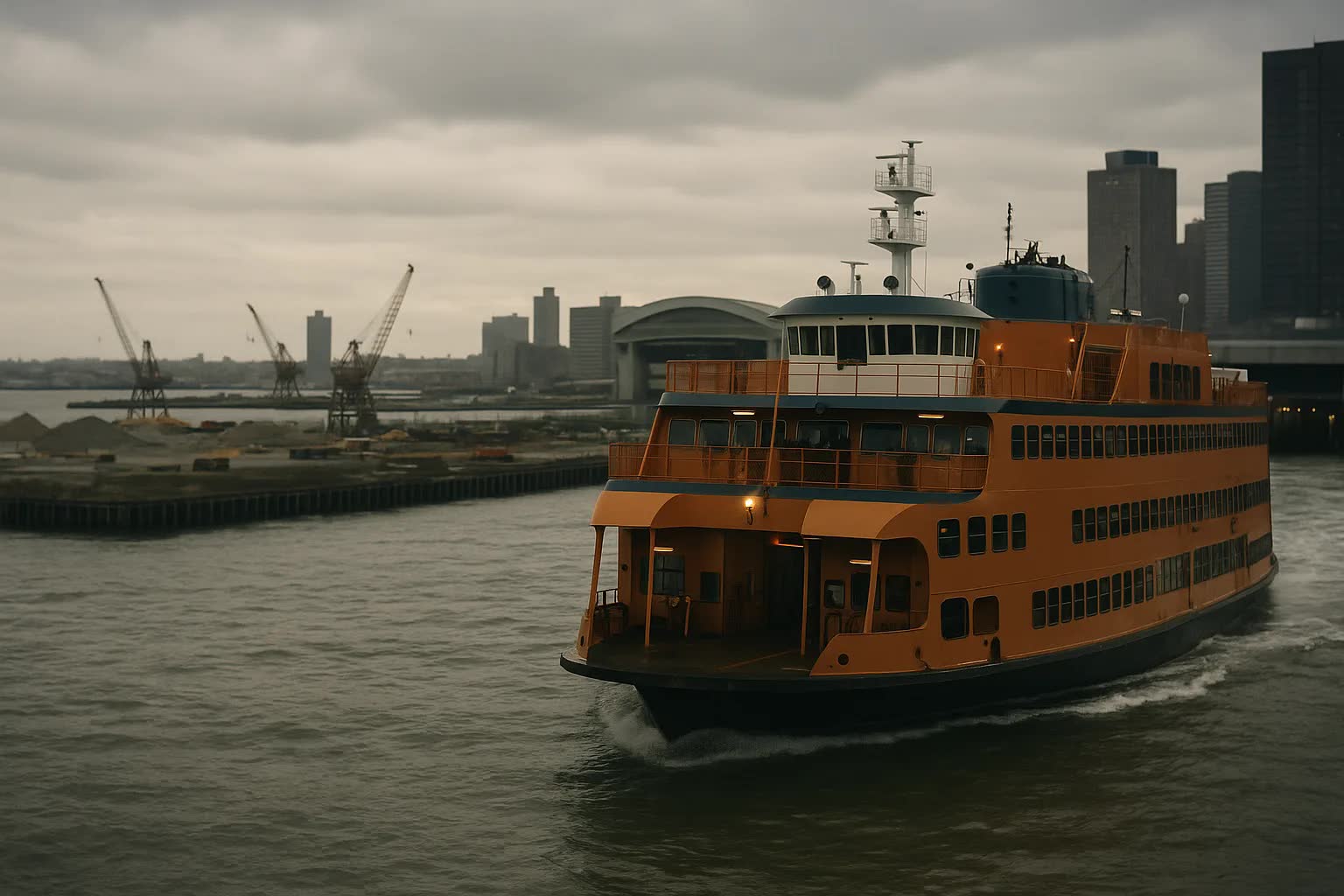
The Metropolitan Transportation Authority's announcement last month of a major revamp to the St. George ferry terminal has triggered a wave of development proposals along Staten Island's North Shore, promising new housing, retail and waterfront parks that would reshape corridors from Tompkinsville through Stapleton to New Brighton. Developers, community groups and civic leaders say the terminal upgrade — pitched as a way to speed ferry service to Manhattan and protect the terminal against rising seas — has turned the long-neglected waterfront into a fresh target for mixed-use projects and preservation battles alike.
Two developers filed competing concepts within days of the MTA's sketch plan: Harborline Development unveiled a 12-acre master plan centered on Bay Street that calls for housing, a maritime museum and a ferry plaza, while AnchorPoint Communities floated a denser, transit-oriented scheme tying Victory Boulevard lots to a new promenade. Community organizations including the North Shore Waterfront Coalition and the Stapleton Merchants Alliance have responded by drafting their own proposals, aiming to lock in public access, shoreline resiliency measures and local hiring commitments as conditions for any private deal.
"We have an opportunity to build a waterfront that serves Staten Islanders, not just corporate logos," said Evelyn Cruz, executive director of the North Shore Waterfront Coalition, at a packed meeting in Stapleton last week. "If the MTA is reimagining the terminal, the city and developers must make room for libraries, small-business storefronts and permanently affordable housing tied to local workforce pipelines." Cruz's group has circulated a list of community benefits it says should be nonnegotiable in any public-private partnership.
The numbers underlying the proposals are concrete and sizable. The MTA's preliminary engineering notes estimate the terminal overhaul at $420 million and suggest a 25 percent increase in peak ferry throughput to about 45,000 riders a day by 2035. Combined, developers have outlined roughly 2.1 million square feet of potential new construction across eight parcels, including as many as 3,400 residential units in total, about 1,100 of which proponents say could be income-restricted under current draft plans. Projections attached to several filings predict more than 6,000 construction jobs over a decade and an annual boost to borough earnings in the tens of millions.
Marcus Liang, senior development director at Harborline Development, said the firm’s St. George Commons plan would deliver both market-rate and deeply affordable homes while paying for waterfront repairs. "This is about creating durable infrastructure and housing that serves Staten Island for generations," Liang said. "Our bid includes a community benefits package worth $18 million in direct investments — workforce training, a school expansion fund, and funding for a public pier — beyond the required mitigation and resiliency work."
Still, community groups and small-business owners warned that new towers and higher rents could erase the character of neighborhoods like Tompkinsville and New Brighton. Local leaders in Stapleton have circulated an alternative vision focused on mid-rise buildings, protections for existing mom-and-pop stores along Bay Street and strict anti-displacement measures. The Stapleton Merchants Alliance has advocated for a phased approach that preserves at least 60 percent of current ground-floor retail within a half-mile of ferry access to maintain daytime foot traffic and livelihoods.
A senior MTA planner who requested anonymity said the agency is treating the terminal upgrade as a catalyst but not a trigger for immediate rezoning, noting that major waterfront landowners have only nonbinding letters of interest on file so far. "We want to coordinate infrastructure timing with the city’s planning and the community to avoid gentrification shocks," the planner said. The MTA's schedule calls for a design competition in spring, environmental scoping by fall and potential construction starts on the terminal in 2028, though that timeline remains contingent on funding and approvals.
City agencies are already eyeing zoning changes and a potential waterfront overlay to manage density and resilience standards. The Department of City Planning is expected to host a preliminary forum next month in St. George, and Community Board 1 staffers have begun gathering feedback on street-level uses and public realm improvements. Several proposals rely on a mix of public subsidies and tax-increment financing to make deep affordability viable; how the city structures those incentives will be a key determinant of which schemes move forward to public review.
Small-business owners in the neighborhood voiced cautious optimism paired with anxiety. "We welcome more customers coming off the ferry, but rents are the elephant in the room," said Rosa DeLuca, owner of Pierside Deli on Richmond Terrace, whose family has run the shop for three decades. "If they bring more people but push us out, that won't be a win for the community. We want wages to go up here, not just rents." Developers say local hiring and commercial rent subsidies will be included in negotiated community benefits packages, though details remain to be hammered out.
For now, the revamp of the St. George terminal has set in motion a complex negotiation among transit agencies, developers, city planners and residents that could redefine the North Shore's relationship to the harbor. The coming months will test whether the MTA's engineering timetable, city zoning tools and community demands can be stitched together into a plan that balances resiliency, housing needs and neighborhood character; public review periods and a formal city land-use application are likely to arrive this summer, with proponents and opponents preparing for a protracted debate that could shape Staten Island's shore for decades.