Staten Island Theater Collective Revives Forgotten Local Playwrights
A grassroots company is mounting staged readings and archival projects to reconnect Staten Island audiences with neighborhood storytelling.
By Olivia Park · December 1, 2025 · 4 min read
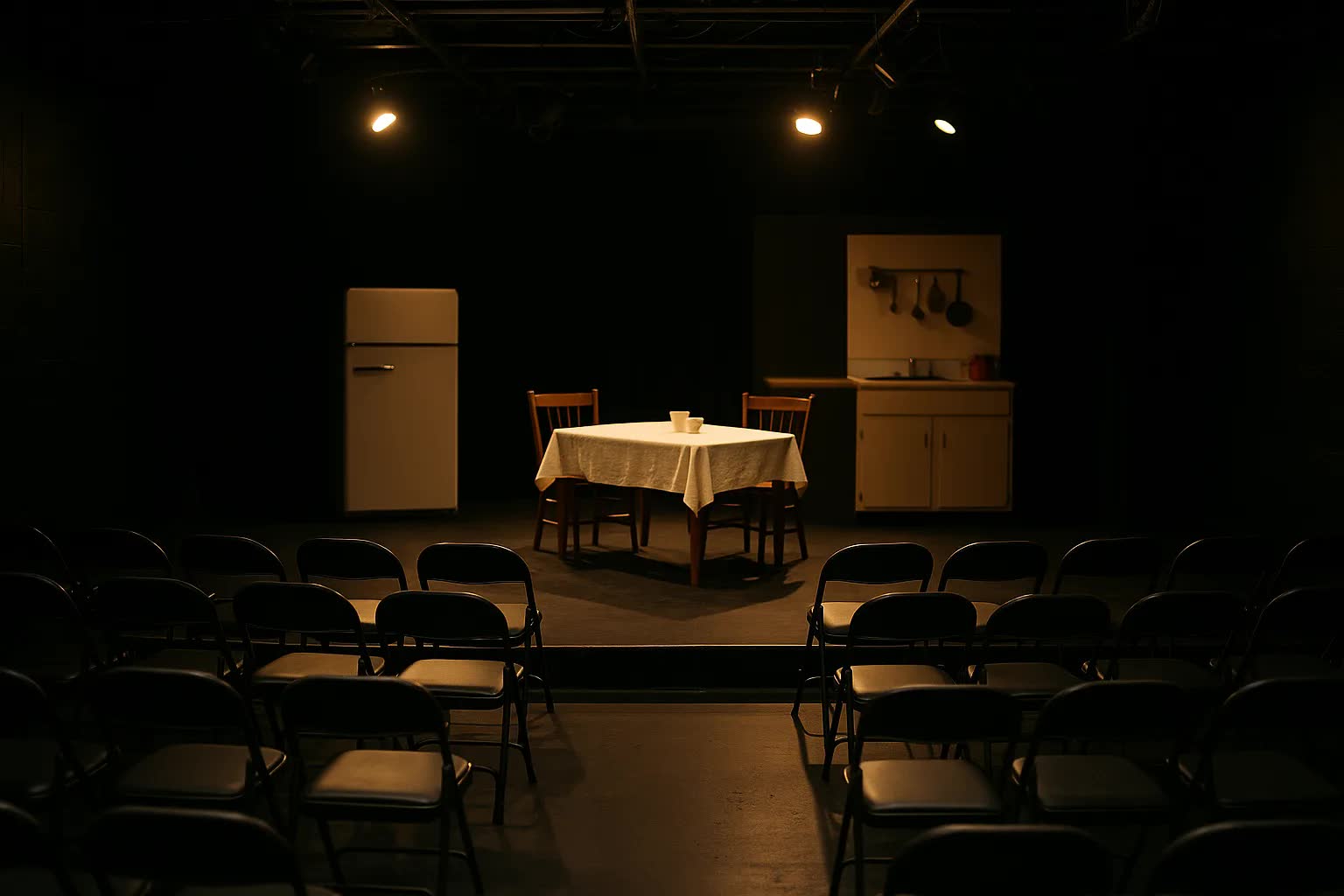
On a blustery November evening a block from the Staten Island Ferry terminal at St. George, a small company of actors and archivists gathered under the marquee of a converted storefront on Bay Street to read aloud lines that had not been heard in public for decades, part of a borough-wide effort to reclaim neighborhood stories that time and real estate have all but erased.
The Staten Island Theater Collective, a grassroots troupe founded in 2022 by three longtime residents and arts administrators, has made it its business to revive the work of forgotten local playwrights through staged readings, archival digitization and community oral histories across neighborhoods from Stapleton to Tottenville.
"We realized there were entire lives of the borough trapped in attics and in the heads of older residents — scripts, rehearsal notes, theater programs — and no one was systematically rescuing them," said Eleanor Diaz, artistic director of the Staten Island Theater Collective, as she unfolded a yellowed typescript in the storefront that doubles as the group's rehearsal room on Castleton Avenue.
The Collective has staged readings in a rotating roster of community spaces such as the Stapleton Library on Canal Street, a repurposed bank on Victory Boulevard in Tompkinsville and a lecture hall at Snug Harbor Cultural Center, pairing performances with taped interviews and pop-up exhibits in local delis and senior centers to broaden access to material usually confined to archives or private collections.
"When we did a reading of Hector Alvarez's 1981 play about day laborers on Richmond Terrace, a woman in the front row started pointing at the stage and saying, 'My brother used to load those trucks,'" said Jamal Bennett, a company actor and theater educator who grew up in Port Richmond. "The work becomes a mirror for people who live here; it isn't an abstraction."
The archival arm of the Collective has amassed a trove of material in three years: 112 scripts and drafts, 47 recorded oral histories averaging 52 minutes each, and high-resolution scans of 218 playbills and production photographs from private collections, all cataloged in a searchable database the group hopes to house permanently at the Staten Island Museum.
"These are primary sources for the borough's cultural history," said Marcus Lee, senior curator of performing arts at the Staten Island Museum, which has provided grants and technical support for preservation. "Neighborhood theaters in New Dorp and Stapleton were incubators for storytelling that reflected the livelihoods of dockworkers, ferry crews and immigrant families. Losing that record would be losing part of how Staten Island understands itself."
The numbers make the case for urgency: between January 2023 and October 2025 the Collective produced 18 staged readings, digitized 112 script items, recorded 47 oral histories, logged 6,340 volunteer hours and engaged roughly 3,750 audience members in live and virtual events; its operating budget last fiscal year was $64,500, supplemented by two private foundations and a $15,000 award from a city cultural fund.
Sustaining that work has not been easy. The borough's limited rehearsal and performance spaces force companies into makeshift venues with inconsistent acoustics and minimal audiences; transportation challenges mean some prospective collaborators travel an hour or more from the North Shore or from boroughs across the water. "We are fighting for bricks-and-mortar spaces and consistent funding," said Rashida Morales, community liaison for the Collective. "It's one thing to care about the plays, it's another to find the money and the rent-stabilized rehearsal rooms to keep them alive."
The reception in neighborhoods has been quietly robust. In Tompkinsville, a reading of a 1970s comedy about a working-class family led to a multi-generational conversation at a post-show reception in a bar on Victory Boulevard; in Great Kills an improvised staged reading drew seniors who remembered the original productions and younger residents drawn to the borough's small stages. Local schools have begun booking the Collective for classroom visits, and a pop-up at Ocean Breeze Park last summer attracted a midday crowd of parents, strollers and retirees, many of whom lingered to share memories of community theater on Staten Island's main thoroughfares.
Looking ahead, the Collective plans to publish an anthology of recovered plays and to launch a neighborhood touring series in spring 2026, targeting senior centers and public schools in Port Richmond, New Dorp and Stapleton while continuing to expand its digital archive with the Staten Island Museum. "If we can get these plays into the hands of teachers and into community spaces, we change how people see their own history," Diaz said. "This work is about civic memory as much as it is about art, and we're just getting started."