On Staten Island, a Sculpture Park Built to Be Swallowed by the Tide
A new waterfront installation on the North Shore is designed to flood and reappear twice a day, turning the rhythm of the harbor into the art itself.
By Marcus Bell · July 16, 2026 · 4 min read
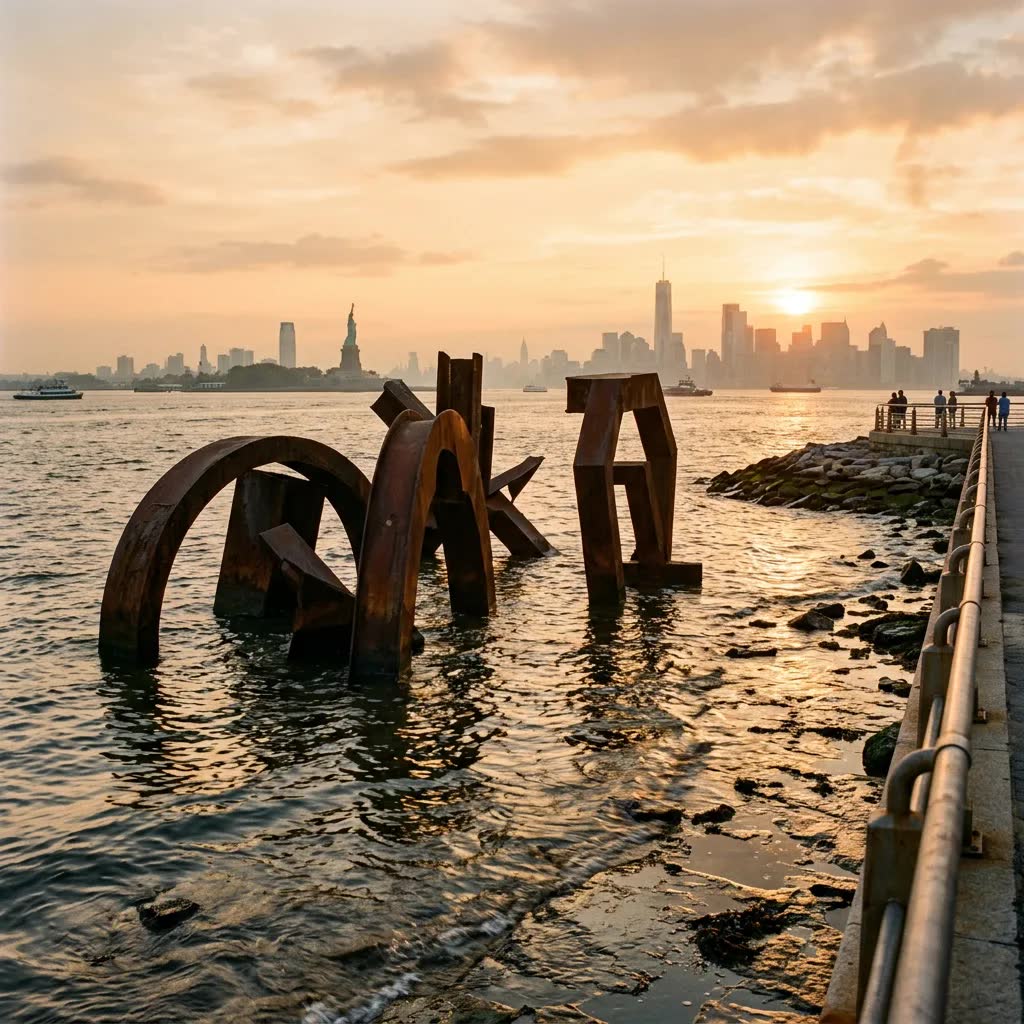
NEW YORK — Twice a day, the harbor comes in and eats the art. Along a reclaimed stretch of the Staten Island North Shore, a new public sculpture park has opened with a deliberately unusual conceit: many of its works are positioned in the intertidal zone, so that as the tide rises they are gradually submerged, and as it falls they emerge again, dripping and transformed. The effect is that the installation never looks the same twice, and is sometimes not visible at all.
The park is the product of a multiyear collaboration between an environmental arts group and the city agencies overseeing the redevelopment of the long-neglected waterfront. Its centerpiece is a cluster of weathered steel forms, fabricated partly from salvaged shipyard material, that rust and streak in patterns the artists have accepted they cannot fully control. "We designed the shapes," one of the lead artists said during a preview walk. "The water designs everything that happens to them after that. We're just the collaborators who show up at low tide."
The concept is more than aesthetic. The park doubles as a piece of public infrastructure meant to make sea-level rise legible to the people who live with it. Interpretive markers, set safely above the high-water line, translate the daily flooding of the sculptures into plain terms: this is how high the water reaches now, and this is how much higher it may reach in the decades ahead. "You can read a statistic about the harbor and forget it in a minute," the artist said. "You watch a ten-foot sculpture disappear under water while you're standing there, and you don't forget that."
For a borough often treated as an afterthought in the city's cultural conversation, the park represents an unusually ambitious bid for attention. Local officials have been openly hopeful that it will draw visitors from across the harbor, and early signs are promising: on its opening weekend the site drew steady crowds who timed their visits to the tide charts posted at the entrance, watching the works vanish and return like a slow-motion tide clock.
The design has required careful engineering to withstand the punishing cycle of saltwater immersion, and the artists concede that the works will visibly age, corrode, and eventually need replacement — a mortality they have folded into the project's meaning rather than fought against. Maintenance crews will monitor the structures, but there is no plan to keep them pristine. The rust is the point, the artists insist; so is the impermanence.
As the afternoon tide crept up during the preview, a small crowd gathered at the railing to watch the base of the largest sculpture disappear beneath the gray-green water of the harbor. A father lifted a child onto his shoulders for a better view. "It's going under," the child announced, delighted, as if narrating a magic trick. In a few hours, at low tide, it would be back — salt-streaked, a little changed, waiting to be swallowed again.