Staten Island Waterfront Launches Free Summer Film Series
Neighborhood groups and arts organizations are programming waterfront screenings on the North Shore to boost local nightlife and community engagement.
By Aisha Bello · December 4, 2025 · 4 min read
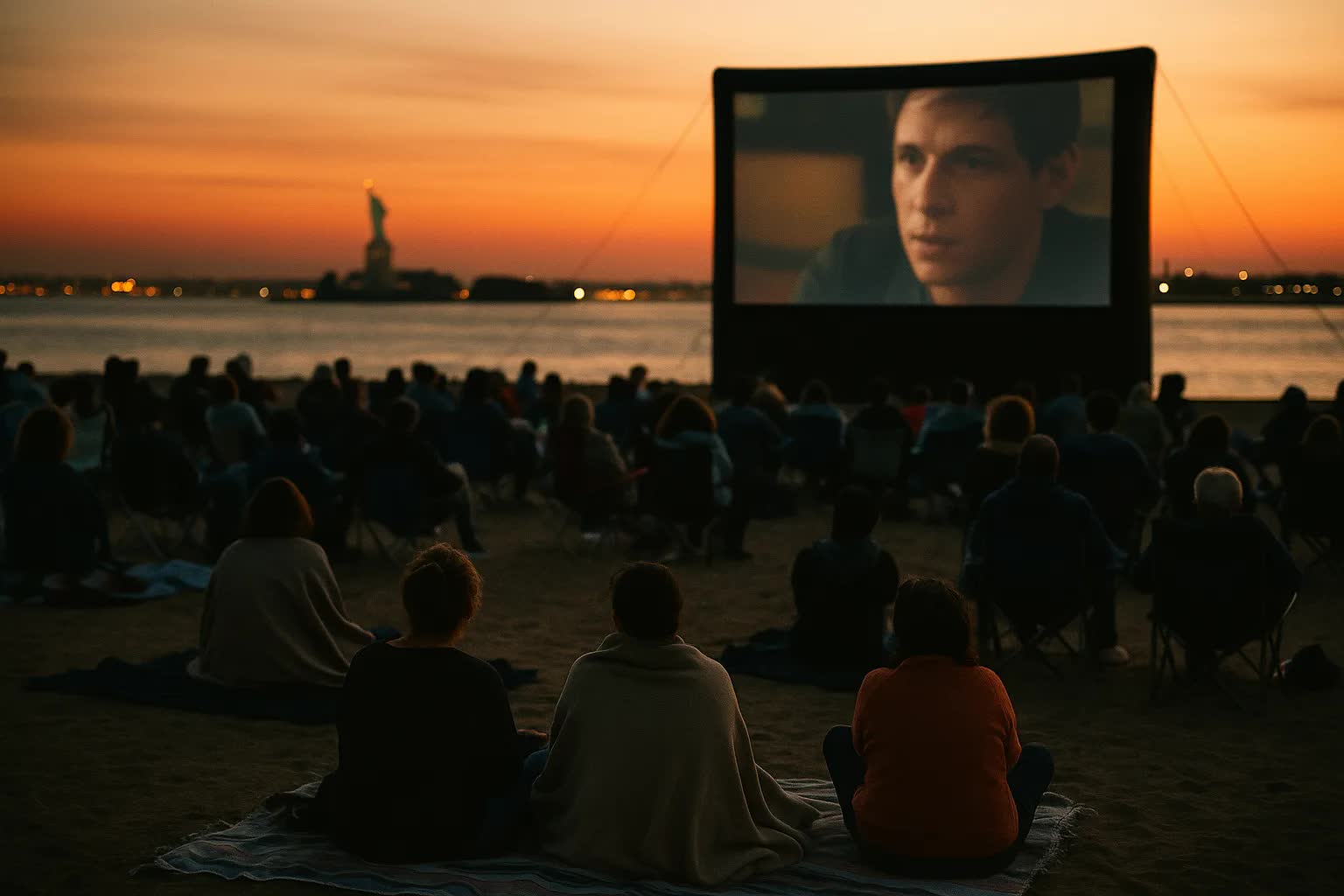
NEW YORK — This summer, Staten Island’s North Shore will be alive with free outdoor movies along the waterfront, an effort by neighborhood groups and arts organizations to spark new nightlife on Bay Street and the piers around St. George, Stapleton and Port Richmond while offering a platform for local filmmakers and family programming.
Organizers say the initiative, billed as the North Shore Summer Film Series, is the product of a year of planning among the Staten Island Arts Alliance, the North Shore Film Collective and a cluster of neighborhood business improvement districts. "We’re trying to stitch together the waterfront into a place where people feel safe and excited to spend an evening," said Marta De Luca, director of the North Shore Film Collective, adding that the series aims to connect long-standing cultural anchors — including Snug Harbor Cultural Center and the Staten Island Museum — with emerging arts groups on the island.
The program will rotate screenings across five waterfront sites: the Riverwalk near St. George Ferry Terminal, the Bay Street Plaza at Stapleton, Richmond Terrace Pier in Port Richmond, the New Brighton Marine Walk and a pop-up at Tompkinsville’s Victory Boulevard waterfront. Programming will include classic crowd-pleasers, family nights, an indie shorts block highlighting Staten Island filmmakers, and occasional retrospective evenings curated by neighborhood groups.
Logistics will include large inflatable screens, professional projection and sound systems, ADA-accessible pathways and a roster of food vendors drawn largely from nearby restaurants on Bay Street and Henderson Avenue. Transit adjustments are expected on weekend nights; "We will be monitoring crowding and may add late-night ferry runs on weekends," said a senior transit planner who requested anonymity, noting that the agency is coordinating crowding plans with Staten Island Ferry operations and local bus routes.
Concrete numbers released by organizers outline the scale: the series will present 33 free screenings across five venues between June 19 and Aug. 28, with shows on Friday and Saturday nights; venue capacities range from about 350 at temporary plazas to roughly 800 at the larger Riverwalk site. The organizers say they expect cumulative attendance of 14,000 to 18,000 people, a budget of $130,000 supported by a $50,000 municipal cultural grant, roughly $60,000 in private sponsorships and about $20,000 in in-kind contributions for equipment and volunteer staffing.
Local business leaders are hopeful the series will lift evening sales in neighborhoods that have struggled to expand nighttime options. "We see this as a lifeline for small businesses along Bay Street and in Stapleton — people come early, dine, shop and stay later than they used to," said Daniel Ortiz, president of the Stapleton Chamber of Commerce. Several bars and restaurants are already planning extended hours and special menus on screening nights, and an ad hoc association of ferry-facing eateries said they will coordinate pre-show family meal deals.
A deliberate portion of the schedule is reserved for Staten Island content. Organizers have issued a call for submissions to the Staten Island Film Lab, promising a juried shorts night and post-screening Q&A sessions with local filmmakers. Youth workshops, run in partnership with neighborhood cultural centers, will teach outdoor-production skills and offer teens the chance to assist with cinematography, projection and event operations — a strategy organizers framed as both workforce development and a way to seed future local programming.
Some residents and community leaders have raised questions about late-night noise, litter and crowd control, prompting the organizers to adopt a set of mitigation measures. Community Board 1’s arts committee chair, Patricia Gomez, said the group negotiated sound limits, a 11 p.m. curfew for amplified programming and a neighborhood cleanup fund. "We want to make sure it's vibrant but not disruptive to folks who live along the waterfront," Gomez said, adding that community marshals will patrol screening perimeters and that organizers have contracted additional lighting for streets leading to transit stops.
Organizers plan to track more than just attendance. They will use wristband counts, QR-coded exit surveys and point-of-sale reporting from participating merchants to measure economic impact and community sentiment. Preliminary projections shared with funders estimate as much as $200,000 in incremental local spending over the summer if attendance meets the upper-range target; results will inform decisions about a possible expansion in 2027 and whether to invest in permanent projection infrastructure at one or more piers.
If the pilot meets its goals, the series could become a recurring fixture. Organizers already have early talks about winter pop-up screenings inside Snug Harbor’s greenhouses, a partnership with the city ferry for special movie-night sailings and an application for state arts funding to expand the program next year. "We want this to be a running thread through the year, not just a season," Marta De Luca said, pointing to plans to convene stakeholders in September to review data, community feedback and options for scaling up.