Streaming Services Map New York City Neighborhoods in Their Next Slate of Series
Producers are using diverse borough locales as storytelling devices, increasing demand for local crews and location-friendly permitting.
By Evelyn Torres · January 21, 2026 · 4 min read
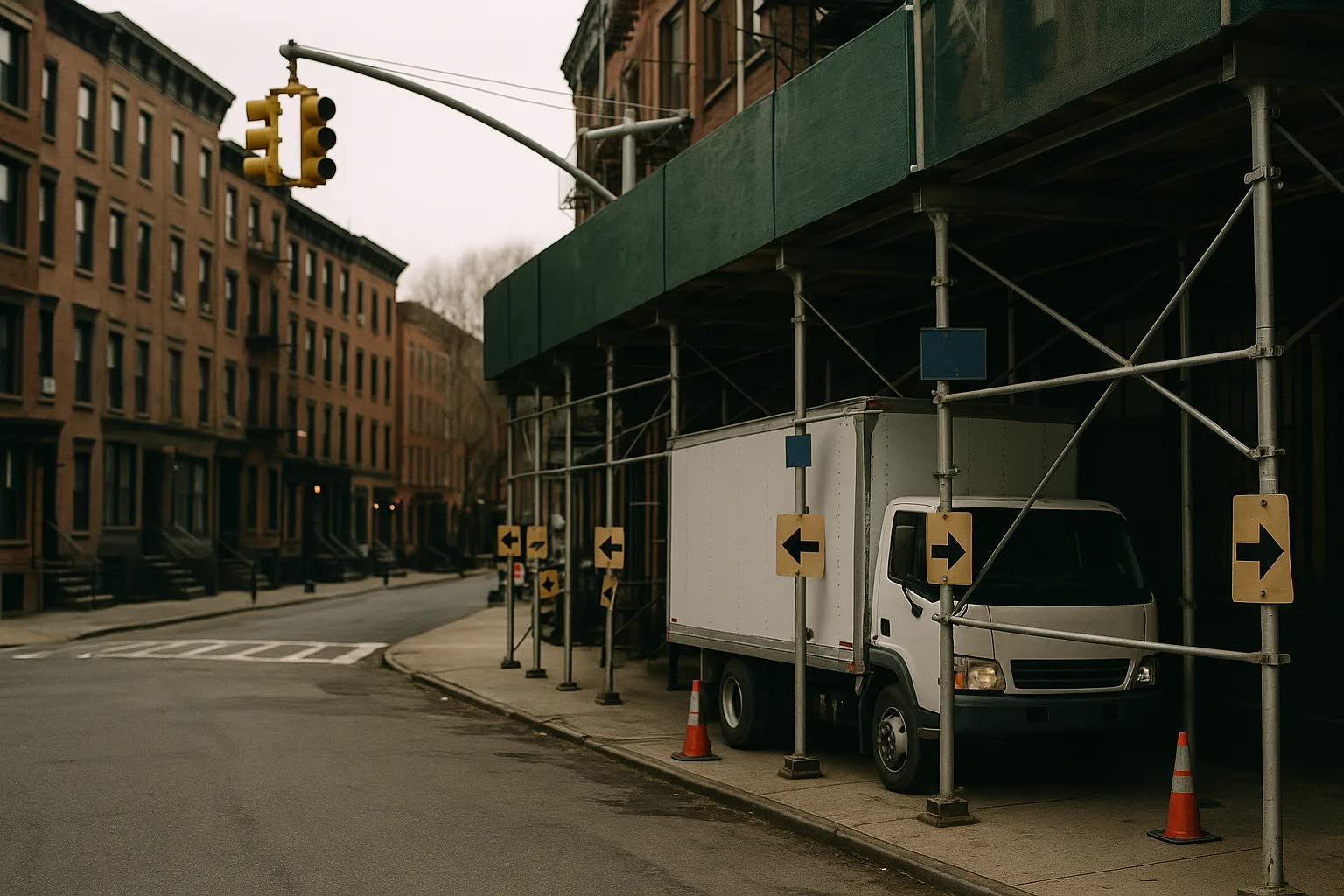
NEW YORK — Streaming services pushing new slates of series are increasingly treating New York City neighborhoods as characters in their own right, sending location scouts from Manhattan to Staten Island to mine distinct blocks, storefronts and public spaces for stories that lean on the city’s patchwork of cultures, buildings and street life, while raising demand for local crews and new, location-friendly permitting practices from the city film office and community boards.
Producers say the pull of authentic neighborhood texture is intentional: a coming anthology for Aurora Streaming frames each episode around a different borough, a limited crime drama will use Hunts Point’s waterfront and food markets to ground its plot, and a comedy series maps Youngstown and Park Slope to play off generational contrast. "We pick streets the way costume designers pick wardrobes," said Maria Alvarez, senior location manager at Peregrine Pictures, who has scouted stretches of Jackson Heights and the East Village for three separate projects. "A block conveys backstory in seconds—façade, signage, who walks by—and that saves dialogue and casting choices down the line."
The shift is measurable. The fictional New York City Film Commission issued 4,212 location permits in 2025, an 18 percent increase over 3,568 in 2024, according to internal tallies shared with industry partners; streaming projects accounted for about 62 percent of last year’s applications. Production spending tied to on-location streaming shoots in the city climbed to an estimated $1.1 billion in 2025, with producers reporting more than 18,400 local hires for camera, grip and transport jobs and roughly 9,700 days of work booked at neighborhood soundstages and repurposed storefronts.
That volume has strained existing labor pipelines and prompted unions and training centers to scale up. "This burst of neighborhood shoots has been a boon for our members, but it also exposes gaps in midlevel craft workers in camera and lighting," said Jerome Holloway, president of the New York Production Technicians Guild, Local 12. "We are running extra apprenticeship sessions and partnering with community colleges in Queens and the Bronx to get people job-ready for the spring surge." The guild reports a 22 percent rise in applications for apprenticeship programs since 2024.
To make repeated, multi-neighborhood shoots viable, city permitting officials rolled out a package of changes last summer that producers call "location-friendly." The measures include a fast-track permit for productions using three or more distinct neighborhoods, extended night-shoot allowances in designated corridors such as Atlantic Avenue and sections of Roosevelt Avenue, and a new online map that visualizes permit history and neighborhood restrictions. "We’ve been trying to balance predictability for crews with quality-of-life protections for residents," said Elena Ruiz, director of the New York City Film Commission. "The new tools are intended to minimize surprise impacts while keeping production moving."
Business owners in targeted neighborhoods say the shoots bring both customers and complications. At the corner of 34th Avenue and Roosevelt in Jackson Heights, Tony Lopez, who owns a bodega and sandwich shop, said a recent weeklong shoot increased lunchtime traffic but made deliveries difficult. "We had crews buy coffee and the craft services ordered food from us, which helped on slow days," Lopez said. "But when they park grip trucks on the block, my supplier can’t get through and I lose time—so it’s a trade-off."
Location managers are getting inventive about those trade-offs, building community benefits into their plans. Producers have begun offering local hiring fairs, scholarship donations to neighborhood arts organizations and "neighborhood mitigation" funds to offset lost parking or blocked sidewalks. On a recent production that transformed sections of DUMBO and Vinegar Hill into a period setting, the crew paid for three days of police crossovers and a small grants program for nearby artists whose studios were affected by equipment staging.
Several productions have chosen streets and landmarks for very specific reasons: a family drama will open with a sequence on the High Bridge and continue through Washington Heights; a thriller has bankrolled temporary repairs and signage at Flushing Meadows–Corona Park while shooting a central scene near the Unisphere; and a romantic drama used the subway mezzanine at Atlantic Avenue–Barclays Center to anchor a pivotal reunion. Those choices sometimes require coordination with transit and sanitation agencies, and more frequent dialogue has forced the city’s transportation planners to add staff to the interagency shoot coordination unit, according to people familiar with the changes.
Not everyone welcomes the uptick. Community board members in Bay Ridge and sections of the Bronx have pushed back on long night shoots and repeated street closures, demanding clearer benefit packages and guaranteed neighborhood liaisons. "We don’t oppose filming, but we want tangible, long-term gains—training slots, storefront investments, real noise mitigation—not just a couple of gift cards and a thank-you note," said Leah Kim, chair of Community Board 4’s cultural affairs committee in Jackson Heights. Those discussions have led some producers to carve out guaranteed open houses and free screenings for neighborhood residents as part of their permitting conditions.
Producers and city officials said they expect the neighborhood-first strategy to intensify through 2027 as streamers aim to stand out with localized stories that reward on-the-ground detail, prompting more investments in crew training, neighborhood permit liaisons and shared equipment hubs in places like the Brooklyn Navy Yard and Astoria. The conversation among studios, labor and communities is shifting from whether to shoot in neighborhoods to how to do it equitably, and the next year will reveal whether those new policies and local partnerships can keep pace with the productions moving in.