Street Vendors Near Midtown Adjust to the Latest Permitting Rulebook
Hot-dog operators, halal carts and pop-up food stands are navigating a new licensing system that aims to modernize enforcement and reduce conflicts.
By Daniel Rodriguez · March 27, 2026 · 4 min read
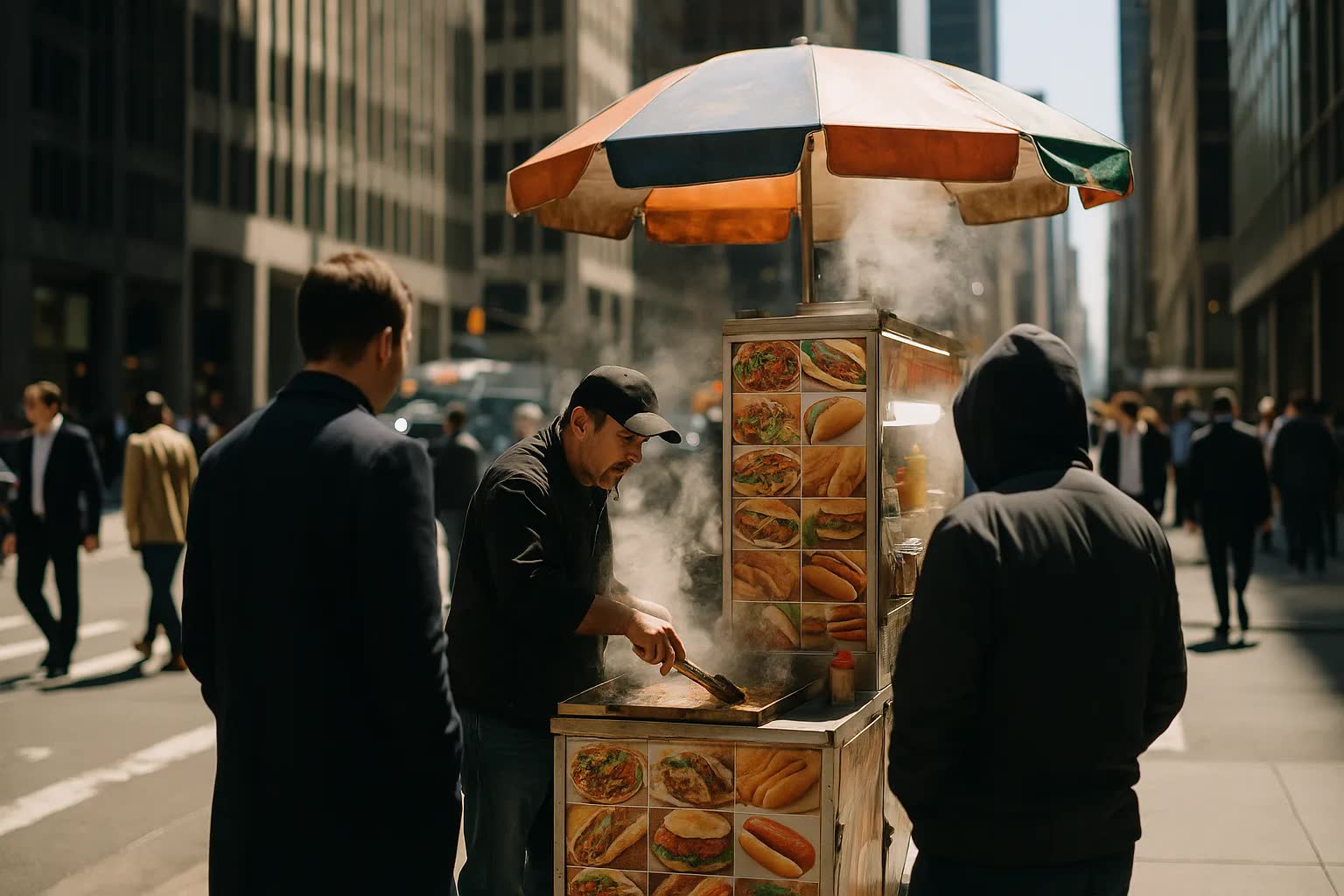
On a brisk Friday morning outside Bryant Park, the familiar tableau of stainless-steel carts, steaming woks and a steady line of tourists and office workers is the first test of a sweeping new permit rulebook the city rolled out this month for Midtown and surrounding commercial corridors, a plan city officials say is designed to bring order, faster enforcement and clearer rights to hot-dog operators, halal carts and pop-up food stands that crowd sidewalks from Times Square to Grand Central.
The rulebook, compiled by the City Vending Authority after two years of consultations, replaces a tangle of ad hoc licenses and neighborhood agreements with a tiered system that uses geofencing, time-limited pop-up permits and a standardized training and renewal schedule intended to reduce clashes between vendors, restaurants and enforcement officers, and to modernize display and payment of fines through a smartphone-based registry.
"We wanted a system that recognizes vendors as small businesses while giving enforcement the tools to reduce sidewalk congestion," said Daniel Park, senior planner at the City Vending Authority, who led the working group that drafted the new code. "The goal is to limit friction points downtown without pushing vendors out of the pedestrian economy they help sustain."
Vendors on the ground are parsing what that balance will mean for their daily routines. "I've been on this corner of 6th Avenue and 40th Street for 14 years," said Luis Vega, owner of Vega's Dogs, a cart that parks near the New York Public Library branch facing Bryant Park. "The training is okay, the app is tricky, but the fees are real. I just want to keep my regulars and not be moved every other month."
The rulebook includes several concrete mandates: 1,350 general vendor permits for Midtown commercial corridors, 400 neighborhood-specific permits for high-density tourist blocks, and 250 temporary pop-up licenses for single-event use; a one-time registration fee of $175, a $65 annual renewal, and a required six-hour food-safety and city-process course to be completed within 90 days of initial registration. The Authority said it will reassign 60 enforcement officers to education and outreach during a 120-day transition, and that a pilot program last year in Hell's Kitchen and Kips Bay reduced reported sidewalk conflicts by 28 percent in test blocks.
Spatial rules in the guidebook are detailed, down to block-face allocations and proximity limits from building entrances and subway stairs, which will affect vending patterns around landmarks such as Times Square, Herald Square, the Port Authority Bus Terminal and the Grand Central plaza. Food-service operators and brick-and-mortar restaurants have long sparred over sidewalk tables and cart placements on Lexington and Park avenues, and some restaurateurs are cautiously optimistic the map-based system will reduce hot spots where foot traffic bottlenecks.
"If the city enforces the map fairly, everyone benefits — pedestrians, vendors and storefront businesses," said Asha Rahman, executive director of the Midtown Vendors Coalition, which supported parts of the new code but pressed for lower fees for low-income permit holders. "But the proof will be in how fines are administered and whether low-volume vendors are given realistic time to comply with the new technical requirements."
Operationally, the rulebook leans on technology: vendors must register and display permits via a QR-coded placard linked to a vendor profile and live location; enforcement officers will use a companion app that flags noncompliant placements and generates on-the-spot warnings before fines. The City Vending Authority also launched a dispute-resolution hotline and expanded partnerships with neighborhood legal clinics to provide pro bono assistance for contested tickets and confiscation appeals.
The economic stakes are immediate for a workforce that city estimates at roughly 6,000 street vendors citywide, with about 2,800 depended on Midtown foot traffic; the Authority's survey of 1,200 Midtown vendors last fall found an average reported daily gross of $320 for food carts and $165 for merchandise stands, seasonal fluctuations of 40 percent between summer and winter, and 18 percent of vendors operating with paid assistants. Labor advocates warn that new compliance costs could push marginal operators out of business even as the city projects modest revenue gains from registration fees.
Controversy has not disappeared with the new rulebook. Several small restaurant owners on 9th Avenue said they still worry that permanent allocation of lucrative curbside slots to vendors will undercut indoor sales, while some vendor groups staged protests last week outside a Council of Midtown Business Improvement Districts meeting after several vendors received warning notices during the transition period. "We need predictable rules, but not rules that make it impossible to earn a living," said Carl Bennett, who owns a sandwich shop near Herald Square and leads a local merchants association.
City officials say the new system will be reviewed at three and six months after implementation, with adjustments possible based on enforcement data, vendor feedback and pedestrian flow studies; pilots in Chelsea and the Garment District are already slated for later this spring. "This is meant to be iterative," Park said. "We're tracking compliance, congestion and economic impact, and we'll tweak permit quantities, hours and prices if the metrics show we're missing the mark." For vendors who have made Midtown their livelihood, the next quarter will determine whether the rulebook becomes a roadmap to stability or another bureaucratic hurdle to overcome.