Subway Buskers Adapt as MTA Rules Shift
Musicians and dancers who have long relied on the transit system must now navigate new enforcement and alternative performance spaces.
By Aaron Feldman · March 7, 2026 · 5 min read
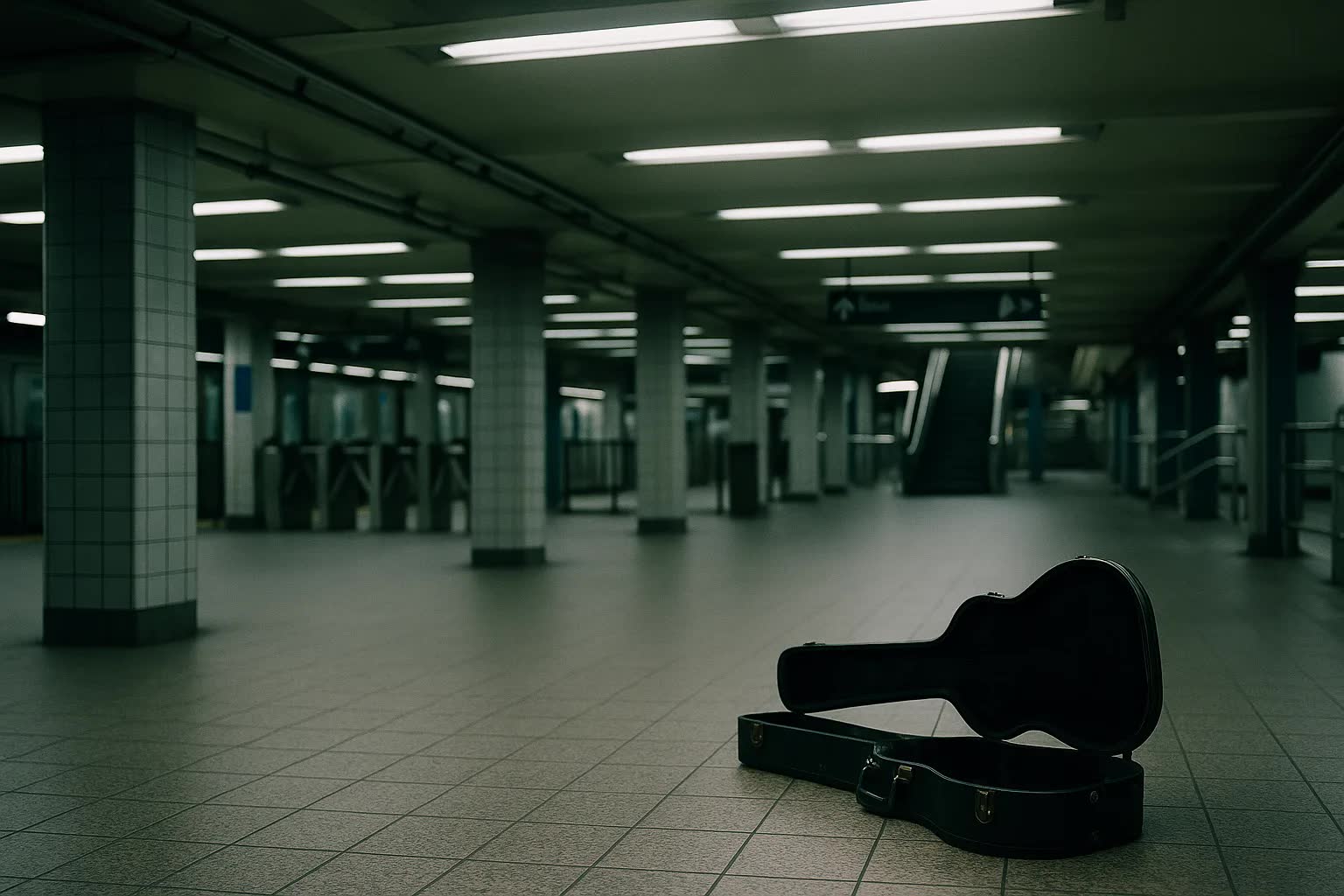
At the bustle of 14th Street and Union Square on a gray late-February afternoon, the usual soundtrack of clacking heels, subway announcements and a trio of brass players has taken on a new timbre: amplified cords plugged into battery packs, petitions being handed to passersby and performers mapping out legal corners to avoid a growing number of enforcement encounters. A shift in Metropolitan Transportation Authority enforcement and a patchwork of city and private alternatives are forcing musicians, dancers and magicians who long relied on sidewalk and mezzanine pitches to rethink how — and where — they make a living in New York’s transit arteries.
The MTA says the changes are aimed at improving customer circulation and safety in stations that have seen rising ridership and increased street-level pedestrian congestion. “We are trying to balance access for riders with the long-standing cultural presence of performers,” said a senior MTA planner who requested anonymity because discussions with performers are ongoing. The agency is piloting designated performance zones in a subset of high-traffic stations and has issued new guidance about amplification, crowd size and staging near stairwells and ADA ramps.
The practical upshot for performers has been immediate and uneven. Marco Reyes, a 34-year-old violinist who has played the mezzanine at Union Square for eight years, said he has had to split his time between the subway and weekday markets in Astoria and a weekly night at a small bar in Boerum Hill. “I used to rely on the morning and evening rush — you could count on a steady flow of people,” Reyes said. “Now I’m booking short sets at coffee shops and trying to get into the official pitches when I can. It’s a scramble, but it’s also making me think more like a small-business owner.”
Numbers collected by two artist advocacy groups and shared with this newsroom show the scale of the shift: during the calendar year 2025 there were approximately 2,134 reported enforcement interactions between transit staff and performers, resulting in 312 formal summonses and 58 arrests, according to a joint tally by TransitArts and the Performer Rights Collective. The MTA’s pilot program, launched in September 2025, designated 18 performance zones across 12 stations, and a follow-up survey found 47 percent of responding performers reported a year-over-year decline in on-platform earnings of at least 25 percent.
Where punishment has been threatened, creativity has followed. In Jackson Heights, a collective of seven percussionists bought a shared van and started a rotating schedule of daytime sets at the Roosevelt Avenue pedestrian plaza, tied to the local merchant association’s weekend market. In Bushwick, a group of dancers now sells short choreography workshops on the steps of Maria Hernandez Park and performs at pop-up art openings coordinated through a nonprofit called The Canopy Projects. Small-business partnerships are becoming a lifeline: coffee shops and bodegas on Bedford Avenue and along Fulton Street in Brooklyn host brief “transit-to-table” sets and split tips with performers for exclusive two-hour windows.
The cultural texture of the transit system is changing, with commuters and tourists noting a rise in regulated, scheduled performances and a decline in the spontaneous jams that once punctuated long commutes. “On Canal Street last month I watched a tap crew that used to pull three storefronts worth of people now performing for 20 minutes and then moving to a private gig across town,” said Nina Alvarez, owner of a café on Canal Street and a member of Manhattan Community Board 1. “For businesses it’s different too — you want the vibrancy but not the crowds that block your entrances.” Small venue owners say the new economics favor curated, ticketed micro-shows that guarantee foot traffic rather than ad-hoc subway audiences.
Not everyone has the mobility or the backing to pivot. Tamika Johnson, 28, a choreographer who performed improvised routines on the mezzanine at Canal Street for seven years, described the logistics of moving bulky equipment and securing daytime bookings while keeping a family in southeast Queens. “It’s a hustle that bleeds into everything,” Johnson said. “I’ve spent more time on my phone coordinating gigs than on the floor practicing. If the MTA is serious about preserving subway culture, it can’t just write rules without providing alternatives.” Johnson recently received a $150 citation for staging too close to an access ramp, she said, and is part of a new coalition seeking subsidized rehearsal spaces and easier access to designated performance zones.
The MTA and city council staffers are exploring policy tools meant to ease the transition: a registry for performers, a low-cost plaque system to reserve 30- to 90-minute slots in designated areas, and a small-grant program to help artists buy portable equipment that reduces congestion. A draft plan being reviewed by transit officials proposes 120-minute weekly allocations per registered performer at a capped fee of $10 per slot for pilot stations, and a rolling lottery to assign high-demand times. TransitArts and the Performer Rights Collective are negotiating criteria for who qualifies for priority slots, arguing for seniority, community engagement and proof of income from public performance.
The new landscape has prompted collaborations that did not exist a few years ago. In Downtown Brooklyn, a coalition of performers, the local chamber of commerce and a small events firm created a weekend “Transit Arts Corridor” that channels buskers to plazas and storefront stages between Atlantic Avenue and Borough Hall, while sponsors cover liability insurance. In Queens, a partnership between a community development group and a well-known arts school runs a weekly “Subway Residency” that offers rehearsal space and transportation stipends to eight artists. Those programs are small but they provide a template that some performers hope can be scaled by private donors and city grants.
Still, tensions remain at the neighborhood level as community boards, small-business owners and transit riders weigh the trade-offs between public safety and cultural vibrancy. In a recent hearing at the Manhattan borough office, residents of the Lower East Side urged the MTA to limit amplified performances near Franklin Street and to enforce crowd-control rules after a handful of summer shows spilled onto stairwells. Performers counter that tighter restrictions without commensurate support will push many of the city’s most recognizable street acts into privatized storefronts and paid gigs that cut them off from the broad, communal audience that built their reputations.
As spring approaches and a slate of festivals and street fairs looms, buskers say they will keep improvising. Some are signing up for formal slots in the MTA pilot while others cultivate micro-audiences online and through neighborhood networks. “We’ve survived so many changes in the past decade,” Marco Reyes said, smiling as he unplugged his amp outside an Astoria market. “This is another one. We’ll adapt — but we’re asking the city and transit agencies to adapt with us.” The coming months will test whether city agencies, private partners and performers can coordinate a system that preserves subway music as both an incubator of talent and a living thread of New York life.