Subway Musicians Push for MTA Support as Live Performance Moves Underground
Organized collectives of transit performers are negotiating permit changes and curated programs with the MTA to formalize a citywide subway stage network.
By Olivia Park · April 7, 2026 · 4 min read
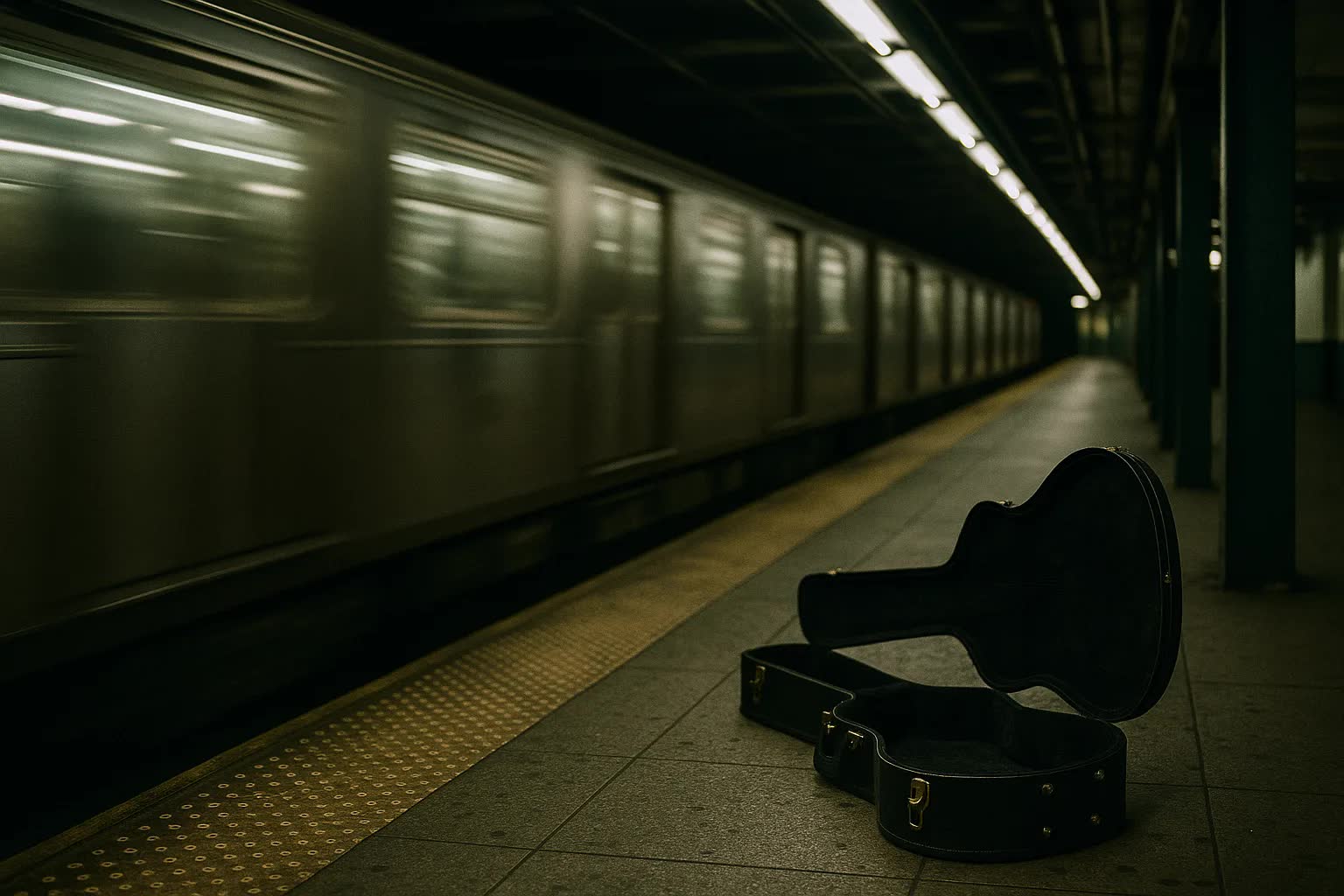
New York’s subway musicians, long part of the city’s informal soundtrack, are pushing for a more formal role in the transit ecosystem as live performance migrates underground amid rising rents and shrinking club capacity; organized collectives from the South Bronx to Sunset Park are now negotiating permit revisions and curated programming with the Metropolitan Transportation Authority to create what supporters call a citywide subway stage network that would place scheduled performances at high-traffic stations from Grand Central to Atlantic Avenue–Barclays Center.
The momentum comes after four years of stopgap solutions and grassroots organizing, when performers and small promoters began pooling resources to manage sound checks, schedule sets and mediate conflicts with station managers. ‘‘We’re not asking for a handout, we’re asking for a stage,’’ said Marisol Rivera, founder of the Underground Arts Collective, which represents about 350 musicians and spoken-word performers in Manhattan and Brooklyn. Rivera said collectives are pressing for guaranteed slots, modest pay, and equipment storage so artists can play without carrying amps across boroughs.
The MTA has already tested several pilots — including a curated two-week roster at Union Square last fall — and agency officials say they are receptive to formalizing a program, subject to operational constraints. ‘‘We are committed to fostering a safe, accessible and vibrant system,’’ said Lena Carver, director of external affairs for the MTA, adding that the agency wants to avoid inconveniencing commuters and creating ADA access issues. Carver said the discussions include station-specific rules, insurance requirements and partnerships with neighborhood business improvement districts to coordinate schedules.
Organizers and agency staff are attempting to quantify what a systematized performance network might look like. According to figures shared with NYDailyWatch by participants in the negotiations, about 4,100 performers registered with local collectives this year, 320 curated performances were piloted across 28 stations in the past 12 months, and those curated slots reached an average of 12,400 riders per day at pilot locations; the MTA has tentatively earmarked $2.5 million for arts transit programming over two years in preliminary internal estimates, and organizers have proposed a permit fee of $25 with micro-grants of $150 to $500 per scheduled set to cover equipment and travel.
Neighborhoods and station geometry are shaping how the proposals are designed. In Midtown, where turnover and rider volume around Grand Central–42nd Street can make crowd control a priority, officials are discussing short, acoustic sets near mezzanines; at Union Square, with its open floor and commuter plaza, organizers envision longer blocks of programming that might include amplified bands and rotating sets for evenings. Brooklyn sites under discussion include Atlantic Avenue–Barclays Center and Prospect Park B or Q platforms near 7th Avenue; in the Bronx, Fordham Road and the Norwood–205th corridor were named as possible locations that could host Latin ensembles and youth orchestras.
Performers say the program would professionalize what is now a precarious hustle. ‘‘The subway saved our gigs after the closure of many neighborhood venues,’’ said Jamal Keene, a saxophonist and co-director of the Bronx Buskers Union who often plays weekday mornings near the Fordham Road concourse. ‘‘We want fairness: a schedule where a jazz trio doesn’t get squeezed out by a drumline and a guarantee that our sound checks don’t get cut off mid-song because of a sudden platform closure.’’ Keene said collectives are also asking for designated storage lockers and a digital scheduling app that syncs with train-service alerts.
But the negotiations are not just about music. City officials, transit planners and community boards have raised questions about crowding, safety and the rights of small businesses that line station exits. A senior MTA planner who requested anonymity said the agency is weighing the trade-offs carefully: ‘‘Our role is to balance public safety, efficient passenger flow and the cultural benefits. We have to model pedestrian impacts for each station and ensure we’re not creating pinch points or violating accessibility requirements.’’ That planner said stations with wide mezzanines fared better in pilot modeling than narrow platforms where emergency egress could be disputed.
Economically, organizers argue a formal network could redistribute revenue more predictably and support a broader workforce of musicians. The collectives’ proposal suggests a tiered stipend system tied to ridership metrics and time-of-day demand, with estimates projecting a median additional monthly income of about $1,200 per active performer if the program reaches 60 percent of pilot capacity; they also propose revenue-sharing with the MTA for branded programming and modest sponsorships from local chambers of commerce. Business owners in neighborhoods such as Gowanus and the Lower East Side have filed letters supporting curated programming, noting spillover customer traffic for cafes and corner stores.
Not everyone is convinced. Some community board members and commuter advocates worry that institutionalizing performances could crowd already-congested stations and shift liability to the MTA. ‘‘We love music, but we need rules that prioritize safe egress and clear lines of sight for security cameras,’’ said Eileen Park, chair of a borough-level arts committee in Lower Manhattan. Park said she wants a transparent appeals process for acts that are denied slots and a clear complaints hotline that flags late-night performances that might disturb nearby residents.
Negotiations are expected to continue through spring, with a joint working group of MTA officials, collective leaders and neighborhood representatives scheduled to present a draft permit framework at the authority’s May operational meeting and a public hearing slated for June in Manhattan. If approved, organizers say, a phased expansion could roll out this summer to 50 stations, accompanied by a centralized booking platform and an independent review of impacts after the first year. For subway musicians who have long played to commuters between platforms and trains, the proposal promises a rare stage: scheduled, supported and woven into the daily rhythms of a system millions of New Yorkers rely on.