Subway Wi‑Fi Upgrade Stalls as Signal Vendors Clash Over Contracts
An ambitious plan to boost underground connectivity faces delays and competing proprietary systems.
By Mei Lin · December 30, 2025 · 4 min read
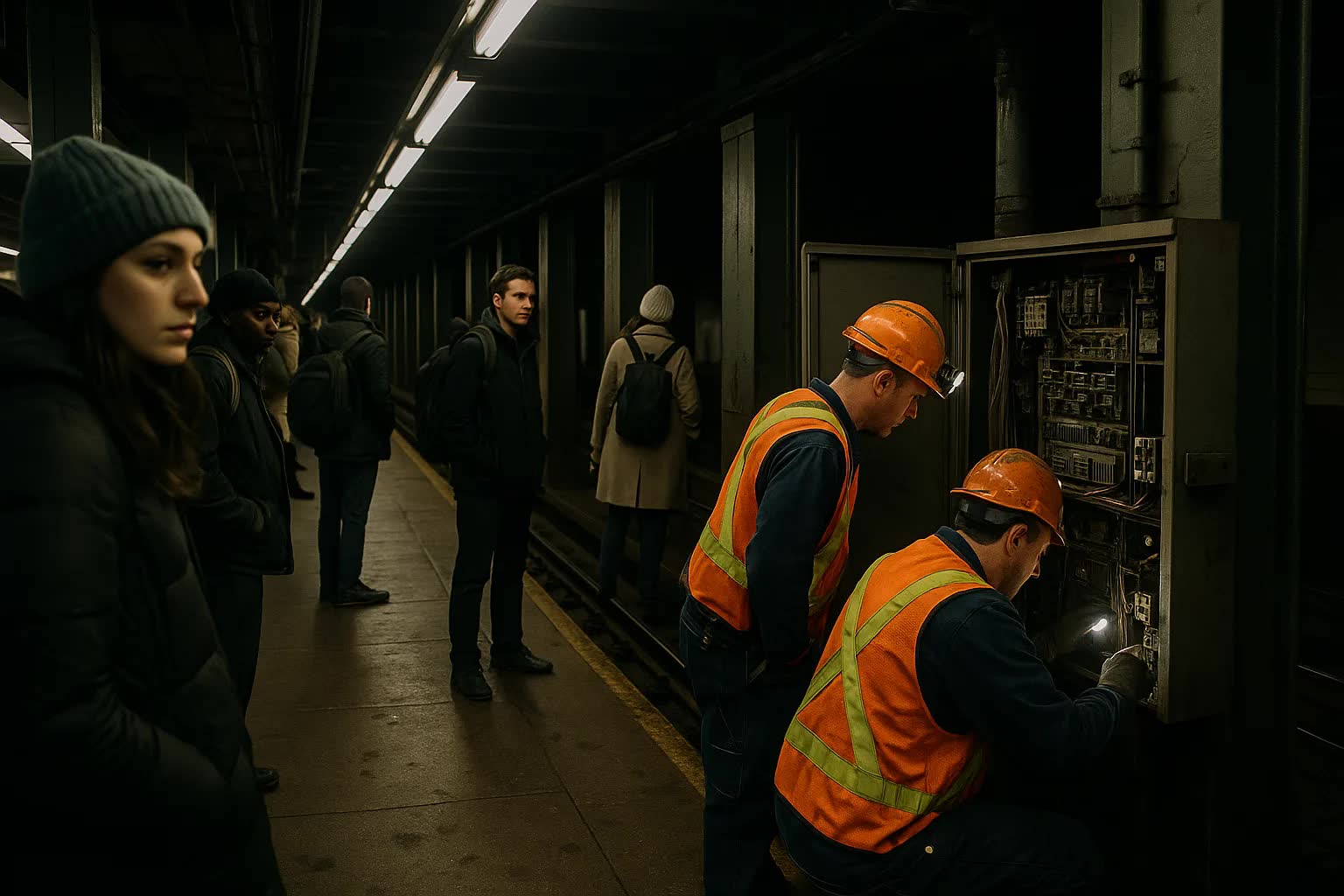
NEW YORK — An MTA plan to blanket the city's subway system with full, high-speed Wi‑Fi has run aground as competing signal vendors clash over contracts, proprietary software and how to wire the tunnels beneath neighborhoods from Times Square to Atlantic Avenue. What was billed as an upgrade to give riders reliable connectivity for work, navigation and emergency alerts is now stalled in procurement disputes, leaving commuters in pockets of Midtown, the Lower East Side and parts of Brooklyn with patchwork service and an uncertain timeline for a fix.
The program, dubbed SubConnect by transit officials, was launched in 2024 with a goal of tying together platform routers, tunnel backhaul and centralized control software to support both passenger Wi‑Fi and transit operations data. But at least three companies that answered the MTA's requests for proposals — SignalWave Technologies, MetroMesh Systems and TunnelLink Networks — insist their systems are not directly compatible, and each is pushing for long-term maintenance contracts that would effectively lock the authority into a single vendor for years.
Technical arguments center on more than speed. Vendors say their designs use different frequencies, handoff protocols and encryption approaches for in-tunnel wireless mesh networks, and dispute over a shared control layer has become the project's core hitch. "We are not fighting about speed; we are fighting about architecture," said Rosa Delgado, senior MTA planner, adding that the authority is worried about future flexibility. "If we accept two proprietary cores in the same tunnel, we risk constant outages and a tangled support system that could cost the agency millions over the long run."
SignalWave's chief executive, Ethan Park, countered that his firm had proposed an open-standards bridge months ago and accused the MTA procurement team of favoring legacy players. "We offered interoperable APIs and a migration path that would have saved ratepayers both time and money," Park said. "The delay isn't about technology — it's about contract terms that protect incumbent fees, not riders." Park's firm has filed a formal protest with the MTA's contracting office, a move that typically freezes awards until hearings are held.
Riders and small businesses say the delays are tangible. In Astoria, a coffee shop owner on 30th Avenue said customers regularly complain about dropped video calls on the N and W trains, and delivery drivers in Sunset Park have had to rely on cellular service that is spotty in some tunnels. A nurse who commutes from Flushing to Manhattan said she has missed dispatch updates during overnight shifts because of intermittent connectivity. Transit staff have also reported difficulty using planned remote diagnostic tools meant to speed repairs on signal equipment when those systems rely on the disputed Wi‑Fi backbone.
The numbers underscore the scale and the stakes. The MTA has budgeted roughly $450 million for the SubConnect rollout; the authority has installed full platform Wi‑Fi hardware in 120 of the system's 472 stations and completed tunnel backhaul in only 12 percent of the target miles, according to internal schedules. Three formal vendor protests are active, two pending contract awards are on hold, and officials say the procurement review could add 12 to 18 months to the public timeline, pushing a 2027 completion target toward late 2028 or 2029 unless an emergency agreement is struck.
Procurement lawyers are poring over licensing clauses that would give vendors the right to charge for software updates and cross-network integrations. Contract watchdogs and several transit advocacy groups worry that without an explicit open-standards requirement, the MTA could face years of 'vendor lock' that raises costs and slows innovation. "This should be a platform, not a set of walled gardens," said Laura Kim, director of TransitTech Advocates, who has advised the city on smart infrastructure. "Every dollar spent tying the city to one stack is a dollar taken from service and maintenance."
At City Hall and in neighborhoods from Queensboro Plaza to Bay Ridge, elected officials and local business leaders have begun pressing the MTA for transparency. A city council member representing Midtown West circulated a letter this month asking for a briefing on interoperability tests conducted in the 7 line's Flushing-Main Street pilot and at Atlantic Avenue–Barclays Center, where differing vendor equipment briefly failed to hand off wireless connections during holiday crowds. MTA officials have agreed to an oversight session in January with committee members and independent engineers.
Pilots run in the 7 line terminal and on a stretch of the L line through Williamsburg and East Williamsburg revealed the central difficulty: even where fiber has been laid and platform routers installed, the in-tunnel radios and central controllers must speak a common language to seamlessly serve moving trains. Contractors say retrofitting older tunnels around Grand Central and Union Square with a single, open control plane is technically feasible but would require rewriting major portions of their software and revisiting pricing models — a step vendors resist unless it is written into contracts.
For the MTA and millions of daily riders, the next few months will be decisive. Officials are weighing a two-pronged approach: renegotiate existing bids to include mandatory open-standards clauses and prepare a new request for proposals that emphasizes modular, vendor-agnostic architectures. If the authority moves quickly, engineers say, riders may see clearer, more consistent service on core Manhattan trunk lines by the end of 2026; if not, the system risks prolonged fragmentation and higher lifecycle costs. The debate now centers on whether city leaders will force a technical reset that favors interoperability or let contract terms define the city's subterranean digital infrastructure for years to come.