Suffolk Towns Press State for Faster Cleanup of Long Island Sound Contamination
Local supervisors demand accelerated testing and remediation plans after new reports link pollutants to shellfish closures and health advisories.
By Malik Johnson · February 23, 2026 · 5 min read
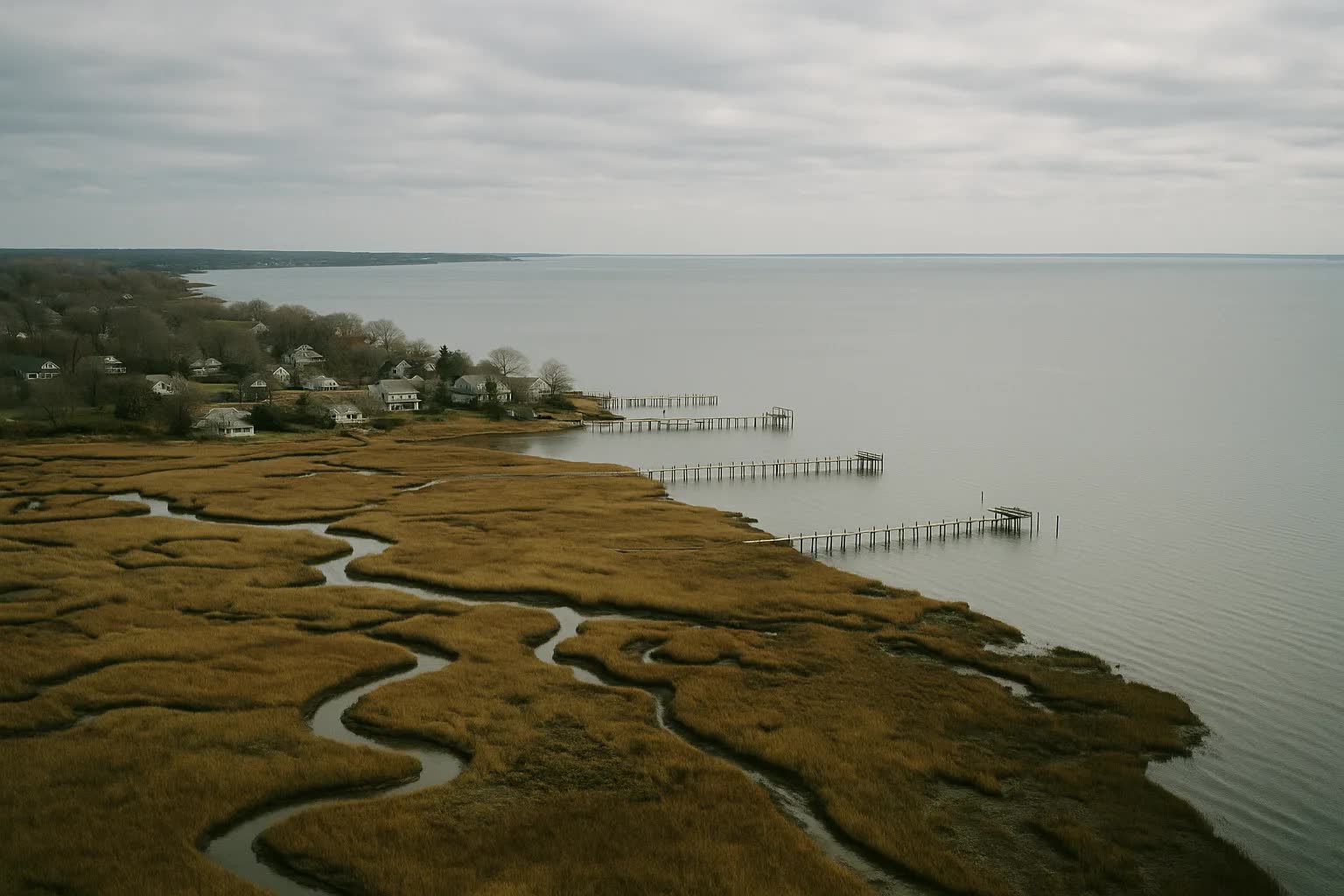
NEW YORK — From the scallop shacks that line the East Village to anglers casting from docks at Pelham Bay Park, New Yorkers who depend on the Long Island Sound are watching with growing alarm as Suffolk County supervisors press the state to speed up cleanup of contaminants that recent reports tie to widespread shellfish closures and health advisories, arguing the environmental threat now has direct consequences for city tables, commuter recreation and waterfront neighborhoods from Astoria to the South Bronx.
The movement was crystallized this week when supervisors from Huntington, Brookhaven and Riverhead — joined by officials from seven other East End towns — convened in Riverhead to deliver a formal demand to the State Office of Coastal Conservation: accelerate testing, expand remediation and deliver a timeline that shortens planned interventions from years to months. "We have families, fishers and small businesses who can't wait for a five-year plan," said Linda Reyes, supervisor of the Town of Huntington, at a midday press conference outside the courthouse. "We need action now to protect public health and the livelihoods that depend on the Sound."
The state-commissioned analyses that triggered the push, circulated to local governments last month, link elevated levels of nitrogen, legacy pesticides, PFAS and enteric pathogens to algal blooms and recurring closures of commercial and recreational shellfish beds along the North Shore and eastern reaches of the Sound. Darnell Pierce, president of the Long Island Sound Fishermen's Cooperative, said the closures have already hammered small operators. "Our members saw a 40 percent drop in licensed landings last season, and the uncertainty this spring could be the difference between staying in business and folding," Pierce said, citing losses felt at docks from Port Jefferson to Greenport and at retail outlets on Canal Street and Orchard Street that source local clams and mussels.
Concrete figures in the reports underscore the urgency: 1,800 acres of shellfish beds were subject to seasonal or permanent closure last year; nutrient concentrations averaged 35 percent higher in monitoring stations near the Suffolk coastline compared with 2019 baselines; PFAS compounds were detected in 22 of 30 tested estuarine sediment samples at concentrations ranging from 5 to 22 parts per trillion; and the towns say they need an immediate infusion of roughly $24 million for emergency testing, dredge planning and temporary mitigation measures along with a proposed $150 million multi-year capital program to upgrade sewer outfalls and construct denitrifying wetlands.
Local scientists and conservation groups echoed calls for faster action. "These contaminant trajectories are consistent with expanding sources of stormwater runoff and failing on-site sewage systems; the longer we delay, the more time pollutants have to bind into sediments and affect the food web," said Dr. Aaron Felder, senior marine scientist at the Shoreline Conservation Institute in Sag Harbor. He and others have urged the use of hybrid responses — short-term closures and targeted dredging combined with longer-term habitat restoration such as eelgrass and oyster bed rehabilitation — to reduce nutrient loads and improve water clarity more quickly than infrastructure upgrades alone.
State officials, who met with supervisors in Albany and hosted a conference call with town leaders this week, say they are increasing monitoring and allocating funds but defended the pace of major capital projects. "We are scaling up sampling and will accelerate grant awards where projects meet state criteria," said Elaine Trask, director of the State Office of Coastal Conservation. Trask emphasized that work on sewer upgrades and land-use changes requires time for engineering, environmental review and permitting, but she acknowledged that certain emergency measures — mobile testing units and temporary harvest restrictions — can be implemented faster.
The political pressure has tangible local consequences: in Huntington, supervisors drafted ordinances that would create a rapid-response fund financed through county bonds; in Riverhead, officials are drafting a legal strategy to seek state accountability if timelines slip beyond an accelerated schedule. Business owners on the North Fork say they cannot afford to wait. At Harborline Oyster Farm in Orient, owner June Park said falling harvests and frequent sanitary closures have forced her to cut staff and turn away restaurant contracts from Manhattan. "Every closure means lost wages and fewer customers in the city who want 'local' seafood," she said. "We export not just product but reputation, and that's at risk."
Community groups in New York City have begun to weigh in as well, staging a series of waterfront forums in the East Village and a listening session at the Astoria branch of the Queens Public Library to highlight how contamination in the Sound affects urban neighborhoods. Residents of City Island and Throggs Neck in the Bronx — both communities that look directly onto the Sound — say they have noticed changes in water quality and increased advisories during summer months when recreational use spikes. Some restaurants in the Lower East Side and a handful of fishmongers near Canal Street have already shifted suppliers north and east as a precaution, raising prices for diners and consumers.
Experts say the technical work is complicated but not impossible if political will and funding align. Recommended short-term measures include doubling the frequency of state testing in hotspot areas from quarterly to monthly, deploying two mobile labs capable of same-day pathogen analysis, and fast-tracking at least 10 pilot projects for wetlands restoration and septic-to-sewer conversions in the hardest-hit towns such as Patchogue and Oakdale. Longer-term solutions rely on a mix of federal disaster grants, state capital appropriations and matching funds from towns and local water authorities, a financing architecture supervisors say must be clarified within 90 days to avoid further economic damage.
A series of public hearings is scheduled next month in Hauppauge and Greenport, where town leaders expect state officials to respond to the demand for an expedited plan; supervisors warn that if deadlines slip they will consider emergency declarations and litigation to compel faster action. For now, residents, fishers and restaurant owners from Astoria to the East Village will be watching the testing numbers — and the calendar — closely as the region approaches what could be a decisive spring for the Sound's health and the seafood economy that depends on it.