Summer Rooftop Cinema Scene Expands Across Manhattan and Brooklyn
Pop-up rooftop screenings are diversifying programming with indie premieres and local filmmaker showcases alongside classic film nights.
By Keisha Brown · December 25, 2025 · 4 min read
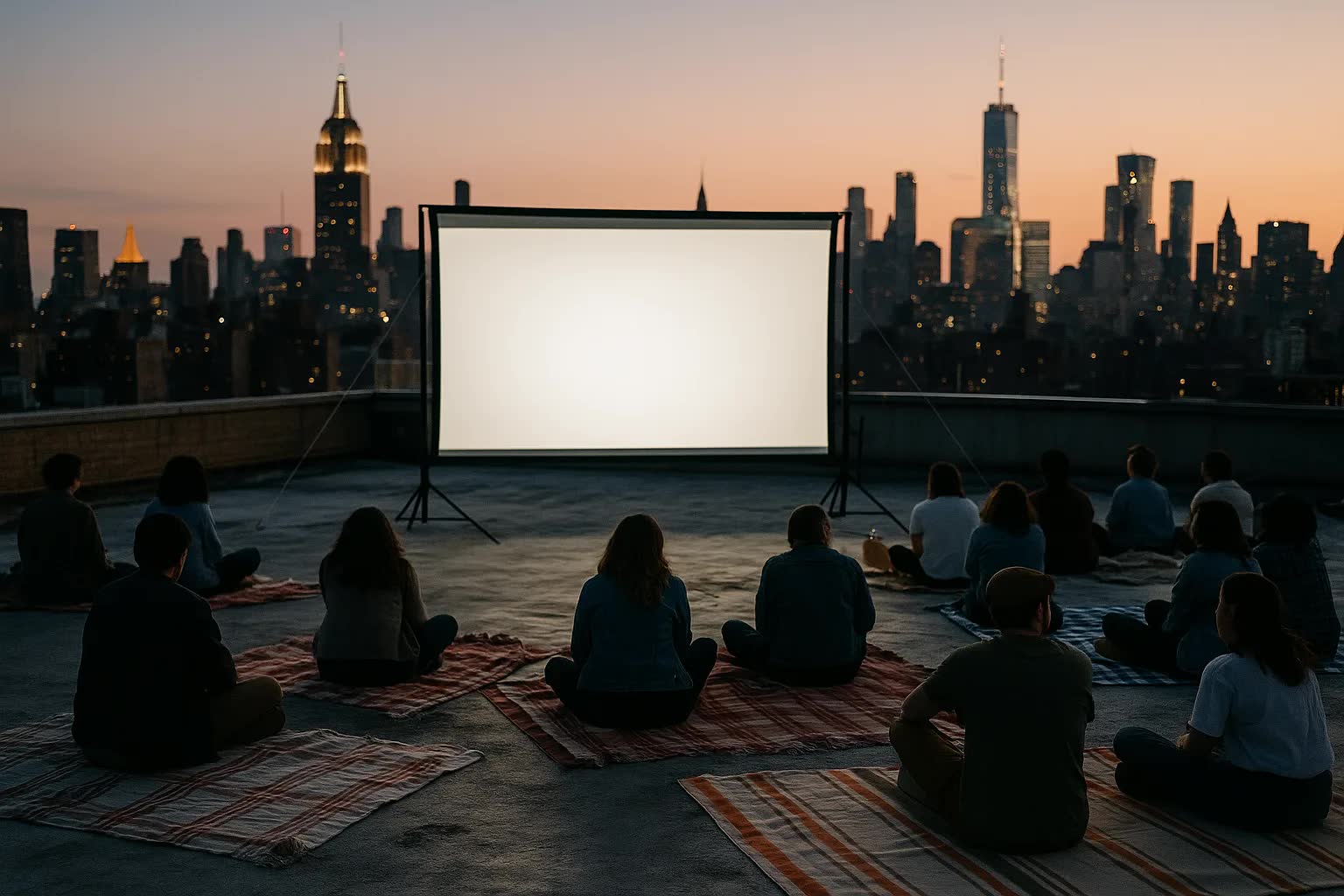
NEW YORK — What began as pandemic-era novelty rooftop screenings have this summer spread across Manhattan and Brooklyn into a sustained cultural circuit, with pop-ups on former parking lots and hotel terraces now hosting indie premieres, local filmmaker showcases and classic film nights under iconic skyline backdrops from Chelsea to DUMBO. Organizers and landlords say the combination of open-air safety, cinematic nostalgia and distinctive neighborhood settings has turned short summer runs into year-round programming for a growing roster of operators trying to carve out a new cultural niche in the city’s crowded entertainment market.
Rooftop operators are positioning their venues as alternatives to multiplexes and festivals, programming weeknight premieres for indie features, weekend retrospectives of classic directors and family matinees timed with dusk. “We built the program around the neighborhood,” said Marcos Alvarez, co-founder of Rooftop Reels, which runs seasonal series at a converted warehouse at 14th Street and Ninth Avenue. “People want something that feels local — a filmmaker from Red Hook or a restored 35mm print paired with pizza from the bodegas on the corner. That chemistry can’t be replicated in a dark cinema.”
The venues themselves reflect neighborhood identities: The Everly, a boutique hotel rooftop on West 14th Street, markets romantic comedies for date-night crowds; The Linden, a converted factory roof in Williamsburg off Bedford Avenue, hosts premieres and after-parties tied to Brooklyn’s indie film scene; and Harborview at Pier 42 has family programming backed by waterfront views of the Lower Manhattan skyline. In DUMBO, a new series on Furman Street pairs experimental shorts with live music, while a Harlem rooftop near 125th Street has become known for director Q&As and community shorts nights that spotlight residents’ stories.
Concrete figures illustrate the expansion: between 2023 and 2025 the number of licensed rooftop screening venues in Manhattan and Brooklyn rose from an estimated 18 to 47, according to a survey of permits and operator filings conducted by NYDailyWatch. Average nightly attendance on established sites runs between 80 and 180 people, with peak weekend shows drawing as many as 320 where rooftop size allows; average ticket prices range from $12 for family matinees to $25 for special premieres. Organizers report that roughly 40 percent of summer slots last year were allocated to local filmmakers, up from about 15 percent two years earlier.
The shift has not been without friction. Neighbors in parts of Chelsea and the East Village have filed complaints about late-night noise and crowds, prompting community boards to work with promoters on mitigation strategies such as sound curfews, timed admissions and improved trash management. “We support cultural activity, but it has to coexist with people who live here,” said Carmen Diaz, chair of a local community board on the West Side. “The most successful operators have been the ones who meet us at the table and commit to permits, stewarding and neighborhood jobs.”
For filmmakers, the rooftop circuit offers direct access to audiences and a different kind of gatekeeper than traditional festivals. Brooklyn-based director Ravi Patel used a Rooftop Reels slot to premiere a 24-minute drama about a laundromat in Greenpoint, and said the post-screening conversation yielded more concrete opportunities than more established festival runs. “You can talk to people after the film, you can see their faces,” Patel said. “We sold out, I met a short-form producer and a curator who wanted to program me in Queens — that kind of word-of-mouth accelerates careers in ways a clapped-in ballroom never did.”
The business side is evolving as landlords, insurers and city regulators learn the ropes. Operators must negotiate rooftop leases that cover late-night use, obtain temporary event permits and secure additional insurance for projection and guest liability. Several companies have invested in modular weatherproof screens and sound systems designed to minimize spillover into residential units. Elena Markovic, general manager of The Everly, said those investments have been essential. “We prioritize accessibility and neighbor-first sound design,” she said. “The cost is considerable, but it allows us to expand programming without sacrificing quality or community trust.”
Programming decisions are increasingly granular. Organizers schedule family-friendly screenings earlier in the evening and reserve Sundays and weekday slots for school partnerships and student showcases; adult-oriented premieres and themed marathons run later and often include rooftop bars or pop-up food vendors drawn from the surrounding neighborhood. Festivals are beginning to add rooftop categories, and partnerships with film schools and collectives bring curated blocks of shorts that rotate through different boroughs. Accessibility remains a challenge for older walk-up buildings, prompting some operators to restrict capacity or invest in temporary elevator access for patrons with mobility needs.
Looking ahead, operators and city planners say the rooftop cinema model is poised to expand further, especially if seasonal permits are streamlined and infrastructure investments make terraces more weather resilient. Several groups have proposals to pilot winterized rooftop domes and to bring programming into Queens and the Bronx where cheaper rooftop space and emerging creative communities could mirror Brooklyn’s boom. “Rooftop cinema is not a flash-in-the-pan trend,” said Aisha Morales, director of programming at the Skyline Cinema Collective. “It’s about reimagining public space for storytelling, and that experiment is only getting started.”