Sunset Park Launches a Community Solar Co-op to Lower Energy Bills
A neighborhood nonprofit secured funding to install panels on industrial rooftops and sell discounted power back to local residents and small businesses.
By Amina El-Sayed · April 20, 2026 · 4 min read
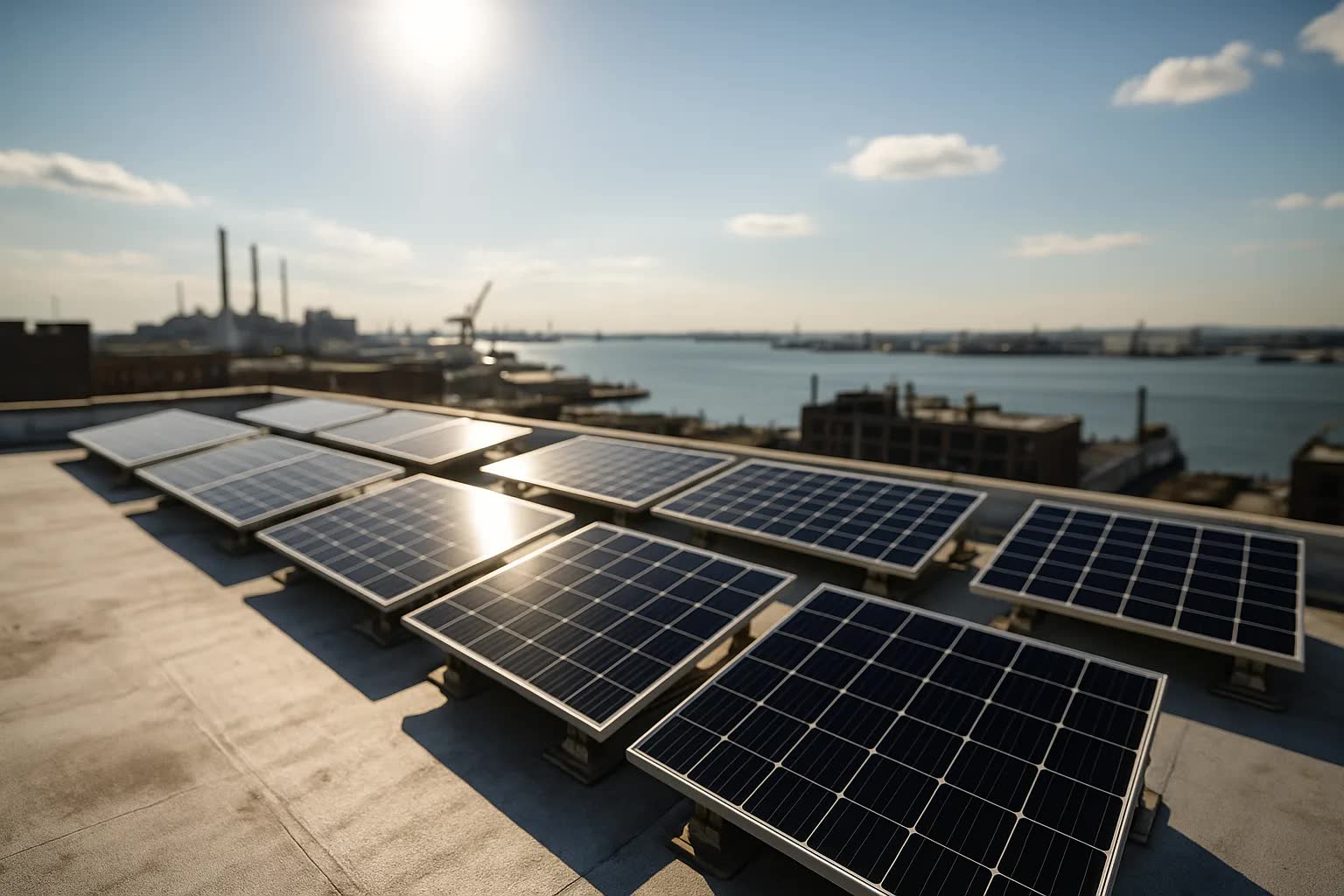
NEW YORK — On April 20, 2026, a neighborhood coalition in Sunset Park launched one of the borough’s most ambitious community solar projects, a co-op that will place panels on industrial rooftops in and around Industry City and sell discounted power back to residents and small businesses in the 11232 zip code, aiming to cut bills and keep energy revenue circulating locally.
The Sunset Park Solar Cooperative, a nonprofit formed by neighborhood organizers, small business owners and local environmental groups last year, announced that it has secured a mix of philanthropic grants and low-interest financing to underwrite the first phase of installations on four large warehouse roofs along Third Avenue and in the pilings-adjacent blocks near 37th Street. The cooperative will operate as a subscription model, offering discounted electricity to paying members and giving priority seats to low-income households that applied through a community lottery.
The cooperative is relying on a model known as community distributed generation coupled with New York State’s shared solar rules and a municipal pilot for virtual net metering. Under the plan, panels will be installed on industrial and commercial rooftops where shading and structural reviews allow, and the electricity generated will be credited to subscriber accounts through the local utility’s billing system. "We designed the co-op so that power produced here stays here — it reduces bills for neighbors and builds wealth for the block," said Maria Santos, executive director of the Sunset Park Solar Cooperative, who grew up on 5th Avenue and 43rd Street and helped organize the founding meetings at the Sunset Park Library.
The project’s backers shared concrete numbers: the first phase will install roughly 1.2 megawatts of solar capacity across five rooftops, financed with $4.7 million — a $3.2 million grant from the GreenGrid Fund and a $1.5 million low-interest loan package secured through a community investment vehicle. Organizers estimate the array will produce about 1.5 million kilowatt-hours a year, enough energy to offset roughly 900 metric tons of carbon annually, and to serve approximately 800 households and 120 small businesses in Sunset Park and the nearby Bay Ridge border within the first three years. The cooperative projects average subscriber savings of 18% to 25% on electricity bills, with low-income households guaranteed at least a 25% discount, and it expects a payback period for investors of about 12 to 15 years once incentives are factored in.
Small business owners in Sunset Park say the savings could be transformational. "My deli’s electric bill used to spike in summer because of the freezers — it’s one of our biggest expenses," said Jamal Harris, owner of Harris Grocery & Deli on Fifth Avenue at 44th Street. "If this cuts what we pay by even $100 a month, that’s payroll or new shelving. It means I can keep prices steady for my regulars." Harris said he signed up as a founding subscriber in March after a co-op informational meeting at the community center on 43rd Street and Fifth Avenue.
Organizers said the project also includes plans for local hiring and workforce training. The cooperative has contracted Brooklyn SolarWorks, a local installation company, to run the rooftop builds and partnered with Sunset Park CTE Academy to create an apprenticeship track for electrical and solar technicians. "We’re not just planting panels; we’re building local careers," said Laila Chen, program officer at the GreenGrid Fund, who added that at least 40% of the hours on the construction phase will be fulfilled by Sunset Park residents and students in training programs.
There are technical and bureaucratic hurdles. Each rooftop must pass structural assessments, and the local utility will handle interconnection agreements and metering changes — a process that historically can take months. The co-op has been meeting weekly with utility engineers and the city’s Department of Buildings to expedite approvals. Organizers also negotiated leasing terms with several industrial landlords; some agreed to a long-term rooftop use arrangement in exchange for a modest annual rent and the promise of reduced demand charges on their own accounts once batteries are introduced in later phases.
Beyond direct savings, supporters frame the co-op as part of a broader push for energy justice in New York City neighborhoods that have historically borne a disproportionate share of pollution and industrial land use. The Sunset Park project follows other community solar efforts in Red Hook and East New York but differs in its emphasis on rooftop use of industrial-scale space and local ownership. City planners say such projects could help meet municipal goals for rooftop solar without competing for scarce residential space; community activists see them as a model for reclaiming economic control over local infrastructure.
Construction is slated to begin in late June, with the first rooftop sites expected to be energized by November 2026, organizers said. Enrollment for the initial subscription cohort closed last month with more than 600 households and businesses expressing interest; the cooperative has so far allocated 400 subscriber credits and placed the remainder on a waiting list while it finalizes grid connections. Officials plan to release a quarterly report on output, subscriber savings and hiring milestones once arrays are producing at scale.
If the pilot meets its goals, the co-op’s leaders say they will seek to replicate the model across other industrial corridors in Brooklyn and beyond, and to expand the project with battery storage to smooth peaks and provide resilience during outages. "This is a neighborhood solution to a citywide problem," Santos said. "We want Sunset Park to be the first of many communities that keep their energy dollars local and build power — literally and politically — from the roof up."