Sunset Park Makers Add Jobs as Local Supply Orders Grow
Small manufacturers in Brooklyn are expanding payrolls to meet demand for shorter, more flexible production runs. Hiring remains difficult for specialized floor positions, prompting several firms to build paid training into the workweek.
By Noah Whitfield · August 24, 2026 · 5 min read
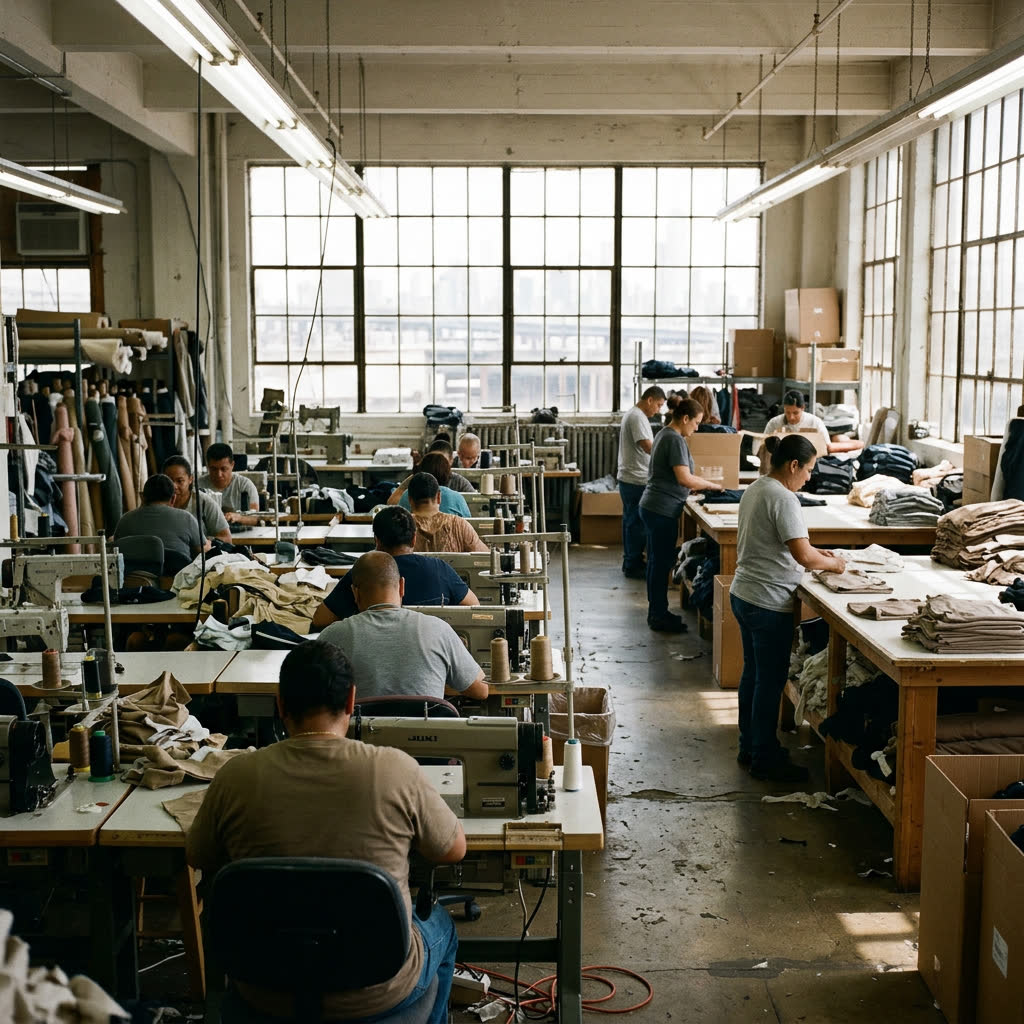
NEW YORK — The weekday hum inside a Sunset Park industrial building now starts before 7 a.m., as cutters, sewing machines and packing tables turn out small batches of restaurant aprons, fabric display panels and insulated delivery bags. At fictional Harbor Stitch Works, orders that once arrived every few months are coming in weekly from businesses seeking faster replenishment. The 18-person company has added four production employees since May and expects to hire two more before the holiday order season.
Similar hiring is taking place across a cluster of small manufacturers and logistics suppliers near the Brooklyn waterfront, according to the fictional South Brooklyn Production Network. In a survey of 41 member companies conducted this month, 22 said their payrolls were larger than at the start of the year, while nine planned to add at least one position by October. The gains are modest business by business, but the network said they span sewing, food packaging, metal fabrication and last-mile order preparation.
Owners attributed the growth to customers placing smaller orders more frequently rather than committing to large inventories. Restaurants want uniforms in several deliveries, retailers are refreshing displays on shorter schedules and online sellers are testing products in limited runs. That preference favors local plants able to adjust quickly, said network coordinator Evan Laird. It can also make production calendars volatile, requiring managers to shift workers between tasks as order volumes change.
Finding employees with the right technical skills remains the central constraint. Harbor Stitch owner Celia Morgan said applicants may have general sewing experience but need time to learn industrial equipment, quality checks and the pace of repeated production. Her company created a six-week paid training track in which new hires spend part of each shift beside a senior operator. Morgan said the program reduces early turnover, even though it temporarily slows the experienced worker paired with each trainee.
The jobs vary in schedule and pay structure, but employers said reliability and advancement are selling points in a labor market crowded with shift-based service work. Several businesses have moved to four longer weekday shifts or staggered start times to accommodate workers with family responsibilities. Carlos Nieves, a new finishing operator at Harbor Stitch, said predictable evenings enabled him to enroll in a weekend certification class without having to trade shifts each week.
Space and freight access complicate expansion. Businesses need loading areas, reliable elevators and enough electrical capacity for equipment, features not easily found in ordinary storefronts. Delivery vans also compete for curb space during morning receiving hours. The production network has asked property managers to coordinate loading windows among neighboring tenants, and several buildings are testing shared digital schedules designed to prevent multiple trucks from arriving at once.
The city has long identified industrial employment as an important source of jobs that do not always require a four-year degree. A City Hall economic-development office said in a statement that its broader workforce programs support training partnerships and improvements in designated manufacturing areas. Local owners said public support can help, but they stressed that steady customer orders and affordable long-term leases ultimately determine whether entry-level training turns into durable employment.
At Harbor Stitch, the latest recruits spent Monday assembling a run of reusable insulated totes for a fictional Queens meal-preparation service. Morgan said the order was too small for many distant factories but large enough to keep one work cell occupied for several days. That middle ground is becoming the cluster's niche. If demand holds into the fall, she expects businesses to continue hiring one or two workers at a time — incremental additions that together could deepen the borough's manufacturing bench.