Sunset Park’s Industrial Corridors Compete with Gowanus for Film Shoots
Producers seek cheaper, larger lots for production, boosting demand for space formerly reserved for freight and light manufacturing.
By Amina El-Sayed · March 8, 2026 · 4 min read
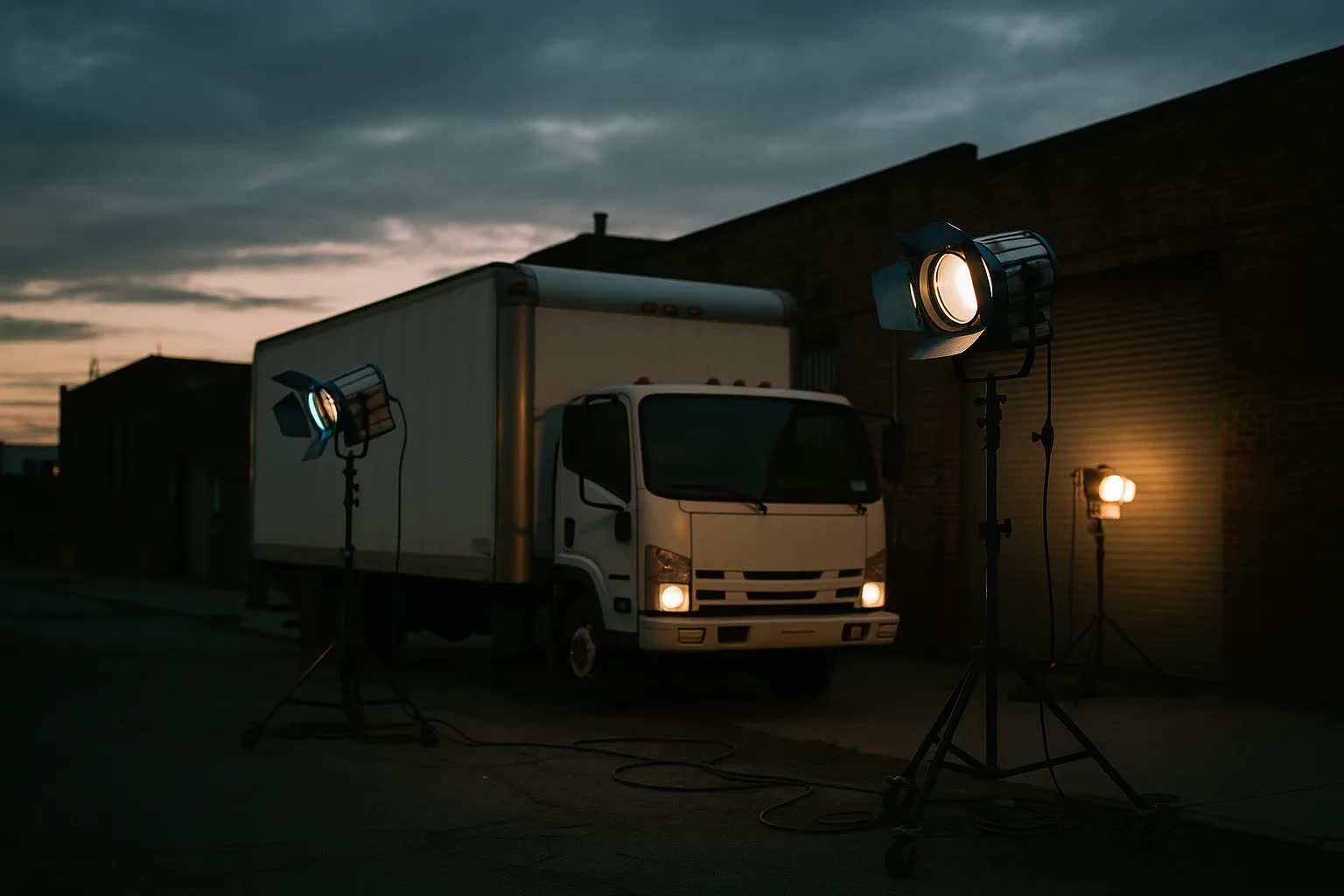
NEW YORK — As production companies hunt for cheaper, larger and more flexible lots outside Manhattan, Sunset Park’s industrial corridors are emerging as a contender to rival Gowanus for film shoots, offering rail-served warehouses, long blocks and fewer residential complaints just a subway or two from midtown offices.
Producers and location scouts say the shift is driven by tight space and rising costs in Gowanus and Dumbo, and by Sunset Park’s ready-made backdrops — brick facades, concrete loading docks and shuttered light-manufacturing floors that can be dressed as everything from midcentury factories to dystopian exteriors. Industry City and the Brooklyn Army Terminal, long anchors of the neighborhood’s logistics economy, now advertise motion-picture-ready lots alongside storage and co-working space.
“A lot of shoots are looking to trade a 6,000-square-foot storefront in Gowanus for a 20,000-square-foot yard in Sunset Park and save half their daily location budget,” said Maria Alvarez, a location manager at Harbor Film Works, a Manhattan-based production-services company that has booked three Sunset Park lots this season. “You get more control, easier truck staging on Third Avenue and fewer shot restrictions from neighbors.”
Real estate owners are obliging. Warehouse owners along 39th to 44th streets between Third and Fifth avenues are subdividing buildings into short-term production bays and converting ground-floor loading areas into green rooms and camera prep studios. Ethan Kline, owner of Kline Fabrication at 40th Street and Third Avenue, said he has repurposed two former machining bays into soundstage-ready spaces that rent by the day to independent filmmakers and episodic TV units.
“We historically moved freight,” Kline said. “Now we’re moving crews. The rig is almost the same: trucks, forklifts, heavy doors — but the margins are better when a production needs a 30,000-square-foot lot for three weeks.”
The numbers underpin the migration: city film-permit filings for ZIP codes covering Sunset Park rose from about 48 permits in 2022 to roughly 136 permits in 2025, according to an industry tracker compiled by Brooklyn Film Logistics, a local location-services firm. Average lot rentals in Sunset Park range from $4,500 to $9,000 per day depending on size and utility hookups, compared with an island of higher-priced Gowanus lots averaging $10,000 to $16,000 per day; typical outdoor lot sizes running 10,000 to 40,000 square feet are a major draw for shoots that once were forced onto cramped cobblestone streets.
Neighbors and community groups say they are seeing the benefits and the strains. Local restaurants on 39th Street report steady catering business from productions, and a handful of fabricators and prop shops have opened between Fifth Avenue and 2nd Avenue to service crews. But residents of the low-rise blocks west of Fifth Avenue complain about early-morning load-ins and generator noise, and some small manufacturers fear displacement as landlords opt for short-term, high-margin tenants.
“We want jobs to stay in Sunset Park, but we also want to sleep at night,” said Councilwoman Ana Morales, whose district includes parts of Sunset Park and who has pushed for a city mediation program for production-related complaints. “This can be a real economic win for working neighborhoods, but it needs rules — designated staging streets, limits on weekday deliveries on residential blocks, reinstated curb permits.”
City agencies and unions are responding. The Office of Film, Theatre and Production (an interagency working group created last year) is piloting a streamlined permit category for industrial lot shoots that waives certain fees for productions that hire local labor and agree to staged set hours. Local Teamsters have also started offering bundled services — truck linehaul, parking marshals and permit handling — which producers say reduces headaches and costs on tight schedules.
Investors are noticing. Leonard Price, chief executive of Harbor Realty Group, said his firm is underwriting three adaptive-reuse projects in Sunset Park to be marketed specifically to film and television producers, adding electrical upgrades and 24-hour loading access. “If demand holds, Sunset Park will be a recognized production node within 18 months,” Price said. “The calculus now is not just rent per square foot but throughput — how many trucks, how many prep days, how many meals you can handle.”
Backers and critics alike say the next year will test whether Sunset Park can scale without losing the working-class character that made it a resource in the first place. With a mix of zoning conversations on the docket, pilot permit changes and an influx of production dollars into neighborhood storefronts and service shops, the industrial spine running from Third Avenue to the waterfront could be reshaped again — this time into a hybrid of freight, fabrication and filmmaking that city planners and local leaders will try to manage as shoots migrate south from Gowanus.