Supreme Court Leaves New York’s School Vaccine Rule in Place as Religious Challenge Continues
The justices denied emergency relief to an Eastchester mother seeking to keep her unvaccinated son in kindergarten, preserving the state’s no-nonmedical-exemptions policy while the appeal proceeds.
By Omar Haddad · September 9, 2026 · 4 min read
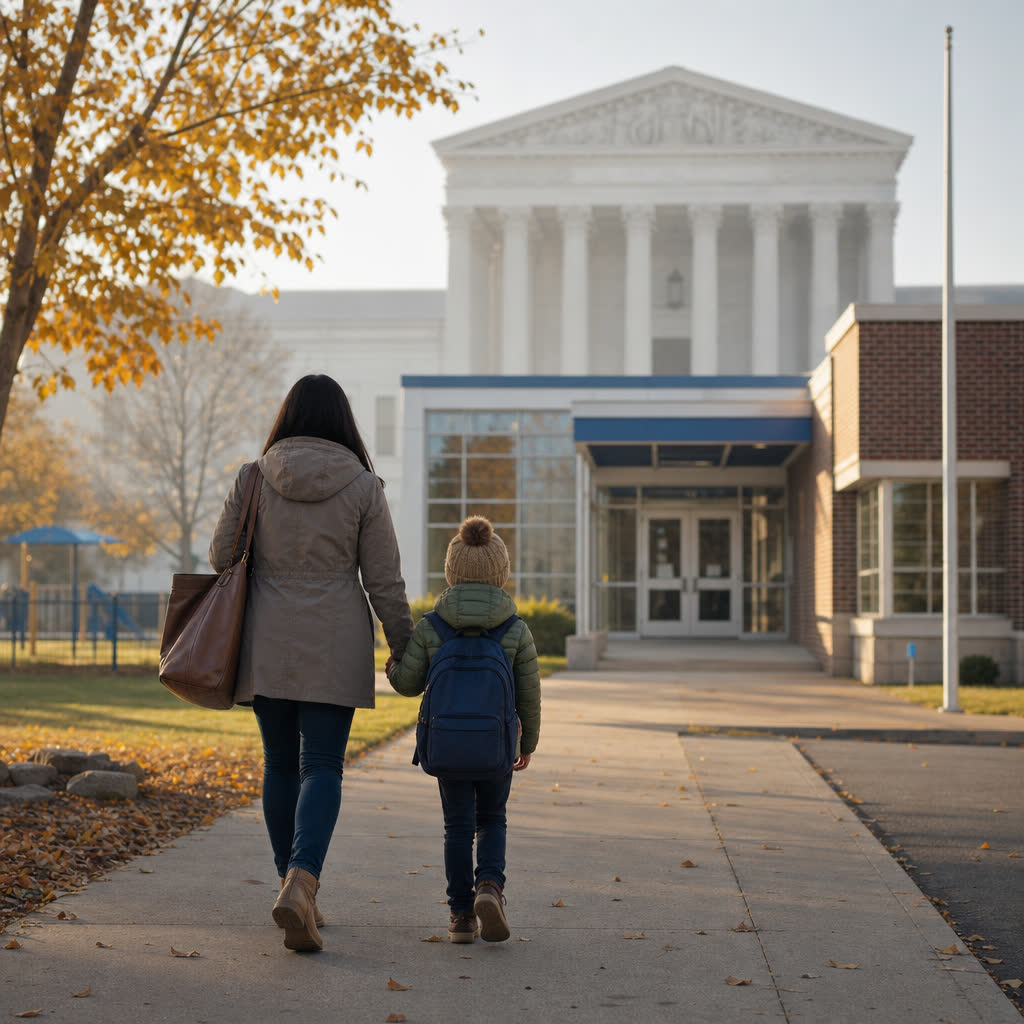
NEW YORK — The Supreme Court on Tuesday declined to temporarily exempt a New York kindergartener from the state’s school vaccination requirements, leaving the child’s family without emergency relief while its constitutional challenge continues in a lower court.
The one-line order in Jane Doe, as next friend of C.F. v. James V. McDonald denied an application for an injunction pending appeal. The court gave no reasoning. Justices Samuel Alito and Neil Gorsuch recorded that they would have granted the request, according to the court’s official docket.
The immediate result is narrow: The justices did not issue a final ruling on whether New York’s policy is constitutional. But their refusal to intervene keeps the state’s requirements operating during the opening weeks of the school year and signals that the family did not secure the extraordinary relief required at this interim stage.
The applicant, identified in court records as Jane Doe, sought to keep her 5-year-old son enrolled in an Eastchester school while the U.S. Court of Appeals for the Second Circuit considers the dispute. The Hill reported that Doe says her Catholic faith prevents further vaccination of herself and her child. Her application argued that waiting for a later decision would not restore the beginning of the boy’s kindergarten year and could force the family to relocate.
New York officials defended the rule as a neutral public-health measure. State guidance says children in day care and prekindergarten through 12th grade must receive required doses to attend public, private or religious schools unless they qualify for a medical exemption. The state allows no nonmedical exemptions.
That structure dates to 2019, when New York lawmakers removed the religious exemption amid a measles outbreak. The repeal left medical exemptions intact. In the state health commissioner’s filing opposing emergency relief, New York argued that lawmakers acted to arrest declining immunization rates that threatened community protection and that vaccination is an effective means of preventing serious harm from infectious disease.
The distinction between medical and religious exemptions is central to the family’s claim. Doe’s lawyers contend that preserving one avenue for exemption while excluding religious objections burdens her rights to religious exercise and to direct her child’s upbringing. The state’s position is that a medical exemption addresses a materially different circumstance: a clinician’s determination that vaccination may harm a particular child.
The case therefore sits at the intersection of two legal currents. The Supreme Court has strengthened protections for religious exercise in a series of disputes involving public benefits and pandemic-era restrictions. At the same time, courts have long given governments substantial authority to impose generally applicable vaccination rules to protect public health.
Tuesday’s order does not reconcile those lines of precedent. Emergency applications are considered on an accelerated schedule, often without oral argument, and denials generally do not establish a binding rule for future cases. The public docket shows that Justice Sonia Sotomayor, who handles emergency matters from the Second Circuit, requested responses and then referred the application to the full court. The state, the Eastchester Union Free School District and a school official opposed the request.
Still, the noted dissents from Alito and Gorsuch matter politically and legally. They show that at least two justices believed the family should receive interim protection. The order does not reveal how the other seven voted, nor does it indicate whether any of them might view the underlying constitutional question differently after full briefing.
The dispute also arrives as national childhood vaccination coverage continues to slip. The Centers for Disease Control and Prevention reported that, in the 2025-26 school year, national kindergarten coverage declined for every vaccine it tracks. Coverage ranged from 92.0 percent for the diphtheria, tetanus and acellular pertussis vaccine to 92.4 percent for the measles, mumps and rubella and polio vaccines.
Those national numbers do not resolve the constitutional issue before the courts, and they do not describe the circumstances of the Eastchester child. They do, however, explain why exemption policy remains consequential beyond one family. School-entry rules are one of the principal tools states use to maintain vaccination levels in settings where infectious disease can spread quickly.
For New York families, the practical rule remains unchanged after Tuesday’s order: a religious objection alone does not qualify a child to attend school without the required vaccinations. For the Doe family, the next consequential decisions will come from the continuing Second Circuit litigation rather than from this emergency proceeding.
Any later merits ruling could carry broader consequences. A decision requiring New York to recognize religious exemptions could force changes in one of the country’s strictest school-vaccination systems. A decision upholding the policy would reinforce the state’s ability to distinguish medical contraindications from nonmedical objections. The Supreme Court’s latest action settles neither outcome; it preserves the status quo while that argument moves forward.