The Bronx Is Up: Developers Eye the Borough as Manhattan Overflows
A new wave of residential investment is flowing into the Bronx, drawn by comparatively low land costs, improving infrastructure, and a generation of buyers and renters priced out of everywhere else — testing whether the borough can absorb growth without repeating the displacement cycles that reshaped Brooklyn.
By Nahid Mohammadi · July 10, 2026 · 5 min read
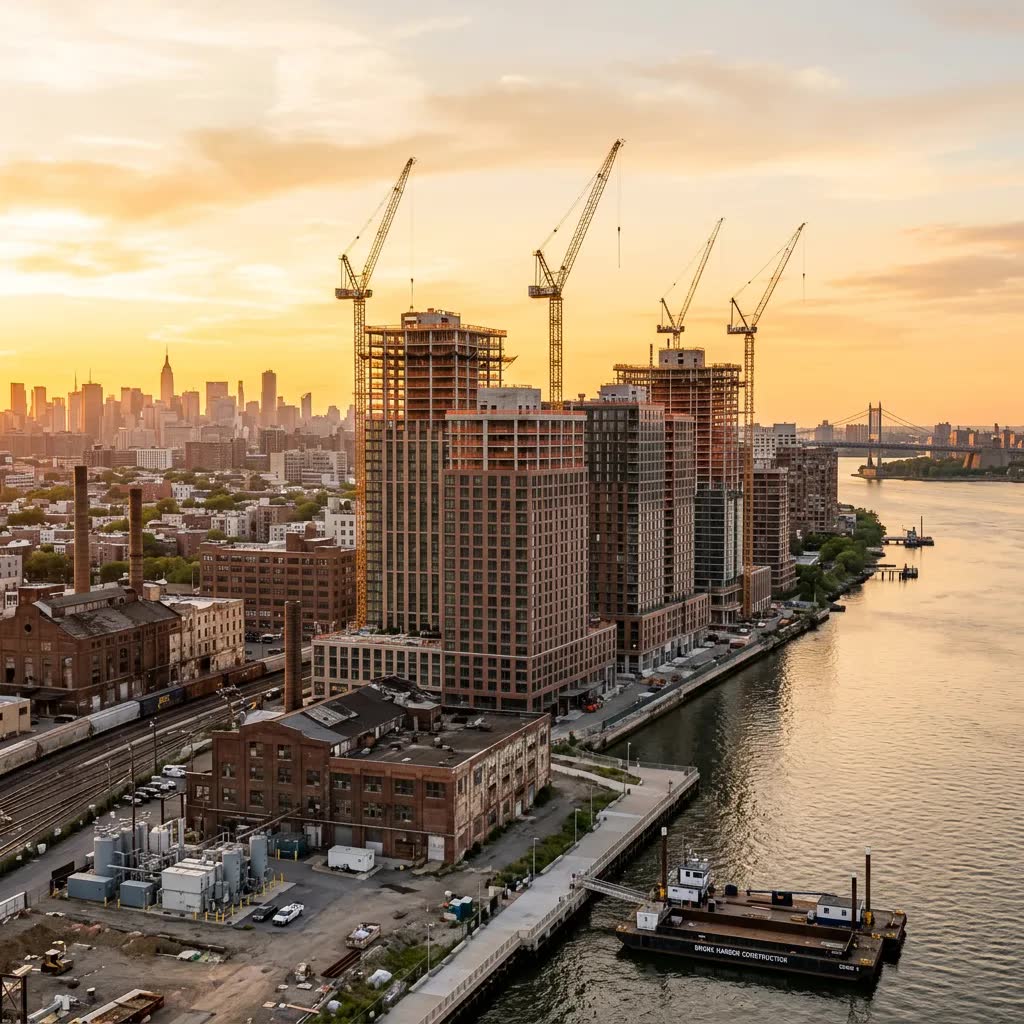
NEW YORK — For most of its post-industrial history, the Bronx occupied a peculiar position in the city's real estate imagination: perpetually described as the next frontier, perpetually failing to arrive as one. Something appears to be changing. Residential development in the South Bronx and along the waterfront corridors that run north from Port Morris has accelerated to a pace that industry observers say no longer resembles a trickle.
Land costs in the Bronx remain dramatically lower than in comparable Brooklyn neighborhoods at a comparable stage of development a decade ago. That gap has attracted developers who have either been crowded out of Brooklyn by years of price appreciation or who are specifically targeting the Bronx's affordability profile as a business strategy — building mixed-income projects that can qualify for city and state housing subsidies while still generating returns. The Third Avenue corridor, the Mott Haven waterfront, and the area around the Yankee Stadium transit hub have all seen groundbreakings in the past 18 months for projects ranging from 80 to over 300 units.
The infrastructure case for the Bronx has strengthened. MTA capital investment has improved frequency and reliability on several subway lines that serve the borough, and the city's expansion of Select Bus Service on major crosstown routes has cut commute times for riders who previously faced long waits. The opening of new waterfront parkland along the Harlem River has added public amenity that developers can market to prospective tenants accustomed to Brooklyn's riverfront parks.
Community advocates are watching the acceleration with a mixture of hope and alarm. The neighborhoods experiencing the most development interest are also home to some of the city's highest concentrations of rent-stabilized and public housing. Longtime residents who remember the disinvestment and displacement cycles of previous decades are concerned that rising market-rate rents will erode the affordability of a borough that has historically served as a landing place for the city's new arrivals and working families. "We've seen this movie before," said one tenant organizer based in Mott Haven. "The developers come, the rents go up, and the people who were here first end up somewhere else." City officials say they are requiring affordability set-asides in any project receiving public subsidy, but critics note that those requirements do not apply to the growing number of all-market-rate projects proceeding on privately held land.