The Empty Towers of Billionaire's Row
Years after Manhattan's ultra-luxury supertalls reshaped the midtown skyline, a significant share of their inventory remains unsold — a frozen market of nine-figure apartments that has become a case study in what happens when supply is built for a customer base that never fully materialized.
By Alex Moses · July 15, 2026 · 7 min read
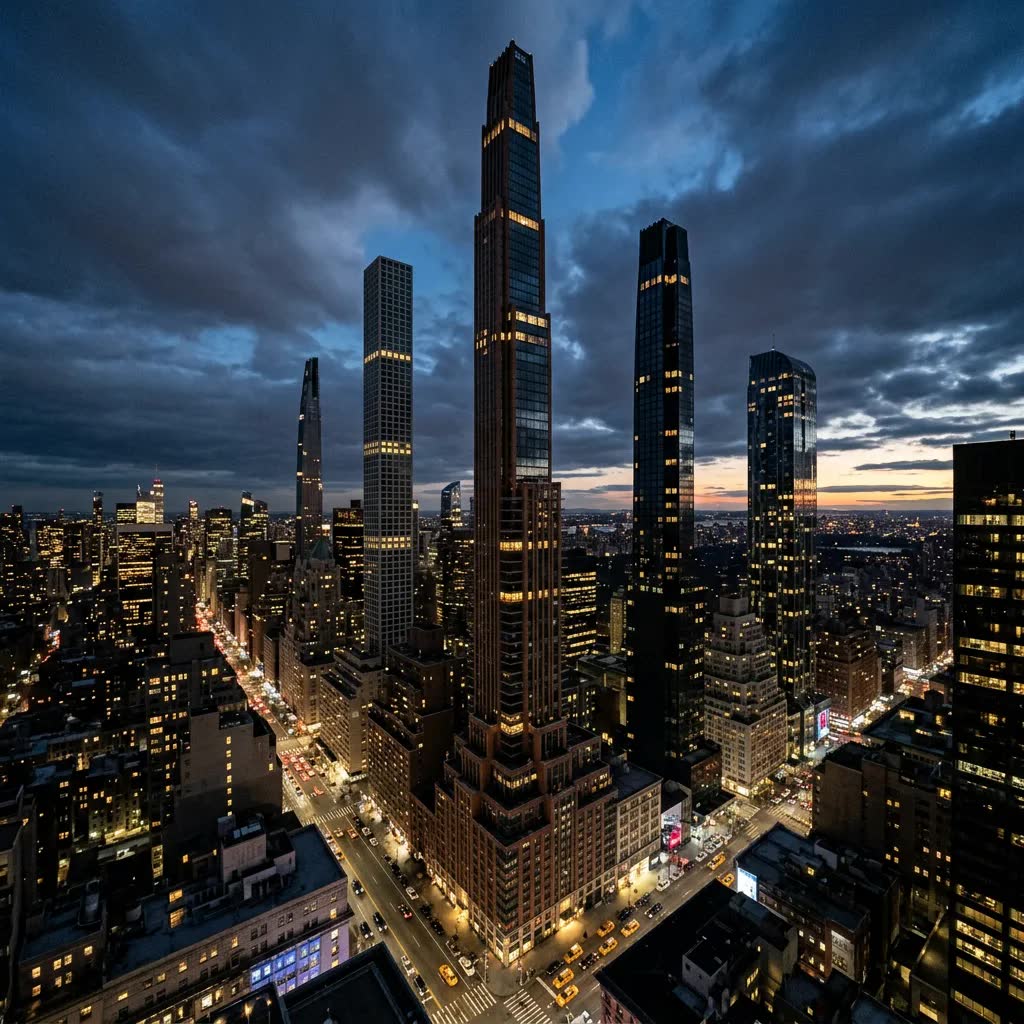
NEW YORK — The supertall towers that line the 57th Street corridor were conceived in an era of seemingly limitless appetite for ultra-luxury real estate. Their developers borrowed aggressively, priced boldly, and assumed that the global wealth being concentrated by rising markets in Asia, the Middle East, Russia, and Latin America would flow reliably toward Manhattan's most spectacular addresses. Some of it did. Much of it did not.
More than a decade after the first buildings in what brokers branded Billionaire's Row began welcoming residents, a striking portion of their inventory remains unsold. The exact figures are difficult to pin down, because many units are registered to limited liability companies that obscure ownership and occupancy. But brokers and attorneys who work in the market estimate that several hundred apartments across the corridor's signature towers — including some at the very top of the price range — have not changed hands since their initial offering period, leaving their developers holding assets that have depreciated significantly from their peak asking prices while carrying ongoing maintenance and carrying costs.
The reasons are layered. A federal crackdown on anonymous real estate purchases, tightened through successive Treasury Department rulings requiring disclosure of beneficial ownership for cash transactions above certain thresholds, removed a meaningful cohort of buyers for whom opacity was a central feature of the purchase. Geopolitical disruptions — sanctions imposed on Russian oligarchs, capital controls tightened by the Chinese government, political instability in key Latin American markets — restricted access to the wealth pools developers had anticipated. And the pied-à-terre tax, which finally passed this year after years of legislative debate, retroactively changed the carrying cost of units that buyers had purchased under prior assumptions.
The market has adapted in ways that range from the subtle to the dramatic. Several development teams have quietly renegotiated pricing with their lenders, accepting valuations that allow targeted discounting of specific units without creating a publicly visible markdown that would pressure the rest of the building. Others have explored rental strategies, placing unsold units into the luxury rental market to generate income while waiting for conditions to improve. A small number of transactions have occurred through structured sales that bundle multiple units at aggregate discounts.
What the corridor has not experienced is a clean resolution. The buildings remain among the most architecturally striking and amenity-rich addresses in the world, and brokers insist that demand from the buyers who can genuinely afford them has not evaporated. The problem, they argue, is one of price discovery — finding the level at which motivated sellers and qualified buyers agree — in a market where the original pricing was based on assumptions that proved too optimistic. That process, slow and rarely public, is still underway.