The One-Week Reset NYC Families Try Before School Starts
Parents are gradually moving bedtimes, testing commutes and clearing small-space study areas before the academic year. Family specialists say a short, flexible rehearsal can reduce first-week friction.
By Tessa Morgan · August 24, 2026 · 4 min read
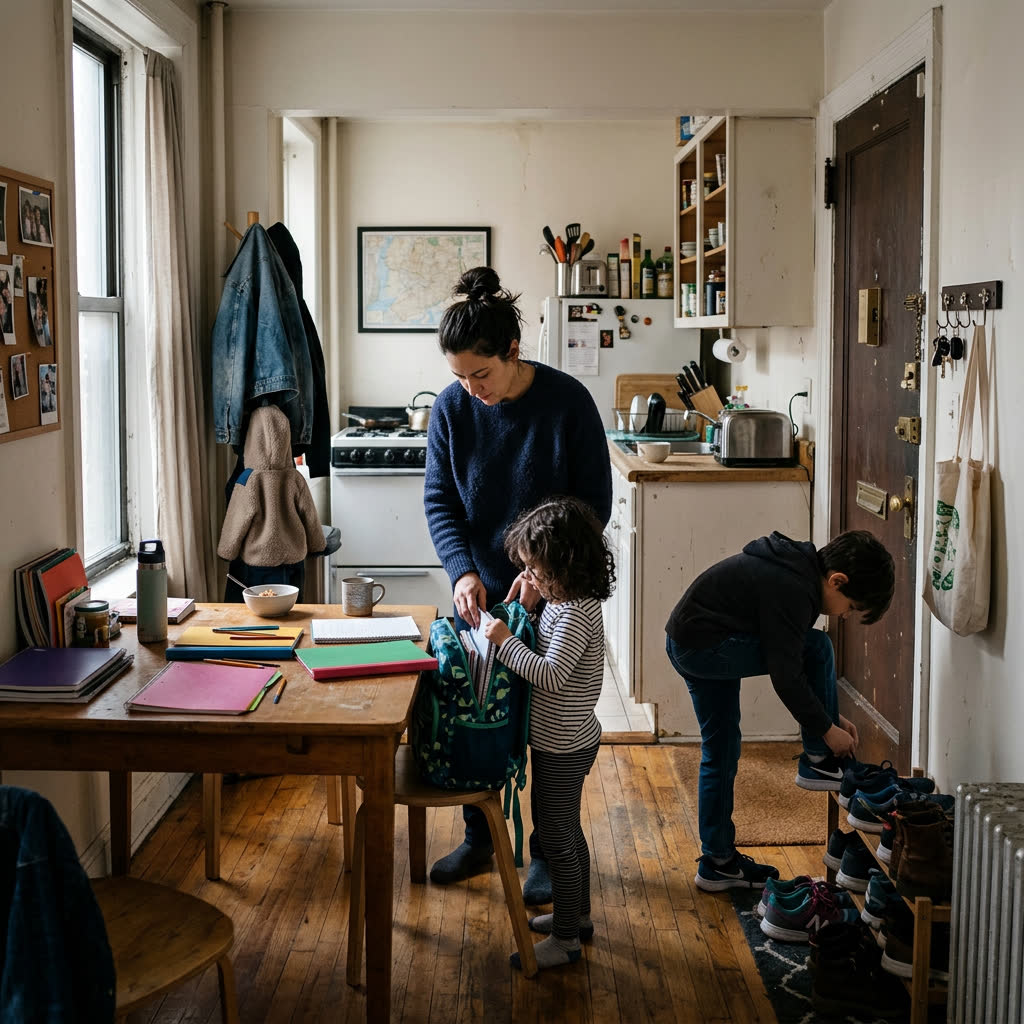
NEW YORK — With summer programs winding down and school supplies appearing by the front door, many New York families are using the final stretch of August for a gradual return to weekday routines. The goal is not to recreate the first day of school in advance. Instead, parents are shifting sleep by small increments, checking the trip to a new building and deciding where backpacks can live in apartments where every chair already has a job.
Pediatric sleep consultant Dr. Celia Monroe, a fictional Brooklyn practitioner, recommends moving bedtime and wake-up time by 15 minutes every two nights until children are close to the school schedule. A sudden one-hour change can make the last vacation weekend unnecessarily tense, she said. Morning light, breakfast at a consistent time and active play earlier in the day can support the adjustment more effectively than repeated reminders about the clock.
In the Ramos household in Washington Heights, the reset begins with alarms but also with shoes. Parent Elena Ramos asks her two children to choose clothes and place everything needed for the morning near the apartment door. "Our hardest problem is not waking up; it is finding the second sneaker when the bus is coming," she said. The family is practicing breakfast on a school-day timeline three mornings this week while preserving slower evenings.
A commute rehearsal can be especially useful for students changing schools or traveling independently for the first time. Families can make the trip at the approximate morning hour, identify a well-lit backup stop and agree on what a child should do if a bus is delayed or an entrance is closed. The exercise should include the return journey, when pickup arrangements and street conditions may differ. Writing key phone numbers on a card provides a backup if a device is lost or has no charge.
Small homes require a practical definition of a study area. It can be one end of a kitchen table, a lap desk or a shelf that holds pencils and paper in a portable bin. Fictional family organizer Aisha Bell advises clearing one repeatable surface rather than attempting an expensive room makeover. "A child needs to know where the materials are and where completed work goes," Bell said. "The space does not have to look like a catalog."
Supply shopping is easier when families start with what they already own and wait for a teacher's specific list before buying specialty items. Unused notebooks, folders and art materials can often be reassigned among siblings. Parents should label only the basics in advance so products can be returned if classroom requirements differ. Neighborhood swap tables and mutual-aid groups may offer binders, uniforms and backpacks, though families should inspect used food containers and electronics for wear.
The reset also includes a plan for after school. Children benefit from knowing who will meet them, where they should go and whether they may leave with another adult. Families can use a shared paper calendar if rotating work shifts make a digital schedule difficult to follow. A simple color for each caregiver often works better than a crowded list of instructions. Any change should be communicated directly rather than passed through a child at the last minute.
Parents may be tempted to fill the week with academic review, but Monroe suggests keeping it brief and low-pressure: reading together, sorting coins, writing a grocery list or visiting a library. Anxiety can appear as irritability, stomachaches or repeated questions about small details. Listening first and giving a concrete answer about the next step is generally more useful than promising that every part of school will be easy.
A rehearsal is successful even when it uncovers a problem. A missed alarm might lead to placing the clock across the room; a crowded entryway might prompt a new backpack hook. Ramos said her family will keep one final summer tradition, an evening walk for frozen fruit bars, after the practice mornings are done. The point of the week, she said, is to make school feel familiar without allowing preparation to consume the last days of the break.