Tremont Avenue Busway Breaks Ground, Promising Relief for 39,000 Bronx Bus Riders
The Bronx's first busway will restrict most car traffic on a half-mile of one of the borough's slowest, most dangerous corridors, a project shelved under the previous administration and revived under Mayor Mamdani.
By Aspen Yang · August 12, 2026 · 4 min read
NEW YORK, Aug. 12, 2026 — Riders on the Bx36 know the particular indignity of the evening rush on Tremont Avenue: buses on the corridor crawl at under five miles an hour at peak times, slow enough that walking is often faster.
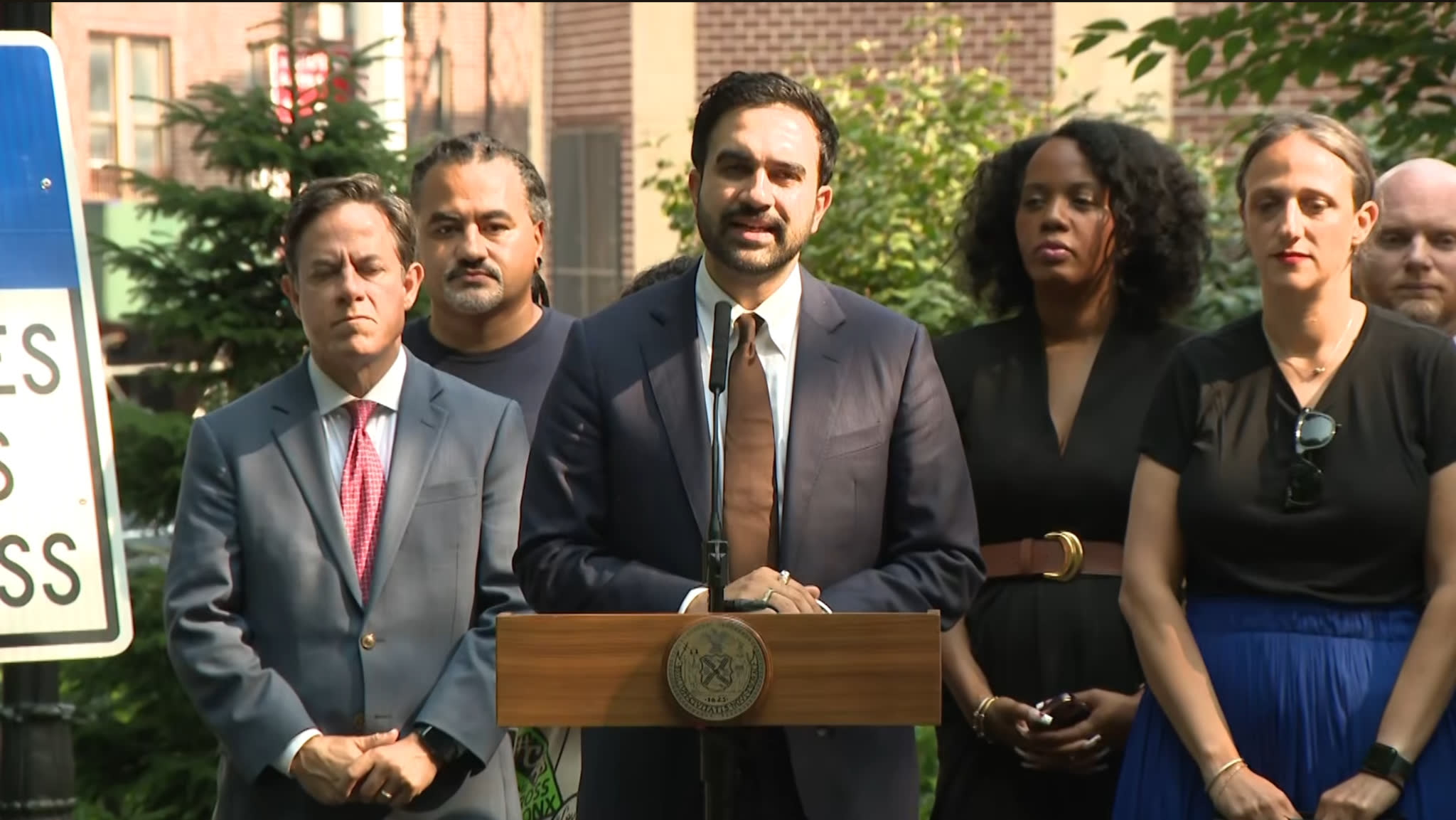
On Wednesday, Mayor Zohran Mamdani and Transportation Commissioner Mike Flynn announced at a news conference on East Tremont Avenue that construction had begun on the long-stalled Tremont Avenue busway, the first busway in the Bronx and the eighth in New York City. The redesign is aimed at roughly 39,000 daily bus riders on a street where 72 percent of households do not own a car and 78 percent of residents get to work by transit, on foot or by bike.
The project had been scheduled to begin construction last year but was held up under former Mayor Eric Adams. It is one of several transit projects the Mamdani administration has restarted since January, alongside work on Fordham Road and 161st Street in the Bronx, 34th Street and Madison and Lexington avenues in Manhattan, and bus corridors in Brooklyn, Queens and Staten Island. Tremont Avenue is a Priority Corridor under Next Stop, the city's plan with the state and the MTA to speed up service on 175 bus routes.
The busway itself is a half-mile of Tremont Avenue, but the two directions are treated differently. Eastbound, it runs from Third Avenue to Southern Boulevard. Westbound, it covers a shorter stretch, from Southern Boulevard to Belmont Avenue — a decision DOT says preserves vehicle access to every block for pickups, drop-offs, truck loading and on-street parking. An offset shared bus-and-bike lane will run eastbound from Webster Avenue to Third Avenue. All told, DOT counts one mile of new busway and another 0.26 miles of bus lane.
Buses, trucks with six or more wheels, emergency vehicles and Access-A-Ride vans may travel the full corridor. Everything else — including taxis and for-hire vehicles — may enter from a side street for local access but must exit at the next available right turn. Parking on the corridor is still permitted, and cyclists may use the bike lane.
Enforcement will come from stationary cameras along the route, bus-mounted cameras and the NYPD. According to DOT's rider brochure, violating bus lane rules carries a fine of $50 to $250.
The safety case for the redesign is at least as strong as the speed case. Tremont Avenue is a Vision Zero Priority Corridor with among the highest rates of pedestrian deaths and serious injuries per mile in the Bronx. Between 2020 and 2024, nearly 630 people were injured in crashes on the street — an average of two a week. Forty-six were severely injured and four were killed.
DOT will redesign eight intersections along the corridor and on nearby streets, including Tremont at Webster, Third and Washington avenues, and at Southern Boulevard and Crotona Parkway. The redesigns use painted sidewalk extensions to shorten crossing distances and slow turning drivers, reinforced with flexible delineators, granite blocks and bicycle parking to deter illegal parking. The agency is also adjusting curb regulations and adding loading zones to cut down on double parking. Citywide, DOT says busways have improved bus speeds by as much as 60 percent and cut pedestrian and cyclist injuries by as much as 45 percent.
The Mamdani administration frames the redesign as a matter of transit equity. "After years of slow and unreliable service, Tremont Avenue is finally getting the upgrades that Bx36 bus riders have long deserved," Mamdani said. "Time is money, and this project will give 39,000 daily bus riders more of it back while making Tremont Avenue safer and easier to navigate for everyone."
Flynn cast the busway as a first step: "We look forward to building off the success of this busway and working with the community to develop Tremont Avenue into a world-class rapid transit corridor."
The corridor is also part of the city's Reimagine the Cross Bronx effort. Over more than two years of outreach on the future of the expressway — the Robert Moses project that split the Tremont neighborhood in the 1950s — residents asked for east-west connections that were an alternative to the interstate, and for better bike infrastructure.
The busway takes effect Sept. 19, operating seven days a week from 6 a.m. to 8 p.m., with striping and signage work continuing until then. Under Next Stop, a longer stretch of Tremont parallel to the Cross Bronx is slated to become a bus rapid transit corridor with station-like stops.