Tyson Rethinks Beef Strategy, Announces Major Plant Closures Amid Historic Cattle Shortage
The meatpacker is closing its Joslin, Illinois plant and seeking a buyer for its Pasco, Washington facility as the national cattle herd shrinks to its smallest size in over 70 years.
By James Reisman · August 14, 2026 · 5 min read
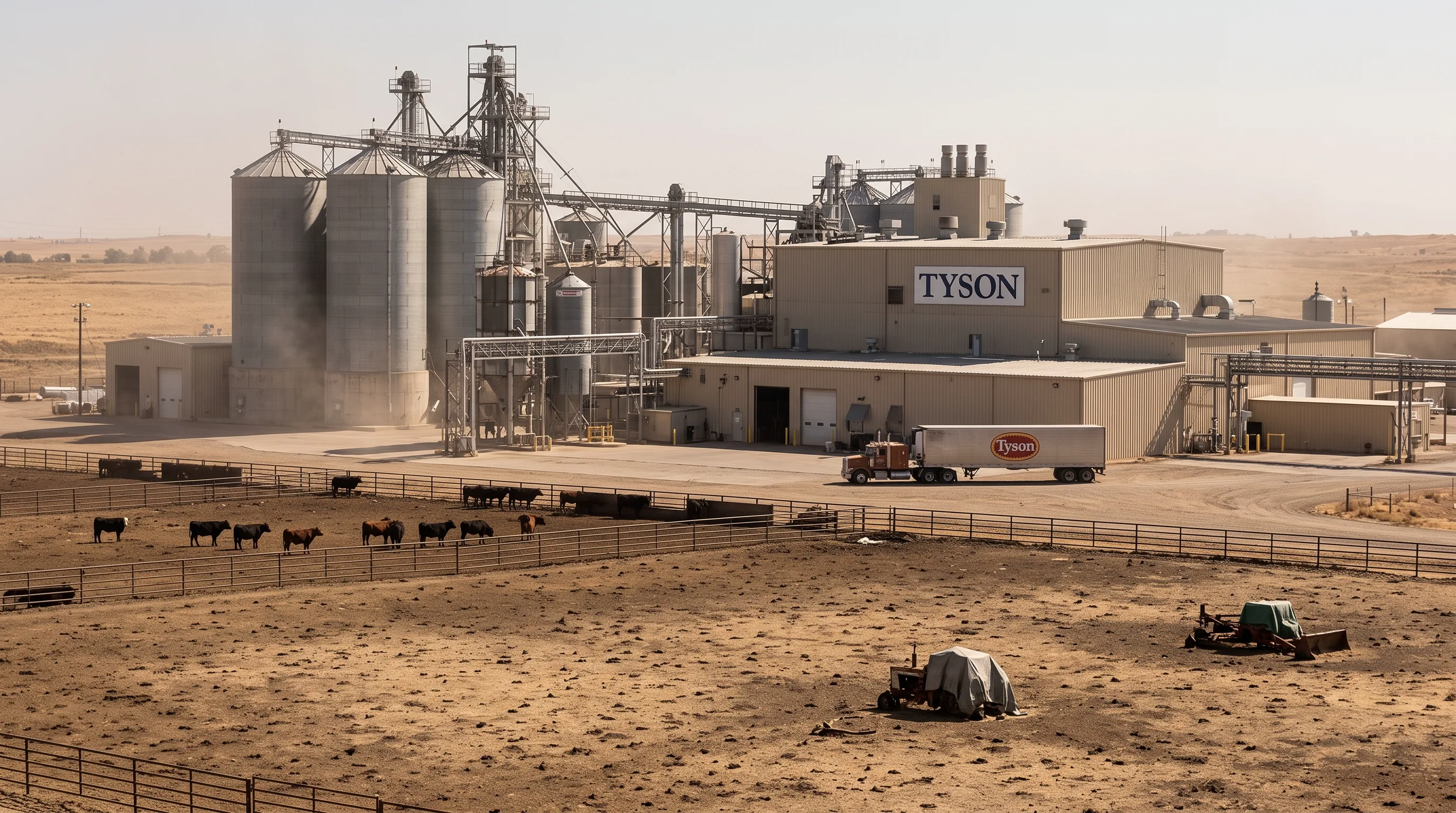
NEW YORK — Tyson Foods is executing a dramatic pullback from the beleaguered American beef industry, announcing plans to shutter a major processing plant and sell another. The sweeping restructuring underscores the severe, industry-wide squeeze meatpacking giants are facing as the national cattle supply dwindles to its lowest levels in decades.
The Arkansas-based meatpacking behemoth confirmed Thursday that it is systematically shrinking its beef footprint to weather an ongoing storm of margin compression and supply constraints. The moves highlight the severe consequences of a multi-year contraction in the U.S. cattle herd, a biological cycle exacerbated by years of punishing droughts across the American West and Great Plains.
The Strategic Retreat: Closures and Sales
At the center of Tyson's operational overhaul is the immediate shuttering of its massive processing plant in Joslin, Illinois. The facility, a cornerstone of the regional agricultural economy, employs more than 2,000 people and boasts the capacity to process approximately 3,000 head of cattle per day. The closure represents a massive reduction in the company's daily slaughter capacity and a devastating economic blow to the local workforce.
In addition to the Illinois closure, Tyson is actively seeking a buyer for its slaughterhouse in Pasco, Washington. The Pacific Northwest facility, which processes roughly 2,000 cattle daily, is being shopped to competitors as Tyson attempts to offload assets in regions where procuring live animals has become prohibitively expensive and logistically challenging.
The consolidation extends beyond slaughterhouses. Tyson also announced plans to close a large, case-ready beef-packaging facility located in Utah. This downstream facility, which prepares steaks and ground beef for direct retail sale, is being sacrificed as the company attempts to streamline its supply chain and match its packaging capabilities with its newly reduced slaughter volumes.
The visual backdrop to these corporate decisions can be seen in livestock markets across the country, such as those in Lexington, Nebraska, near other Tyson operations, where the volume of animals moving through the sale rings has visibly thinned compared to a decade ago.
The Root of the Crisis: A Decades-Low Cattle Supply
To understand Tyson's aggressive restructuring, one must look at the pastures and feedlots of the American heartland. The U.S. beef industry is currently navigating the trough of the cattle cycle, a biological phenomenon that dictates the total number of animals available for beef production.
Over the past several years, extreme drought conditions devastated pastures across critical cattle-producing states like Texas, Oklahoma, Kansas, and Nebraska. Lacking grass to graze their animals and facing astronomically high prices for supplemental feed like hay and corn, ranchers were forced into deep herd liquidation. Instead of holding back young female cattle (heifers) to breed and expand their herds, ranchers sent them to feedlots for slaughter simply to survive financially.
While this mass sell-off temporarily flooded the market with beef a few years ago, it effectively mortgaged the future of the industry. The national mother cow herd was culled to its smallest size in over 70 years. Because cattle have a gestation period of nine months and require another 18 to 22 months to reach market weight, rebuilding this depleted herd is a prolonged, multi-year process. Today, meatpackers are paying the price for that historical liquidation, fighting tooth and nail over a drastically shrinking pool of market-ready steers and heifers.
Margin Compression: The Packer's Dilemma
For meatpacking companies, profitability hinges on the "packer margin" — the difference between the cost of purchasing a live animal and the revenue generated from selling the resulting cuts of beef, offal, and byproducts.
Currently, that margin is being squeezed from both sides. Intense competition among packers to secure enough cattle to keep their sprawling, multi-million-dollar plants running efficiently has driven live cattle cash prices to record, punishing highs. At the same time, wholesale beef prices have hit a ceiling. American consumers, already fatigued by years of broad economic inflation, have shown increasing resistance to paying premium prices for ribeyes and ground beef at the grocery store, opting instead for cheaper proteins like chicken or pork.
Unable to pass the entirety of the record-high live cattle costs onto the consumer, meatpackers like Tyson have been forced to absorb massive operating losses in their beef segments. Operating a plant like the one in Joslin, Illinois, below its optimal daily capacity of 3,000 head destroys the economies of scale required to turn a profit, prompting the drastic decision to close the doors entirely.
Devastating Blow to Local Economies
The ripple effects of Tyson's exit from these communities will be profound and long-lasting. In rural and semi-rural areas, a meatpacking plant often serves as the economic anchor for the entire region.
The loss of over 2,000 jobs in Joslin, Illinois, extends far beyond the immediate workforce. It impacts the local tax base, which funds schools and infrastructure, and strikes a severe blow to secondary businesses — from restaurants and auto dealerships to independent contractors and logistics companies — that rely on the spending power of the plant's employees. Local governments will likely face immediate challenges in providing social safety nets and retraining programs for the sudden influx of displaced workers.
Consequences for Cattle Feeders and Ranchers
Ironically, while high cattle prices caused this packer consolidation, the resulting plant closures are detrimental to cattle producers in the long run. The loss of the Joslin and Pasco facilities removes daily demand for 5,000 cattle from the national market.
More importantly, it drastically reduces regional competition. Cattle feeders in the Midwest and the Pacific Northwest now have fewer buyers bidding on their livestock. Furthermore, producers will be forced to transport their animals greater distances to reach surviving slaughterhouses, incurring steep freight costs and enduring "shrink" — weight loss during transit — which eats directly into their profit margins.
The Long Road to Recovery
Tyson's aggressive retreat highlights a bleak near-term reality for the U.S. beef processing sector. Industry analysts widely agree that the cattle supply will remain exceptionally tight through at least 2027 and potentially into 2028, depending on weather patterns and the willingness of ranchers to begin retaining breeding stock.
Until the pastures fully recover and the biological clock of herd expansion runs its course, meatpackers will be forced to operate in a defensive posture. For Tyson Foods, pulling back from the beleaguered beef business and shuttering massive facilities in Illinois, Washington, and Utah is a painful but necessary survival tactic in an era defined by too much concrete and not enough cattle.