Ukrainian Culture Finds New Footing in the East Village
A wave of cafes, dance troupes and language classes is reviving an immigrant enclave's cultural profile while responding to renewed community needs.
By Daniel Rodriguez · February 3, 2026 · 4 min read
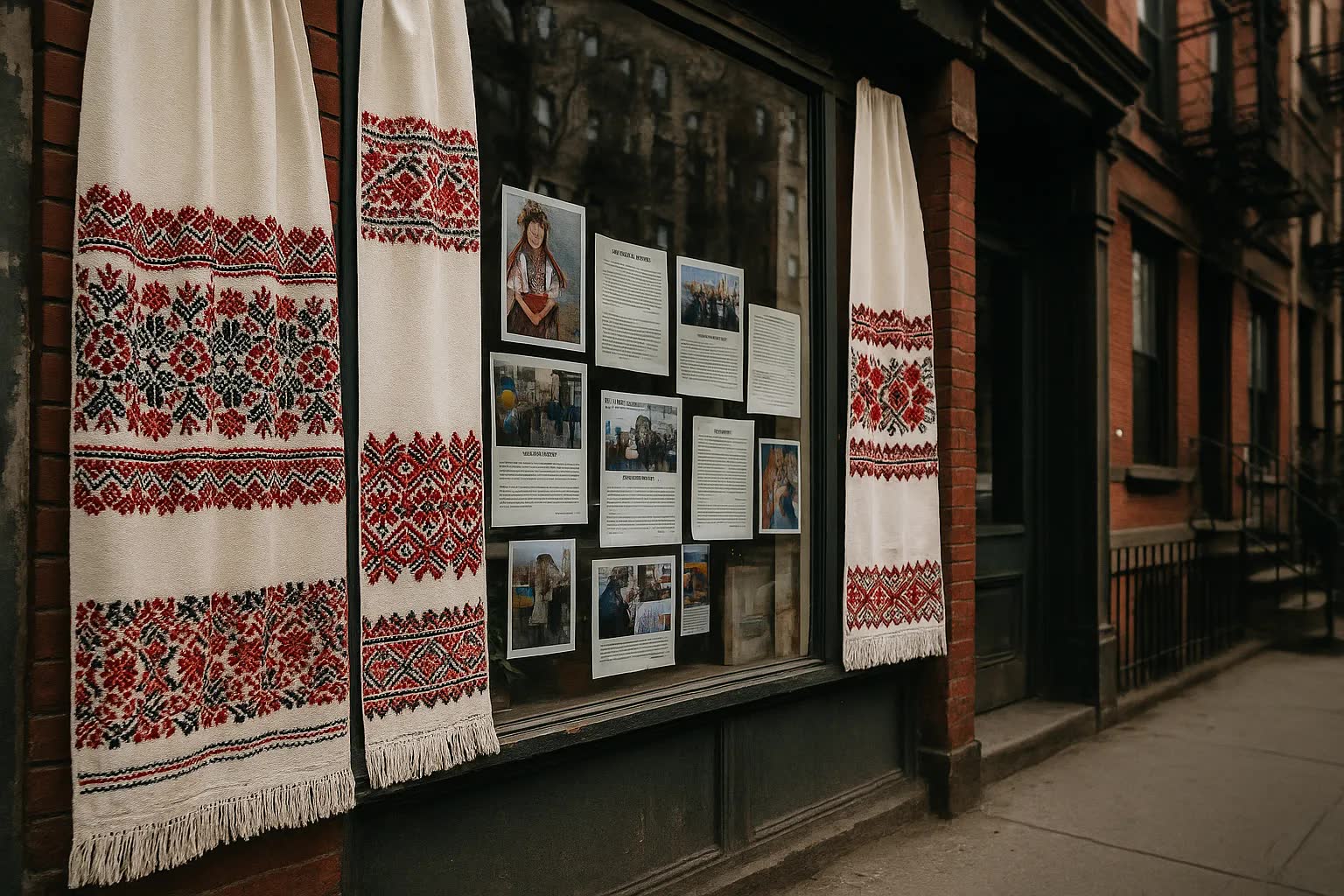
On a gray Thursday morning at the corner of St. Mark's Place and Avenue A, a new kind of Ukrainian presence is reshaping the East Village: cafes with Cyrillic neon, dance rehearsals spilling out of converted lofts, and language classes filling community rooms where pottery studios once were. The revival is not merely aesthetic; it has become a practical response to an influx of newcomers, many of them recent arrivals from Ukraine, and to longtime residents seeking cultural anchors in a rapidly changing neighborhood.
For decades the East Village and the adjacent Lower East Side have been home to waves of migrants who built institutions, restaurants and social clubs that anchored city life. The current surge — starting after the 2022 Russian invasion and accelerated by community organizing in 2024 and 2025 — has a different texture: it combines refugee support, small-business entrepreneurship and an intentional effort to retain cultural practice rather than just sell it.
At 118 East 7th Street, Cafe Ridna opened last spring where a shuttered bodega stood for years, offering black coffee, vareniki and pay-what-you-can community breakfasts on Sundays. "I wanted to create a place where people could feel at home the way my grandmother’s kitchen made me feel," said Mykhailo Kovalenko, owner of Cafe Ridna. "We hire people who need work first, and we use the cafe as a hub for language exchange and paperwork help — not just for cappuccinos."
A few blocks east, the Ukrainian Cultural House of the East Village on Avenue B runs language classes, legal clinics, and a job-placement program from the second floor of a two-story building near Tompkins Square Park. "Culture is what keeps people resilient when everything else is uncertain," said Oksana Hrynevych, director of the Ukrainian Cultural House of the East Village. "We teach folk songs and Ukrainian history, but we also teach how to navigate the subway and how to write a New York resume."
The performing arts dimension has been especially visible on weekend afternoons. The Dnipro Dance Collective rehearses in a converted storefront on East 9th Street and stages small outdoor performances near the Tompkins Square Park fence during warm months. "We are training young dancers who arrived with very little, and they are now teaching older community members traditional dances," said Lena Malenkov, artistic director of the Dnipro Dance Collective. "That intergenerational exchange is how culture survives here."
The numbers underline the change: since January 2023, 18 Ukrainian-owned or -focused businesses have opened in the East Village and lower Alphabet City area, with six nonprofit cultural or social-service organizations established in the same period. Weekly Ukrainian language classes now enroll roughly 120 students across four sites, and combined legal and job-placement clinics have served more than 350 clients in the past 18 months. Local fundraisers and private donors contributed an estimated $450,000 last year toward storefront renovations, programming and emergency housing assistance; commercial vacancy rates along key blocks of St. Mark's, which averaged about 14% in 2022, were measured at approximately 6% by late 2025.
The revival has economic as well as cultural implications: small businesses are creating roles for baristas, bookkeepers and cultural coordinators, but they are also navigating thin margins and rising rents. Several cafe and shop owners described paying below-market wages in the first year and then raising pay to retain trained employees. A coalition of neighborhood employers and the East Village Workers Alliance is drafting shared guidelines for living wages and predictable scheduling; organizers say the aim is to prevent exploitation while keeping businesses viable.
Longtime residents and local merchants give mixed reviews. Some welcome the infusion of foot traffic and neighborhood events, while others worry about commercialization replacing quieter community spaces. "I love the music and the dumplings, but I'm also nervous when a kitchen turns into a weekend destination and the rent keeps climbing," said Maria Kosenko, who has lived on Avenue B for 23 years. "We want cultural life that serves residents, not just Instagram."
City agencies and private foundations have offered small grants and technical assistance, and several initiatives aim to link new arrivals to city job-training programs and housing resources without erasing the distinctiveness of Ukrainian cultural offerings. Partnerships with neighboring community gardens and arts organizations have turned occasional pop-up markets into more permanent cultural calendars that stretch from the Bowery to the Lower East Side, creating cross-neighborhood foot traffic and shared programming.
Organizers say the goal now is sustainability: to balance growth with community stewardship and to institutionalize support mechanisms that were improvised at the outset. Plans are in motion for an annual Ukrainian cultural festival in late 2026, an artists' residency program that would host visiting creators from Ukraine, and a storefront co-op that would reduce individual overhead for fledgling vendors. "We want to be here in 10 years as part of the neighborhood fabric, not a flash in the pan," said Hrynevych, projecting a cautious optimism that reflects both cultural pride and an awareness of the economic realities facing small businesses in Manhattan.