Upper East Side School Faces Evacuation Plan After Structural Audit
Parents and educators are demanding transparency after engineers flagged potential safety issues in a 1920s school building.
By Taylor Nguyen · December 21, 2025 · 4 min read
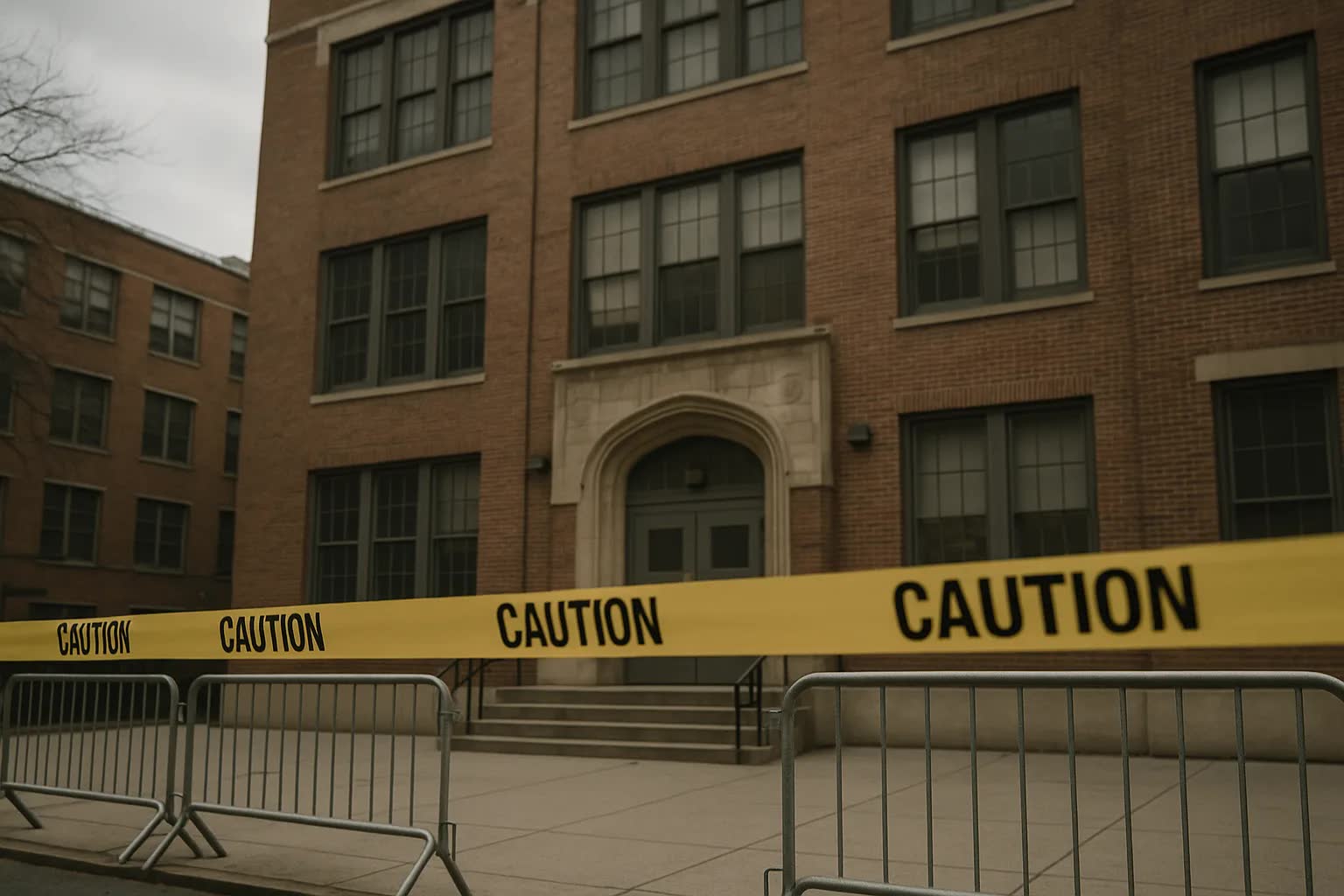
A structural audit of a brick-and-limestone school building on the Upper East Side has prompted city education officials to draw up an evacuation plan that could displace hundreds of students as early as next month, touching off urgent demands for transparency from parents and educators who say they were blindsided by the findings. The building, a hulking 1920s schoolhouse on East 88th Street near Park Avenue and a stone's throw from the Metropolitan Museum of Art, houses a K–8 program and several full-day prekindergarten classes that families and teachers say are central to the neighborhood’s daily life.
Engineers contracted by the city completed the weeklong audit after teachers reported new hairline cracks at the base of an interior stairwell last month and a maintenance crew discovered water staining in a third-floor classroom ceiling. The firm, Harbor & Finch Engineering, flagged corroded steel anchors, spalling masonry above several window lintels, and signs of differential settlement in the building’s southwest corner, according to a redacted summary provided to the school and union leaders over the weekend.
"What we noted during the inspection were multiple areas where the masonry had delaminated from the backing and where load transfer was compromised," said Leonard Park, lead structural engineer at Harbor & Finch, in an interview Tuesday. "Those conditions do not mean imminent collapse, but they do increase the risk of falling material and require immediate shoring and a formal plan to protect students and staff."
Parents at Eastwood Academy’s PTA meeting on Tuesday evening expressed alarm over the lack of a public, detailed report and pressed the Department of Education for timelines and costs. "We need the whole audit, not summaries that leave out crucial details," said Maria Alvarez, PTA president at the school, who has two children enrolled in second and fifth grades. "Families deserve to know when they'll have to find day care, how special-needs services will be preserved, and whether the city can guarantee a safe classroom for every child."
The audit document and follow-up estimates provided to school leaders contain concrete figures that have sharpened the debate: the building was completed in 1924, serves 720 students across 28 classrooms and three instructional floors, and the engineers identified 12 specific exterior and interior locations where mortar loss and cracking were judged to pose a safety concern. Harbor & Finch’s preliminary price range for shoring and stabilization work is $6.2 million, with comprehensive remediation and preservation of historic facades estimated between $18 million and $25 million, and the draft evacuation plan contemplates relocating 720 students and roughly 70 staff to temporary swing spaces within a 1.5-mile radius.
School officials described a logistical exercise that would include staggered busing, altered lunch and physical-education schedules, and a shift in special-education service delivery. The Department of Education said it is identifying three nearby buildings that could serve as temporary swing space — two community centers and a vacant wing of a neighborhood parochial school — and has discussed the use of modular classrooms on a leased lot several blocks east of the site, though no contracts have been signed.
Teachers and union representatives warned that moving classrooms, even temporarily, will disrupt instruction and could erode the rapport critical for younger students. "We can teach through change, but only if the city plans for continuity of services — counselors, aides, paraprofessionals and the same therapeutic supports the IEPs require," said Asha Patel, a fourth-grade teacher and local chapter leader for the United Educators Union. "Last-minute transfers jeopardize learning and the safety measures we teach daily in our classrooms."
City officials acknowledged the sensitivity of the situation but declined to release the complete audit to the public until they had conferred with the Department of Buildings and the law department, citing technical language that requires explanatory notes. "We are working with engineers and the Department of Buildings to finalize a mitigation and relocation plan that prioritizes safety while minimizing disruption," said Jordan Li, a Department of Education spokesperson, in a written statement. "Parents will be notified in writing at least 10 business days before any relocation."
Community leaders pointed to prior episodes across the five boroughs where aging school stock prompted emergency closures, arguing that advance disclosure could have eased the transition. Local Council district meetings have been scheduled, and some parents are circulating a petition demanding public briefings, archival copies of maintenance logs going back a decade, and an independent review by a third engineering firm. Legal advisers contacted by multiple families said they are exploring whether the notice and inspection regime met the city’s obligations under state education and public-works statutes.
In the days ahead, the city must decide whether to proceed with temporary relocation, accelerate shoring and repairs at the East 88th Street site, or pursue a blended approach that keeps some grades in place while others move to swing space; a community briefing is set for next Wednesday at the neighborhood library. Whatever path is chosen, parents and school staff said they will press for a firm timeline and public accounting of costs so that the restoration of a nearly century-old neighborhood institution does not become a prolonged source of instability for students and families.