Vinyl Shops From the East Village to Astoria Report a Renewed Youth Customer Base
Independent record stores are diversifying events and focusing on local discovery nights to attract younger collectors across borough lines.
By Anika Bose · March 9, 2026 · 4 min read
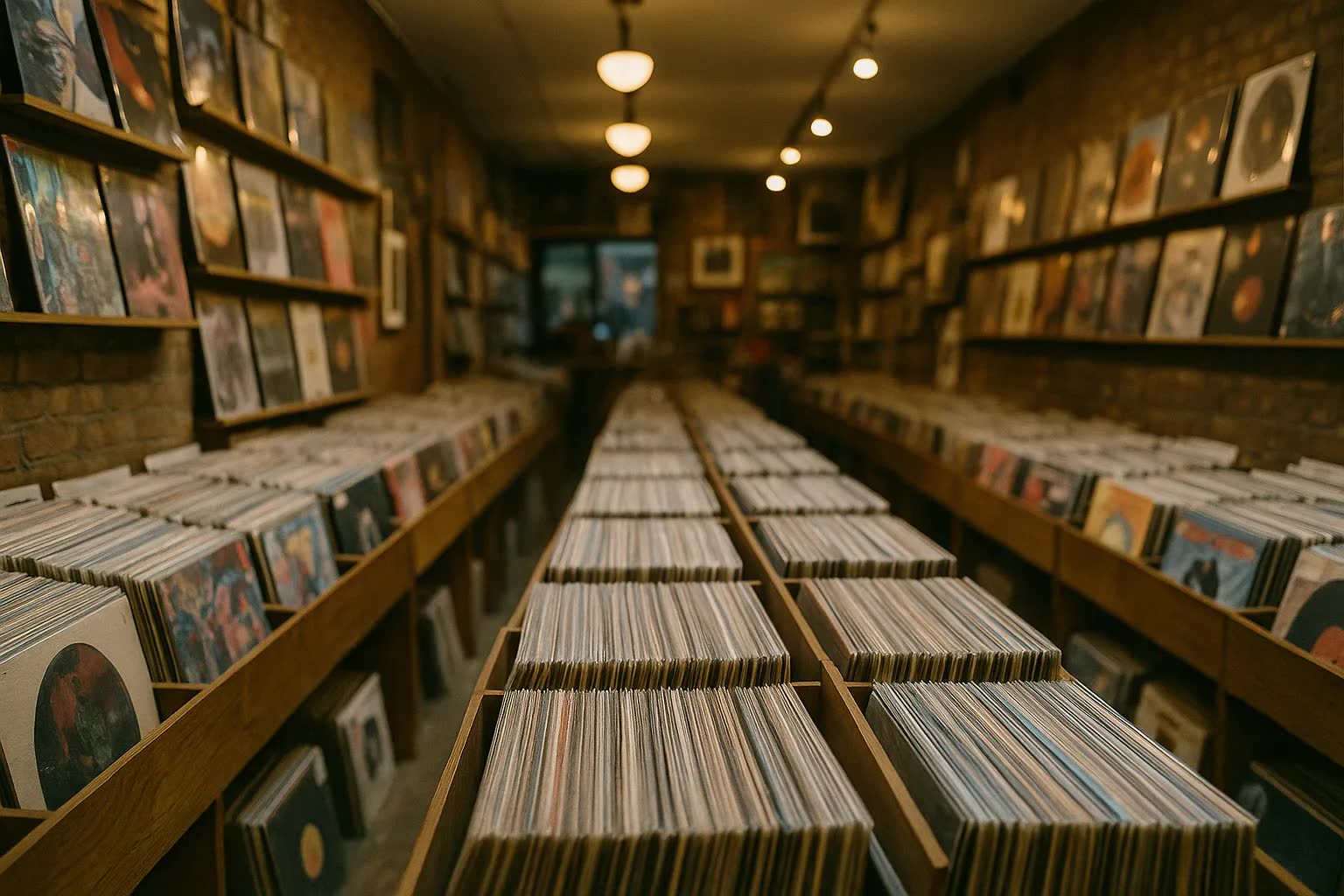
NEW YORK — Vinyl shops from the East Village to Astoria say they are seeing a sustained and youthful resurgence after years of steady, older collector traffic, as independent stores across subway lines and borough borders diversify programming and double down on curated discovery nights to turn browsing into community practice for patrons in their 20s and early 30s.
At St. Mark's Records on St. Mark's Place, owner Maria Chen said the change is visible most evenings when a mix of students from NYU and nearby Cooper Union mingle with neighborhood residents by the listening booth. "We used to think young people only streamed everything," Chen said. "Now they want a physical object and a place to share it — especially a place that helps them find music they didn't know existed." The shop has added midweek local-artist listening parties and a Thursday night 'discover your next favorite' rotation of staff picks.
Across the East River, Astoria Vinyl Co. on 30th Avenue near Astoria Park has amended its hours to include later Fridays and hosts a monthly nights market with DJs and zine makers. Manager Dylan Rivera said the store's crowd now includes more first-time buyers than collectors looking for back-catalog rarities. "We're seeing a lot of people who are surprised how affordable vinyl can be if you buy secondhand — and they like that the records come with stories," Rivera said. He pointed to a recent pop-up featuring local punk bands that drew a crowd from Sunnyside and Long Island City.
A citywide pulse check compiled by the New York Independent Record Retailers Association, a coalition of 28 stores in the five boroughs, found that shops reported a 36 percent increase in customers ages 18 to 29 over the past 12 months and an average foot-traffic rise of 28 percent compared with the previous year. The data, collected from February shop tallies and point-of-sale systems, showed average monthly visitors rose from 720 to 980 for the sample stores; Record Store Day sales for the same group were up 42 percent year over year. Astoria Vinyl Co. reported monthly visitor counts climbing from roughly 800 to 1,350 and a 20 percent bump in used-vinyl acquisitions to meet demand.
Many stores say the young surge is partly a reaction to streaming ubiquity and partly the result of concerted outreach. In Williamsburg, Vinyl Junction on Bedford Avenue revamped its calendar this winter to include DJ workshops, beginner crate-digging classes and a 'bring your friend' discount for new collectors. "We frame it as music education as much as retail," said Asha Patel, events coordinator at Vinyl Junction. "If someone is curious about Motown or experimental jazz, we'll host a night that breaks down five records and what to listen for. That keeps people coming back."
The programming is deliberately local. Shops in the Lower East Side and Bushwick now pair 'discovery nights' with neighborhood maps that highlight venues and coffee shops — a route that encourages multi-stop nights out. In Astoria, a collaboration between Astoria Vinyl Co., a small roaster on Ditmars Boulevard and the 30th Avenue BID created a late-night corridor for music, bites and art. In Jackson Heights, an afternoon event called 'Queens Listening Room' emphasizes South Asian and Latinx independent pressings and invites residents to trade records and stories.
Social platforms and fandom culture are also lifting in-store visits, according to proprietors. Staff members say posts on short-form video apps and community Discord servers have drawn younger buyers who want to see a record before they commit to a purchase or who come to shop based on staff-curated playlists. "There is a genuine social component now — people tag each other, plan meetups and then come in person," said Jonas Klein, who runs a small pressing-service cooperative out of a shared industrial space in Sunset Park that works with neighborhood shops to press local runs. "Online discovery funnels people into physical places, and the stores are capitalizing on that."
Still, store owners warned that the revival is fragile. Rising rents on St. Mark's Place and in parts of Williamsburg have pushed several long-running shops to smaller footprints, and a continuing backlog at pressing plants keeps lead times long for new local runs. "We have demand, but we have to be nimble about inventory and space — we're selling more records per customer but with thinner margins," said Noah Whitaker, senior market analyst at the City Cultural Economy Lab, a nonprofit research group that tracks small retail trends. Whitaker's team found that while youth interest is high, 62 percent of independent shops in the study cited rent and supply as the biggest constraints to growth.
Beyond sales, store owners emphasize the cultural services they provide: mentorship for teenage musicians, free listening sessions for neighborhood seniors, and partnerships with after-school music programs in Brownsville and the Bronx. St. Mark's Records now hosts a monthly workshop with a local high school's music program that helps students catalog music and create archival zines, while Astoria Vinyl Co. is piloting a 'press your first single' grant with a Queens arts nonprofit for emerging artists who can't otherwise afford studio time.
Looking ahead, owners and organizers say the trend is likely to continue if shops can sustain diverse programming and build deeper neighborhood ties: planned pop-up circuits for summer markets in McCarren Park, an experimental pressing plant proposed for a Brooklyn industrial block, and a citywide coordinated 'Neighborhood Discovery' weekend slated for May that would mirror smaller Record Store Day efforts but prioritize local acts and youth-oriented workshops. For now, the renewed energy on side streets and near community parks suggests the work of turning newcomers into regulars is well underway, and independent shops are betting their future on keeping discovery nights lively, affordable and locally rooted.