Warm Nights Extend Heat Health Risks Across New York City
Clinicians say overnight conditions can matter as much as afternoon peaks, especially for older adults, outdoor workers and residents without reliable cooling.
By Maya Chen · August 24, 2026 · 5 min read
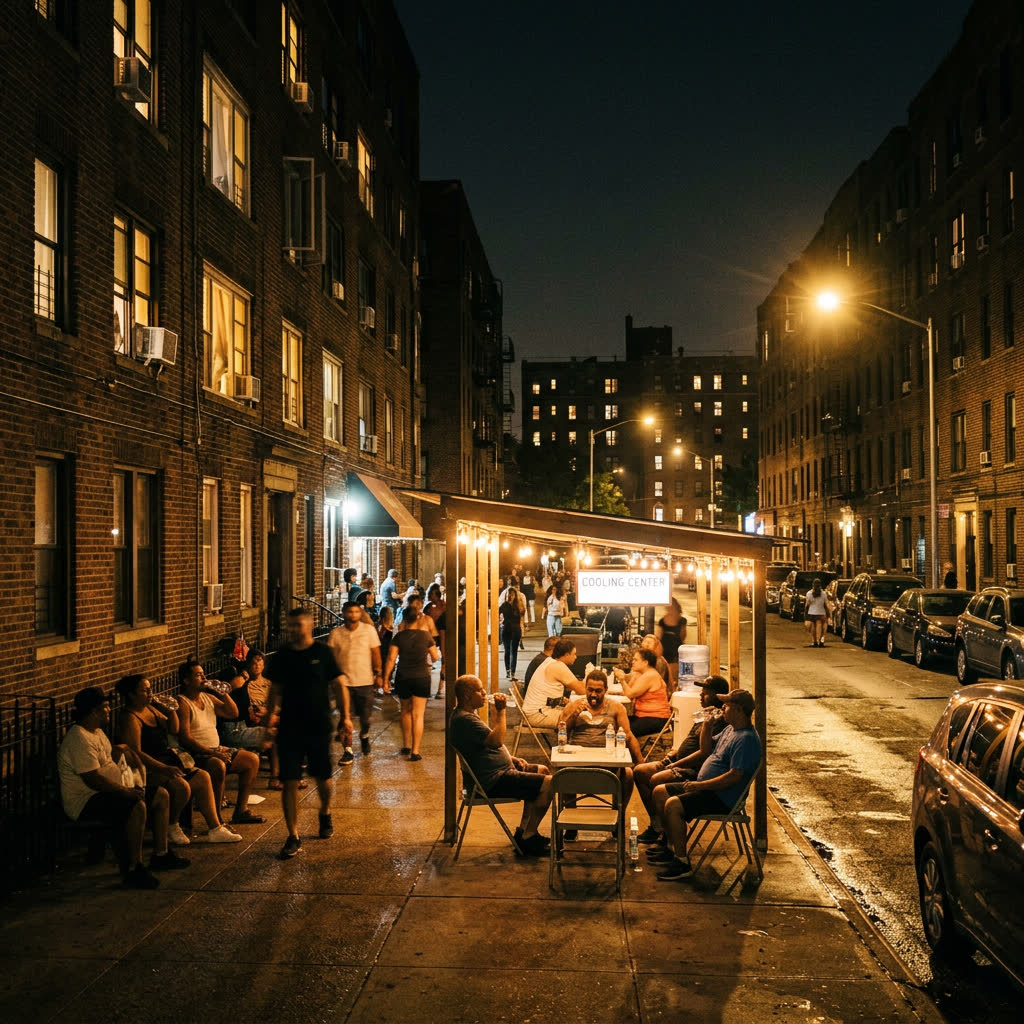
NEW YORK — A stretch of humid late-summer weather is keeping public-health workers focused on overnight temperatures, which can prevent the body from recovering even when daytime readings fall short of record levels. Outreach teams across the city are reminding residents to check on neighbors, drink water regularly and spend time in a cooler setting when their homes remain hot after sunset. The concern is cumulative exposure over several days, not only the highest temperature on a single afternoon.
Dr. Imani Wells, a fictional emergency physician at Harbor Borough Medical Center, said heat illness can begin with heavy sweating, headache, nausea, weakness or dizziness. Confusion, fainting, seizures or an inability to cool down can indicate a life-threatening emergency and warrant calling 911. Wells said people should not wait for thirst before drinking fluids, while those whose clinicians have limited their fluid intake should follow individualized medical advice.
Warm apartments can be especially difficult for older adults, infants and people with heart, lung or kidney conditions. Some medications can also affect hydration, sweating or the body's response to heat, but clinicians caution against stopping prescribed medicine without guidance. A pharmacist or prescriber can explain whether a medication changes heat risk and how to store it safely when indoor temperatures rise.
Nighttime risk can be easy to overlook because the sun has set and outdoor activity has slowed. In upper-floor apartments, however, roofs and walls may continue releasing heat for hours. Closing shades during the day, using fans only when indoor conditions make them safe and moving to an air-conditioned space can help. Fans alone may not prevent heat illness in a very hot room, particularly for medically vulnerable residents.
The city's cooling-center network and public air-conditioned spaces offer options during declared heat conditions, but hours and accessibility vary by location. Residents are advised to check the city's current map or call 311 before leaving home. People who rely on powered medical equipment should review backup plans and keep emergency contact information available in case high electricity demand contributes to a local outage.
Outdoor workers and delivery workers face a different pattern of exposure. Celeste Moreno, a fictional occupational-health nurse with the Midtown WorkWell Clinic, recommends scheduled water and shade breaks rather than waiting for symptoms. New workers and those returning after time away may need a gradual adjustment to heavy activity in hot conditions, she said, because heat tolerance develops over time and can be lost.
Public-health outreach groups are also asking New Yorkers to make specific check-ins instead of sending a general message. A call that asks whether a neighbor has working cooling, water and a plan for the night can reveal a problem sooner. If someone sounds disoriented, cannot be awakened normally or reports severe symptoms, outreach workers say the appropriate response is emergency help, not another check-in the next morning.
Hydration advice does not require specialty drinks for most people doing ordinary activities. Water and regular meals are generally sufficient, while prolonged heavy exertion may call for additional guidance. Alcohol can worsen dehydration, and very sugary beverages may be difficult for some people to tolerate. Clinicians also advise never leaving a child, older adult or animal in a parked vehicle, even briefly.
Forecasters expect late-August conditions to fluctuate, but health officials said precautions should continue on any day when humidity and indoor heat remain elevated. The city updates heat advisories and cooling resources as conditions change. Wells said the practical test is how a person feels and whether the home cools overnight, since risk can persist after the outdoor temperature begins to decline.