Westchester Parking Crunch Fuels New Commuter Garage Boom
Developers are proposing multi-story parking structures near Metro-North stations as limited commuter lot capacity drives daily chaos.
By Anika Bose · January 5, 2026 · 4 min read
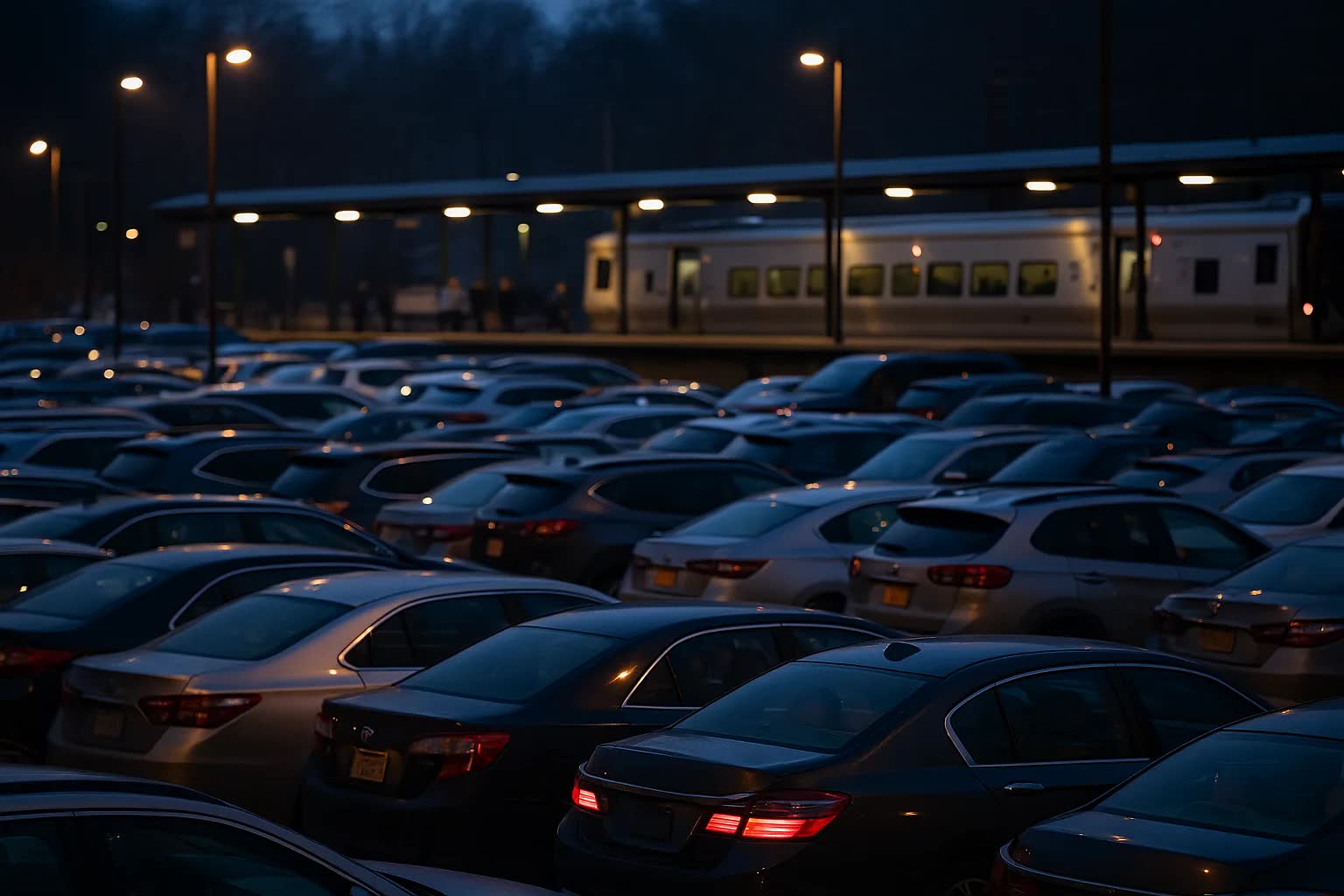
NEW YORK — As commuters from Westchester County line up for hours each weekday outside Metro-North lots, a parking crisis that has been building for years is now driving a surge of proposals for multi-story garages near train stations from White Plains to New Rochelle, and officials in Manhattan and the suburbs are watching closely for what the boom will mean for downtowns and the morning commute into Grand Central Terminal.
On a recent weekday morning in Scarsdale, drivers circled the municipal lot on Crane Road looking for a space before abandoning their search and piling onto the Saw Mill River Parkway toward the Bronx, where some park-and-ride at underused private lots and take buses. ‘‘It’s chaos,’’ said Daniel Reyes, a financial analyst who lives on Heathcote Road and commutes to a Midtown office on Lexington Avenue, adding that he often arrives at the lot at 6:15 a.m. and still misses a space. ‘‘I shouldn’t be starting my day stressed about parking,’’ he said.
Developers say they are responding to pent-up demand. Proposals filed in the last 18 months include a six-level, 900-space structure near White Plains Station on Main Street from Hudson Gate Partners and a 700-space garage planned by GreenPeak Development on North Avenue in New Rochelle. Local planning boards in Yonkers and Mamaroneck have received at least five separate applications for multi-story lots within a half-mile of stations, and several private owners have begun buying small parcels adjacent to tracks in the hopes of assembling sites large enough for structured parking.
‘‘We’re watching a years-long mismatch between commuter needs and available supply,’’ said Lydia Montoya, director of commuter services at Westchester Mobility Partners, a private advisory firm that works with municipalities on parking strategy. ‘‘If you build only surface lots or leave decisions to the market without planning for traffic flow and pedestrian safety, you can create bottlenecks that spill into residential streets and downtowns.’’
The scale of the shortfall is stark, according to municipal filings and county estimates: roughly 120,000 weekday commuters originate in Westchester, while publicly managed commuter lots across the county provide about 14,500 spaces. Average utilization in peak lots exceeds 95 percent on weekday mornings, and wait lists for municipal permit spaces top 4,200 names. Developers say the new proposals would add roughly 6,800 structured spaces countywide at an average development cost of about $30,000 per space, a total private investment in the range of $200 million to $250 million, not including potential public subsidies or bond financing.
Not everyone welcomes the sudden push for larger garages. Residents in Pelham Manor and parts of Yonkers have raised concerns about increased traffic on narrow streets that feed stations, the potential loss of small businesses if surface lots are redeveloped, and the visual impacts of tall concrete structures. City planning officials in New Rochelle and White Plains say they are weighing design standards, requirements for noise mitigation and landscaping, and limits on curb cuts that could steer lanes of traffic away from Main Street shopping corridors.
Developers are pitching a different vision: modern, mixed-use parking structures that do more than store cars. ‘‘These are not the gray, brutalist garages of the 1970s,’’ said Aisha Benson, founder and CEO of GreenPeak Development, which is seeking approvals in New Rochelle and Hartsdale. ‘‘We design active ground floors with retail, secure bike rooms, EV charging banks, and transit information centers so garages become multimodal hubs rather than standalone car farms. That helps downtown retailers and creates safer, more walkable connections to stations.’’
The Metropolitan Transportation Authority and county officials say they see both opportunity and risk in the boom. A senior MTA planner who requested anonymity cautioned that adding capacity adjacent to stations must be closely coordinated with operations: ‘‘If you increase parking by tens of percent without improving drop-off lanes, signal timing, and pedestrian crossings, you can undermine train throughput and safety. We need integrated solutions—more spaces alone won’t fix the commute.’’ At the same time, Westchester county executives have signaled openness to public-private partnerships and are evaluating federal discretionary grants that could support EV infrastructure and last-mile connections at new garages.
Local business owners and brokers are already forecasting economic ripple effects. In downtown New Rochelle, where a planned garage would sit near the Huguenot Street retail corridor, shop owners say additional parking could bring more weekday customers and lift lunchtime foot traffic that has yet to fully recover. Commercial brokers report rising interest in parcels within a half-mile of stations, with asking prices up as much as 20 percent in some neighborhoods as developers look to assemble sites for structured parking and small transit-oriented housing projects.
Approvals and construction timelines will determine whether the new garages ease the crunch or entrench car dependence. Several applications are slated for hearings this spring, and developers say construction would take 12 to 24 months once permits are granted, with the first projects potentially opening in late 2027 or 2028. Planners and advocates say success will depend on pairing increased capacity with better bus connections, pricing strategies that favor off-peak commuters, and design that preserves neighborhood character; otherwise, the commuter parking boom could be a short-term fix that shapes travel patterns for decades to come.