Westchester’s Yonkers Race Becomes Test Case for Suburban Backlash Against City Policies
A high-profile state legislative contest in Yonkers is drawing attention as suburban voters react to housing and transit policies from NYC leaders.
By Keisha Brown · March 7, 2026 · 5 min read
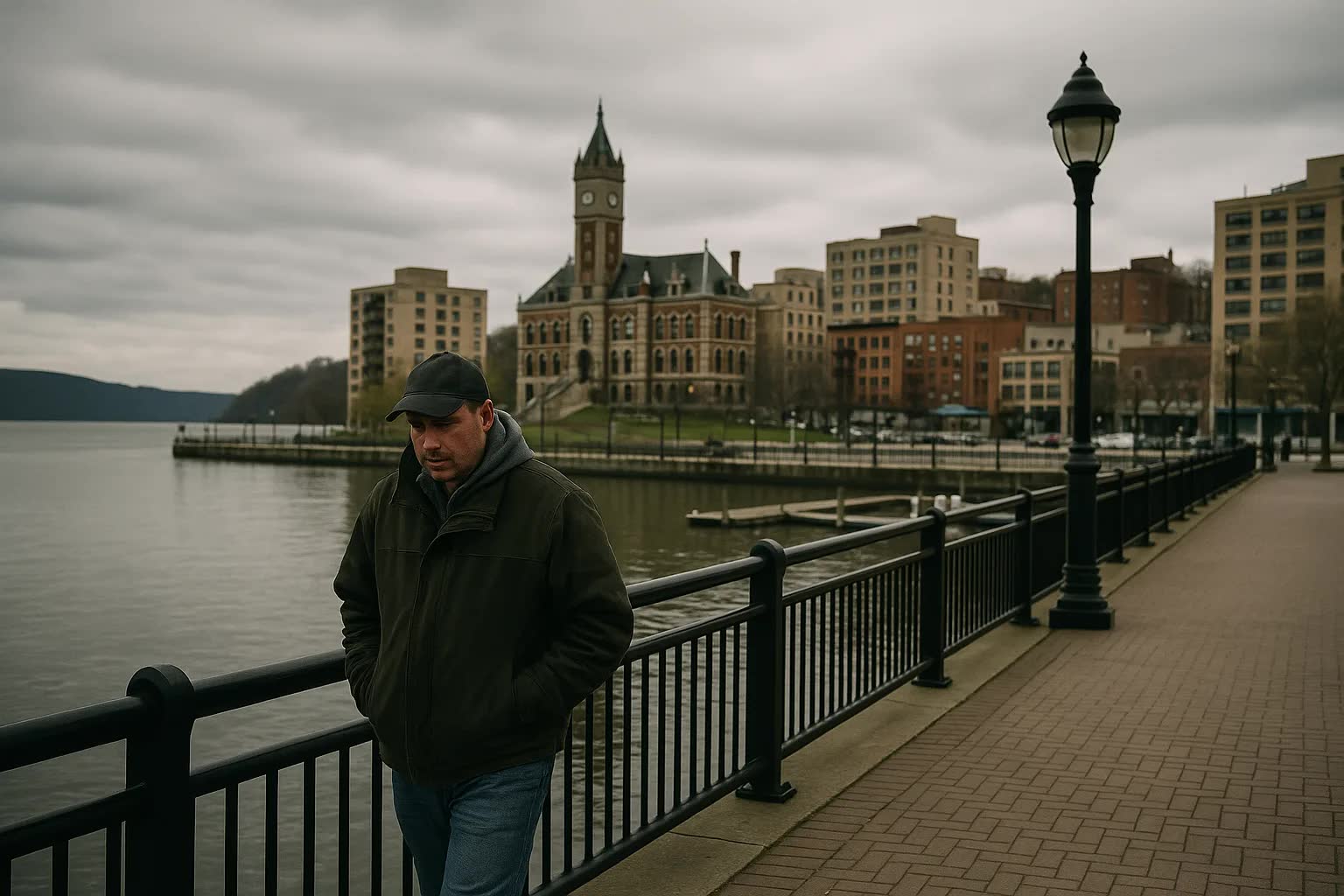
A campaign sign clustered near the Yonkers Metro-North station and a poster tacked to a lamppost on McLean Avenue represent more than a local contest: they are markers of how New York City policies on housing and transit are reshaping politics in the suburbs. Voters who commute into Midtown and families priced out of Manhattan neighborhoods from the Upper West Side to Astoria say they are weighing a state legislative race in Yonkers as a referendum on city-driven zoning changes, bus-lane expansions and congestion measures that have consequences across county lines.
The fight for the open 36th State Senate seat has drawn unusually high attention and money for a suburban legislative race. The Democratic candidate, Lila Chen, a city planner turned nonprofit director, frames herself as a bridge-builder who supports regional solutions; her Republican opponent, Thomas Reed, a former Yonkers school board member, argues that policies crafted in Manhattan—by officials and agencies focusing on New York City—have led to a spillover of density and costs that Westchester municipalities must absorb. The contest, scheduled for a special primary in April, is being watched by county leaders and advocacy groups as a test of whether suburban voters will push back against perceived top-down initiatives from city halls and transit authorities in the five boroughs.
"We are not anti-housing; we are against one-size-fits-all plans imposed from Manhattan," said Marisol Vega, vice president of the Yonkers Neighborhood Alliance, which has backed neighborhood-level controls and limits on large-scale redevelopment. "When plans that favor high-rise development on the Lower East Side or new bus lanes on 125th Street ripple out, Yonkers bears the traffic, the parking crunch and the pressure on our schools. Residents want a say in how growth happens here."
Concrete data underscore the intensity of the debate. Yonkers added an estimated 1,200 housing units citywide between 2018 and 2024, while city planning proposals and regional housing targets shepherded by New York City officials envision tens of thousands of new units concentrated around transit corridors, some within 10 miles of Yonkers; Metro-North weekday ridership into Grand Central has recovered to roughly 76 percent of pre-pandemic levels, down from a 2019 weekday average of about 65,000 riders to an estimated 50,000 current weekday riders on the Hudson and Harlem lines combined. Polling commissioned by a local public affairs firm in late February showed 42 percent of likely voters in the district identifying housing and development as their primary concern, with 33 percent naming transit changes and 25 percent citing taxes and services; campaign finance filings show the two main campaigns raised a combined $1.2 million in the past six months, with outside groups adding roughly $450,000 more in independent expenditures.
Neighborhood-level grievances have sharpened the race. In Getty Square, the central business district, small retailers have reported increased delivery congestion since new curbside regulations were piloted in Manhattan commercial strips, and residents of Park Hill and Armour Villa Park complain about overflow parking and construction staging on quiet streets near retooled waterfront projects along the Hudson River. On weekdays, commuters from northwest Yonkers converge on the Yonkers train station on Nepperhan Avenue, and the sightlines to Grand Central during rush hour have become rallying points for those who say they feel the brunt of city-centric policy without having a seat at the table.
Lila Chen said she understands concerns about housing but urged that the debate be framed regionally. "We cannot ignore the housing shortage in New York City, nor can we pretend Yonkers should close its doors," Chen said at a town hall in Getty Square. "My plan invests in school capacity, transit connections and targeted growth in places that make sense for Yonkers—around the train station and our downtown corridors—while protecting single-family neighborhoods and expanding real community engagement in zoning decisions."
Transit policy has become shorthand for a broader anxiety. Bus-priority lanes and congestion pricing pilots in Manhattan have prompted riders to reroute and, in some cases, seek alternatives that increase cross-county car trips, a pattern that officials and planners track closely. "We have seen measurable shifts in ridership patterns when service changes or dedicated lanes are introduced," said a senior MTA planner who requested anonymity to discuss internal modeling. "Some commuters adapt by changing their times or routes; others shift to park-and-ride patterns that put strain on suburban arterials and municipal parking resources. Those second-order effects are real and often underappreciated in city debates."
The political calculus is tangible: Westchester Democrats worry that losses in suburbs like Yonkers could complicate statewide majorities, while local Republicans and independent groups see an opening to capitalize on frustration. Historically, Yonkers has been competitive, with margins tightening in municipal and county races as turnout among younger, more transient residents fluctuated. Campaign strategists on both sides emphasize turnout in precincts that border the Bronx and in neighborhoods with high numbers of commuter households; door-knocking in Getty Square and targeted mailings in Park Hill have replaced the broad-stroke television buys that once defined county races.
Outside spending and endorsements reflect the nationalization of what might otherwise be a local contest. Housing and urbanist advocacy groups from Manhattan and Brooklyn have donated to Chen's allies, arguing that regional coordination is necessary to address affordability; neighborhood preservation groups and local business associations have funneled resources to Reed, emphasizing municipal control and slower development. In the last month of the campaign, both campaigns increased field staff along Central Avenue, near Yonkers Riverfront Library, and in precincts adjacent to the Saw Mill River Parkway, deploying volunteers to explain specific policy positions on rezonings, accessory dwelling units and bus-lane enforcement.
Whatever the outcome in April, the race is likely to reverberate beyond Yonkers. If suburban voters coalesce around skepticism of city-led housing mandates and transit reconfigurations, expect to see more county-level fights over zoning and greater insistence on intergovernmental bargaining. The winner here will inherit not just a legislative seat but a mandate—of sorts—from voters who want to shape how growth, transit and services are managed across municipal lines, and the results could force both city and state leaders to rethink how they coordinate policy for a region that no longer neatly separates urban and suburban interests.