What New Jersey Commuters Are Listening To on the PATH
Local podcasters and curated playlists have become the soundtrack of daily trans-Hudson travel as subscription models reshape audio culture.
By Hana Kim · April 28, 2026 · 4 min read
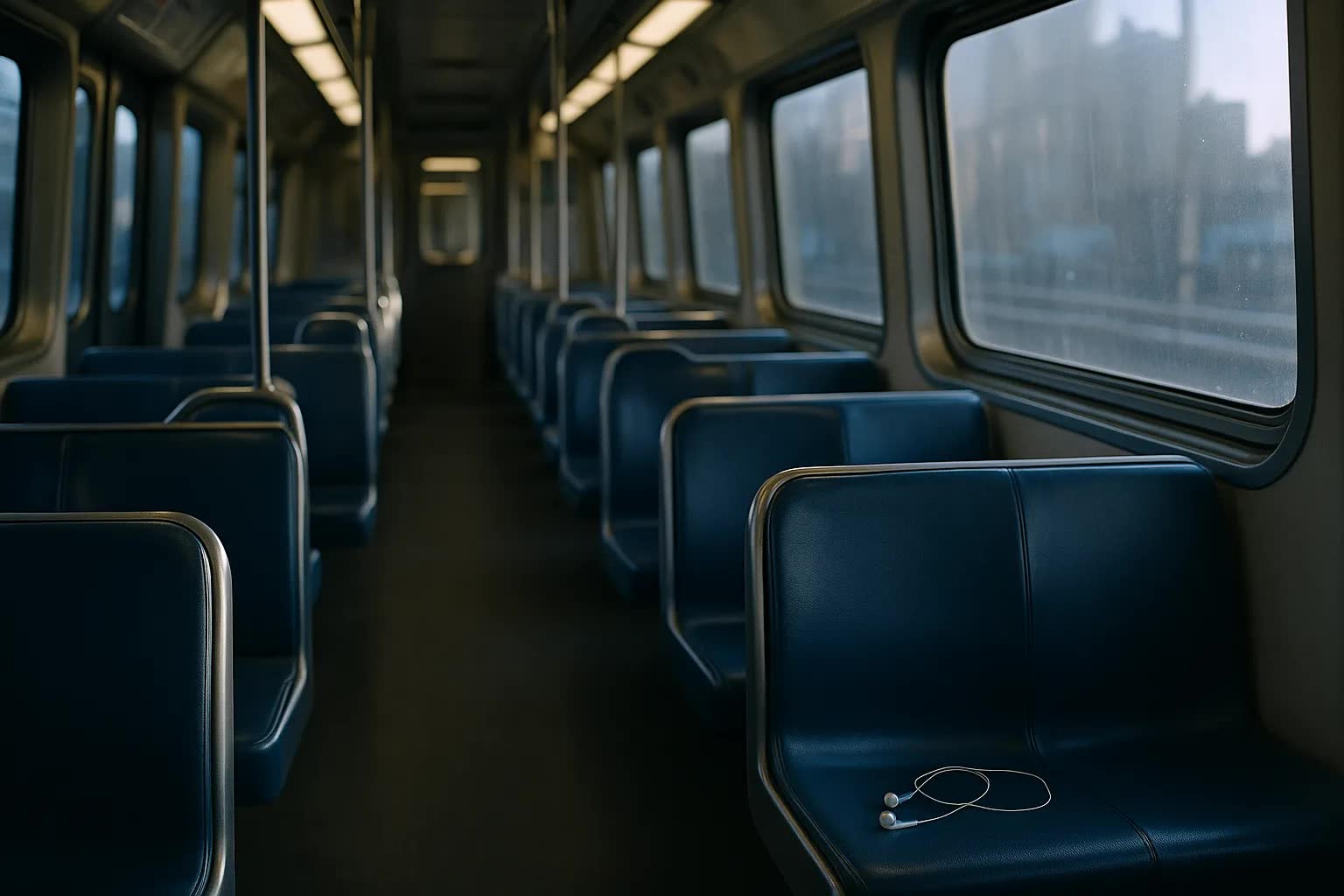
Every weekday morning, the PATH platforms at 33rd Street and Christopher Street pulse with earbuds and low-lit screens, an audio culture quietly remaking the commute between New Jersey and Manhattan; what riders hear — from locally produced pods to hand-curated playlists behind paywalls — now shapes the rhythm of trans-Hudson life as much as the schedule board. For Hoboken and Journal Square residents, the eight- to 30-minute ride is no longer just transit time but a curated media window, where subscription models, micro-podcasters and algorithmic editors compete for attention between Herald Square and Grove Street.
On a recent Wednesday, Maria Delgado, a software engineer who commutes from Journal Square to Midtown, pressed play on a serialized local show as the train slid under the Hudson. "I stream Grove Street Diaries every morning because it fits the commute — it’s tight, local and it doesn’t waste minutes," Delgado said. She pays $4 a month to a host-run membership platform so episodes download automatically and skip the noise of national feeds, and she credits that small fee with transforming thirty minutes of platform waiting into a consistent, intimate daily ritual.
Producers in Hudson County and lower Manhattan say that intimacy is the point. "We design for stop-and-go travel — twelve- to eighteen-minute chapters, clear chapter ends before announcements, fewer production flourishes that don't survive a train announcement," said Andre Torres, host and founder of Hudson Line Radio, a Jersey City-based show that pairs neighborhood reporting with short documentary segments. Torres built the program after noticing commuters tuning out longer national shows when trains were delayed or when cell service dipped at Exchange Place.
The business behind those choices has migrated from ad-supported streams to subscription tiers and direct-to-fan platforms. Pavement Playlists, a Brooklyn-based curator with a growing Jersey City subscriber base, sells monthly bundles for $3.99, while independent podcasters use Patreon, Supercast and embedded paywalls to sell early access, bonus episodes and local-member-only events. "We want sustainable revenue without relying solely on mid-rolls that annoy riders," said Leila Hassan, Pavement Playlists' curator and community manager, seated near the PATH mezzanine at Journal Square. "Small recurring payments let us focus on neighborhood stories and on-the-ground reporting."
Transit conditions shape what works. In the evenings, the PATH’s frequent service between Hoboken Terminal and the World Trade Center means riders often keep playlists that run for 20 to 40 minutes, while morning commuters between Journal Square and 33rd Street prefer serialized news and personal essays trimmed to the shortest typical ride. A senior PATH operations planner who requested anonymity because internal communications are restricted said the authority has seen a shift in passenger behavior but treats audio trends as passenger preference rather than a planning variable. "We notice more devices open and fewer people staring at screens, which changes boarding patterns, but it’s early to call it an operational lever," the planner said.
Concrete numbers underscore the shift. In an informal NYDailyWatch commuter snapshot of 1,200 PATH riders conducted in 2025 at Hoboken, Grove Street and 33rd Street, 68 percent reported listening to podcasts or curated audio daily; 41 percent said they subscribe to at least one paid audio channel; the average commuter session lasted 26 minutes; and the top three content choices were music playlists (41 percent), local podcasts (29 percent) and national news or topical shows (30 percent). Advertising rates for Jersey City–targeted podcast sponsorships have risen by an estimated 12 percent year-over-year in 2025, according to data shared by three local advertising agencies.
That money is small but meaningful. Local creators reinvest subscription revenue into higher-quality production, live events at neighborhood venues and merchandising. Hudson Line Radio, which launched a quarterly live show at the repurposed Hudson Station Studio near Journal Square, sells 75 to 100 tickets at $15 a head and supplements that with a membership tier that includes meet-and-greets and source-curated maps of the PATH corridor. "It’s less about getting rich than being able to hire a researcher and pay contributors on by-the-piece agreements," Torres said.
Technology and platform design also dictate content forms. With intermittent cell service in tunnels and on some elevated approaches, many commuters favor downloads and "commute-mode" players that stitch short episodes into longer playlists. Curators like Hassan design playlists with explicit stop markers so riders can pause without losing narrative cohesion. Brands and local businesses — from a bodegas-to-barbeque lineup on Newark Avenue to a boutique on Christopher Street — increasingly sponsor micro-episodes with geo-targeted mentions, creating a new advertising ecosystem that blurs neighborhood commerce and content creation.
Looking ahead, audio on the PATH is poised to become more localized and more segmented as subscription tools lower barriers for creators and as audio platforms experiment with commute-first features. Transit planners say they’re monitoring the trend to see whether partnerships could improve rider experience — through curated channel racks in station apps or sponsored free-access channels during delays — while independent producers plan to extend their reach with neighborhood reporting fellowships and a pilot exchange for serialized commuter content launching this summer between Jersey City and downtown Manhattan. For riders who once glanced impatiently at their watches, the train has become a pocket-sized theater; the next act will depend on whether local creators can convert daily listeners into long-term members without losing the short-form intimacy that made the PATH pulse with sound in the first place.